High School Grade
Project
6 weeks
Brain Buzz: Choose, Think, Feel
Updated
Self Directed Learning
Effective Communication
Academic Mindset
Critical Thinking & Problem Solving
Collaboration
+ 1 more
1-pager
Launch
Launch
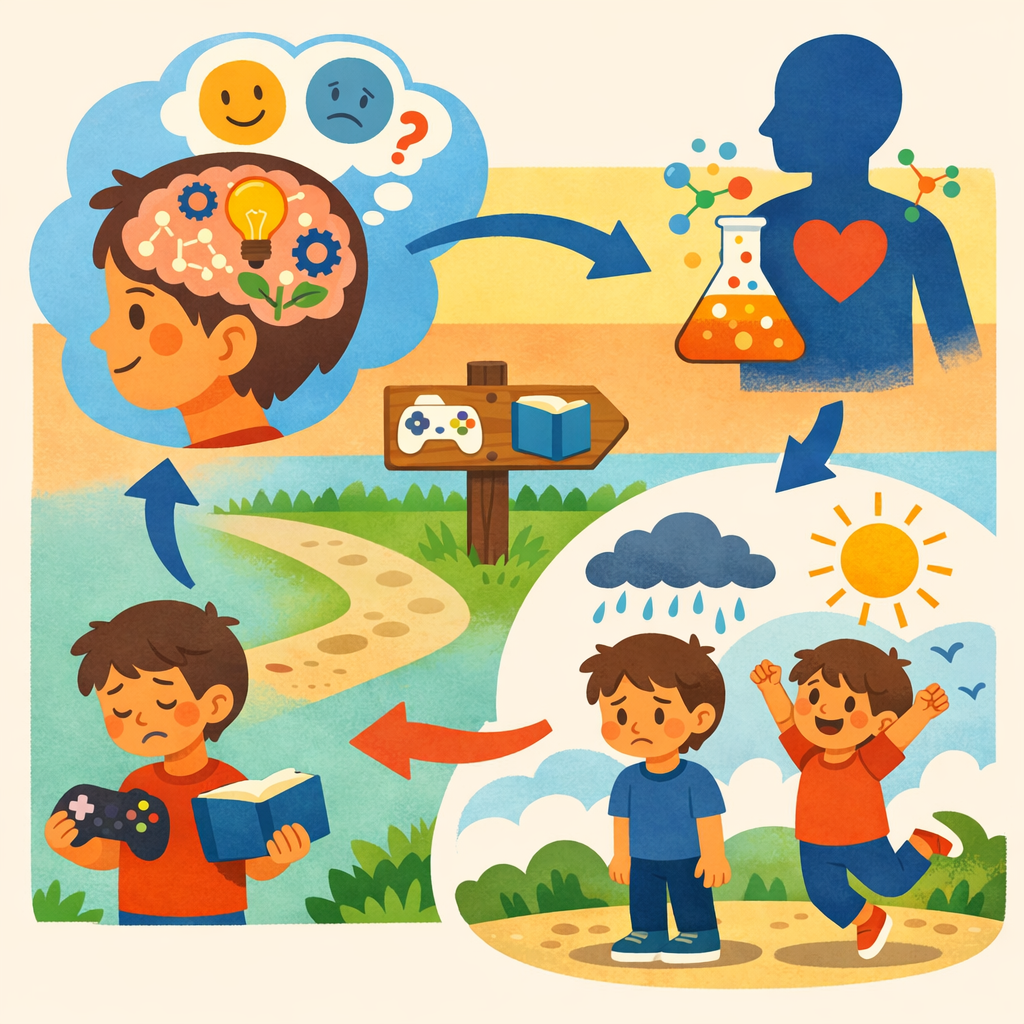
Students will launch the investigation by collecting firsthand evidence about emotional change during the petting zoo experience, then use early neuroscience vocabulary and expert input to build an initial claim about how thoughts, choices, brain activity, and chemicals connect to feelings.
Days 1 - 2
Question And Hypothesis
Question And Hypothesis
Students will analyze petting zoo observation records, build stronger neuroscience vocabulary, refine investigable questions about emotional control, and develop a testable hypothesis that links thoughts or choices to brain structures, chemical responses, and emotional change. They will compare evidence quality, use peer and teacher critique to improve question design, and complete a graded question-and-hypothesis checkpoint that prepares them for planning methods in the next phase.
Days 3 - 7
Plan And Methods
Plan And Methods
Students will design and peer-review a credible evidence plan for investigating emotional control, using structured observation tools, source-based neuroscience reasoning, and CER planning to decide how they will collect, organize, and justify evidence in the next phase.
Days 8 - 12
Collect And Verify
Collect And Verify
Students will collect a new round of observation and interview evidence, test the quality of their methods and records, and verify whether their developing explanations about brain structures, chemical responses, and emotional control are supported by traceable evidence before moving into analysis.
Days 13 - 17
Analyze And Present
Analyze And Present
Students will analyze patterns and anomalies in their emotional-control evidence, test interpretations against peer and expert-informed criteria, revise their before-and-after concept map, and prepare a public-facing expo station with evidence-based conclusions, limitations, and clear neuroscience explanations.
Days 18 - 22
Showcase
Showcase
Students will present their final neuroscience explanations to an authentic audience through the Mind in Motion Expo, defend a claim about emotional control with evidence from their investigation and expert input, and complete a final annotated concept map assessment plus reflection on how their thinking changed.
Days 23 - 24
Launch
Days 1–2
Question And Hypothesis
Days 3–7
Plan And Methods
Days 8–12
Collect And Verify
Days 13–17
Analyze And Present
Days 18–22
Showcase
Days 23–24
July 2026
Mon
Tue
Wed
Thu
Fri
28
Day 2
🧠 Brain Pathway Claim Draft
🧠 Brain Pathway Claim Draft
30
Day 4
❓ Strong Questions for Emotional Control
❓ Strong Questions for Emotional Control
August 2026
Mon
Tue
Wed
Thu
Fri
3
Day 5
🧪 Hypothesis Frames with Dopamine
🧪 Hypothesis Frames with Dopamine
4
Day 6
📝 Question and Hypothesis Studio
📝 Question and Hypothesis Studio
5
Day 7
✅ Investigable Claim Checkpoint
✅ Investigable Claim Checkpoint
10
Day 9
📊 Observation Table and Coding Key
📊 Observation Table and Coding Key
11
Day 10
🗣️ CER Prompt and Citation Clinic
🗣️ CER Prompt and Citation Clinic
12
Day 11
🔍 Evidence Plan Peer Review
🔍 Evidence Plan Peer Review
13
Day 12
✅ Evidence Plan Method Gate
✅ Evidence Plan Method Gate
17
Day 13
Collect And Verify
🧠 Evidence Traceability Mini-Clinic
🧠 Evidence Traceability Mini-Clinic
18
Day 14
📓 Emotional Shift Evidence Run
📓 Emotional Shift Evidence Run
19
Day 15
🎤 Doctor and Therapist Question Round
🎤 Doctor and Therapist Question Round
20
Day 16
🔍 Brain-Chemical Claim Check
🔍 Brain-Chemical Claim Check
24
Day 17
✅ Midpoint Evidence Audit
✅ Midpoint Evidence Audit
26
Day 19
🧠 CER Limits Seminar
🧠 CER Limits Seminar
27
Day 20
🗺️ Concept Map Draft Two
🗺️ Concept Map Draft Two
September 2026
Mon
Tue
Wed
Thu
Fri
31
Day 21
🎛️ Mind in Motion Rehearsal
🎛️ Mind in Motion Rehearsal
1
Day 22
🧾 Emotional Control Conclusion
🧾 Emotional Control Conclusion
3
Day 24
✍️ Final Brain-Emotion Map
✍️ Final Brain-Emotion Map