All grades
Project
1 week
Carbon Footprint Chronicles: A Green Quest
Updated
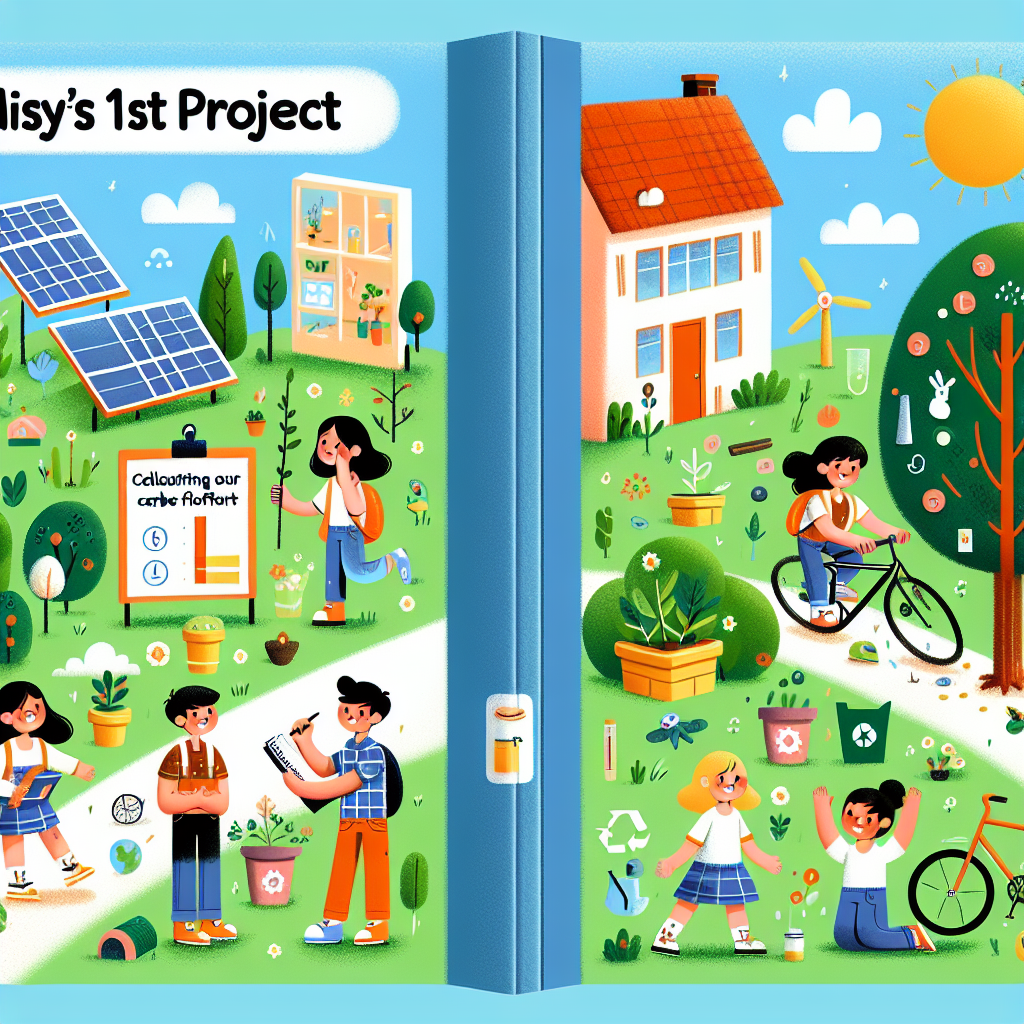
1-pager
Define
Define
Students will synthesize their carbon footprint data and empathy research into a clear, user-centered problem statement. Using evidence from carbon calculator results, interviews, and content knowledge about energy sources and global warming, they will define a focused community carbon challenge that guides solution design in the next phase.
Day 2
Ideate
Ideate
Students will generate a wide range of human-centered solutions to reduce individual and community carbon footprints. Using structured brainstorming, concept sketching, and peer feedback, teams will move from divergent idea generation to selecting a high-potential solution aligned to user needs, scientific principles, and project criteria.
Day 3
Prototype
Prototype
Students will build and refine testable prototypes of their Community Carbon Reduction solutions, using user-centered design principles to create tangible models or campaign materials. Through structured peer feedback and self-assessment, they will revise their prototypes to better meet user needs before final testing and exhibition.
Day 4
Empathize
Days 1–1
Day 1
Define
Days 2–2
Day 2
Ideate
Days 3–3
Prototype
Days 4–4
Day 4
Test/Present
Days 5–5
March 2026
Mon
Tue
Wed
Thu
Fri
9
Day 1
Empathize
🌍 Carbon Footprint Calculator Kickoff
🌍 Carbon Footprint Calculator Kickoff
🔥 Energy Sources & Global Warming Mini-Lab
🔥 Energy Sources & Global Warming Mini-Lab
🧠 Empathy Map: Our Carbon Choices
🧠 Empathy Map: Our Carbon Choices
10
Day 2
Define
🧩 From Data to Patterns
🧩 From Data to Patterns
🗺️ Carbon Impact Empathy Map
🗺️ Carbon Impact Empathy Map
✏️ Drafting Our Carbon Challenge
✏️ Drafting Our Carbon Challenge
🧠 Divergent Brainstorm: 20 Carbon Solutions
🧠 Divergent Brainstorm: 20 Carbon Solutions
11
Day 3
Ideate
💬 Peer Feedback Carousel
💬 Peer Feedback Carousel
✏️ Concept Sketch & Solution Storyboard
✏️ Concept Sketch & Solution Storyboard
12
Day 4
Prototype
🛠️ Prototype Planning & Materials Map
🛠️ Prototype Planning & Materials Map
🔧 Building Our Carbon Solution Prototype
🔧 Building Our Carbon Solution Prototype
✅ Prototype Readiness Check
✅ Prototype Readiness Check
13
Day 5
Test/Present
🔁 Final Prototype Revisions
🔁 Final Prototype Revisions
🖼️ Carbon Solutions Exhibition
🖼️ Carbon Solutions Exhibition
🪞 Self-Assessment & Action Reflection
🪞 Self-Assessment & Action Reflection