x

Design with XQ Competencies

Use Inkwire's AI Design Tool to design an engaging learning experience with XQ Competencies in minutes.
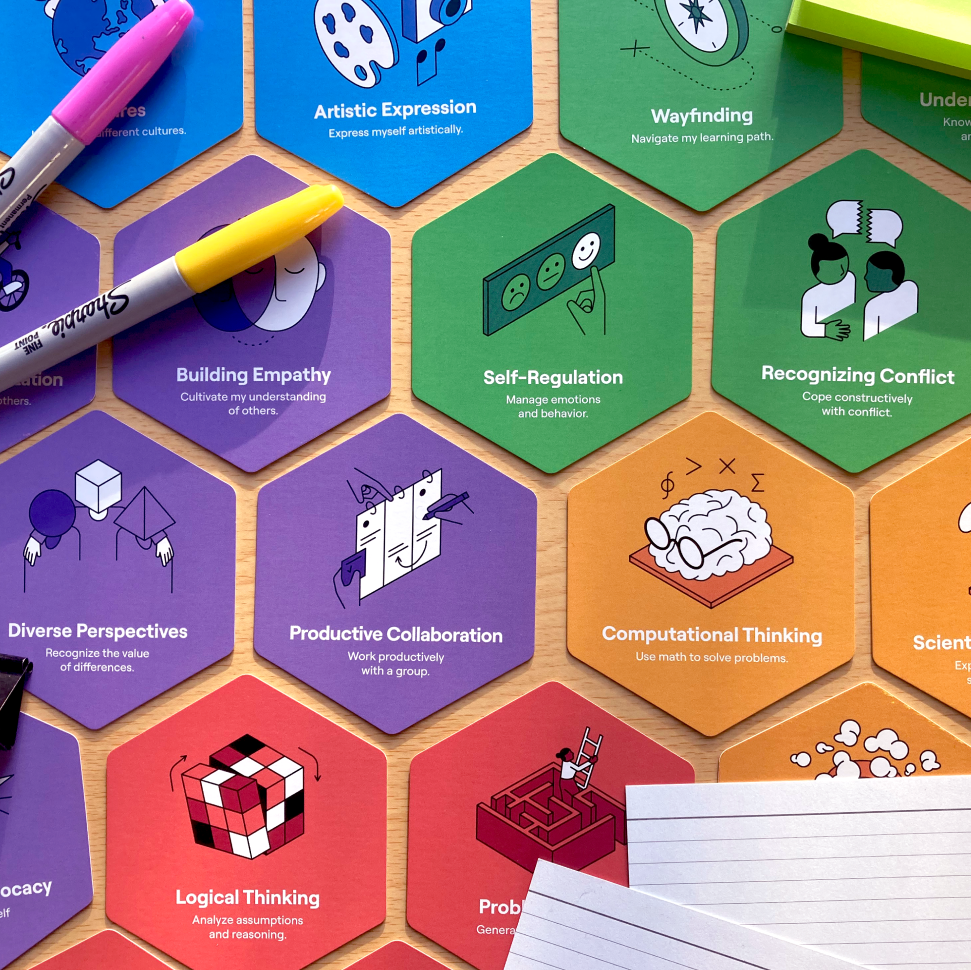
Try it out – design your own project

Recent Designs

Kitchen Lab: Bio, Chem, and Sizzle

Grade Level(s): High School

Initial ideas

This project will be focused on kitchen science that combines Biology, Chemistry, and Physics. Each lesson should focus on a cooking technique, a food type (biology), what happens when cooking (chemistry), and how cooking happens (physics). The project should end with students sharing a recipe of their choice with each of the components explained (bio, chem, and phys). The recipe can be newly created or a family favorite. Ideally, it will be easy enough to create in the classroom, either fully or partially.

Food Poisoning: Cells, Genes, and Germs

Grade Level(s): High School

Initial ideas

Create a two week lesson about the basics of cell biology and the central dogma centered around a phenomenon of of an ecoli infectious disease through food poisoning

Zombie Zappers: Machines vs. the Undead

Grade Level(s): High School

Initial ideas

This is a High School Biology and Physics integrated science course. Students will start the 5 weeks of this course in the role of biology researchers who have already learned about and compared body systems from different animal groups and plants to humans, including dissection. Students learned there was a zombie outbreak illness and used evidence to determine the cause of the illness. In this 5-week case study, students must use knowledge of simple machines to design a compound machine that can be used to kill zombies. Week 1 of the course should be focused on learning about simple machines and the forces involved. The remaining weeks should build toward the final project design and explanation. Final Project will be students creating the final machine using easy to access materials like cardboard. Additional project info: Guiding Questions How can we use knowledge of zombie anatomy and the physics of simple machines to create a trap device to protect us from a zombie attack? Learning Targets Design a compound machine composed of at least 2 simple machines as a trap to stop or kill zombies. Analyze the forces in the compound machine design to explain how the machine can be used to stop or kill zombies. Supporting Target/s Collaborate with teammates to achieve the desired goal of a fully explained and effective zombie stopping/killing machine. Project Summary In this project, students use their understanding of human body systems and the physics of simple machines to design a compound machine that stops or kills zombies in a fictional zombie attack at our school. Success Criteria Analyze hypothetical data about zombies to determine the needed forces in a machine to stop or kill a zombie. Construct a scientific explanation to justify the use of a machine design to stop or kill a zombie. Students should use systems thinking diagrams like stock and flow diagrams or physics forces models where appropriate. These diagrams will help students explain their learning and choices for their final explanation. The lessons should have lots of opportunity for sense-making through productive discourse protocols. There should be benchmark assessments to determine if students are on track for their final design with explanation of forces.

Roots, Routes, and Removed Lands

Grade Level(s): High School

Initial ideas

Students research the history of local Native American communities and how and why they were removed from their ancestral homelands. They produce a StoryMap that makes this history visible to their wider community, combining maps, primary sources, and narrative. Culminates in a community showcase where students present their StoryMaps to an audience beyond the classroom.

Zombie Systems Sleuths

Grade Level(s): High School

Initial ideas

This is a High School Biology and Physics integrated science course. Students will start the 5 weeks of this course in the role of biology researchers learning about and comparing body systems from different animal groups and plants to humans. There will be a rat dissection activity. Students must gain an understanding of human body systems and knowing the differences in the kingdoms of life. During this unit, a zombie outbreak will occur. Students will gather data and explore possibilities about what might be the cause of the outbreak. Final Project will be students researching and choosing a causative organism (fungal, bacterial, or viral) for the zombie apocalypse outbreak. Their response will be supported with evidence from throughout the case study. Additional project info: Guiding Questions How can we compare body systems and plans among various organisms to better understand human body systems? How do scientists search for and determine the causative agent of a newly emerged illness? Learning Targets Connect similarities and differences among body plans and systems across kingdoms of life. Investigate the cause of a novel disease in human populations. Supporting Target/s Analyze multiple data sets and varied media (test, video, etc.) to better understand the causes and effects of a unique illness in humans. Project Summary In this project, students build upon their understanding of human body systems and various infectious organisms to determine the cause of a unique illness outbreak. By investigating the hypothetical causative agents, students will respond with a claim, supported by evidence and reasoning, as to the actual cause of the outbreak. Success Criteria Connect human body systems to the impacts of the outbreak illness. Analyze cause using a stock & flow model or anatomical model. Analyze data collected from the outbreak to understand the potential causes of the illness. Construct a scientific explanation that identifies the likely causative agent of the outbreak that includes a claim with evidence and reasoning. Students should learn about systems thinking diagrams like stock and flow diagrams. These diagrams will help students explain their learning and choices for their final explanation. The lessons should have lots of opportunity for sense-making through productive discourse protocols. There should be benchmark assessments to determine if students are on track for their final explanation.

Courtroom Clash: The Mock Trial Challenge

Grade Level(s): 8th Grade

Initial ideas

Host a mock trial to teach students about the legal system, critical thinking, and public speaking. They will role-play different court positions and work on a fictional case.

Kindergarten Discovery Guide

Grade Level(s): Kindergarten

Initial ideas

At ACE students will have to present their learning through the process called "Defense of Learning Showcase" The End-of-Module Performance Task will be the end product. Students will have the option of the following to complete the task: Create a Kindergarten Guidebook that answers the essential question: "What Will I Discover in Kindergarten?" Students will synthesize their learning by creating a guidebook that teaches families, future kindergarten students, and community members about kindergarten. The guidebook may include: Drawings and photographs Classroom maps Labels and captions Student reflections Interview responses Kindergarten tips and advice Descriptions of routines and expectations Examples of learning experiences Sharing Their Knowledge Students can share their guidebooks through multiple authentic audiences and formats: Classroom publishing celebration Family showcase event Kindergarten orientation for incoming students Digital class book or slideshow Gallery walk with other classes Video recordings explaining each page Student presentations to families and community members By engaging in this inquiry project, students answer the essential question, "What will I discover in kindergarten?", while demonstrating the ACE competencies through authentic research, collaboration, reflection, and communication. The final guidebook serves as evidence of their learning and helps others feel excited, informed, and prepared for their own kindergarten journey.

Fitness Quest: Level Up Together

Grade Level(s): High School

Initial ideas

Fitness Quest is grounded in the belief that every student can be successful in physical education when success is defined by growth, participation, and personal achievement rather than athletic ability. The unit blends project-based learning, gamification, cooperative learning, and standards-based assessment to create an engaging and inclusive learning environment. Students work in small collaborative groups to investigate fitness concepts, complete movement challenges, reflect on their progress, and apply their learning to real-world wellness. Rather than competing against one another, students focus on improving from their individual starting points while contributing to the success of their team. The culminating portfolio and guild-designed fitness challenge provide authentic evidence of learning and encourage students to view physical activity as an achievable and lifelong pursuit.

Design your own project
Click here to learn more about the XQ Competencies, designed by XQ Institute.