9th Grade  Project 8 weeks

Probabilidad Fiesta: Stats in Latin Spice!

GGomez9
Updated
CCSS.Math.Content.HSS-IC.A.1
CCSS.Math.Content.HSS-IC.B.6
CCSS.Math.Content.HSS-IC.B.4
CCSS.Math.Content.HSS-IC.A.1
CCSS.Math.Content.HSS-ID.A.2
+ 11 more
1-pager

Purpose

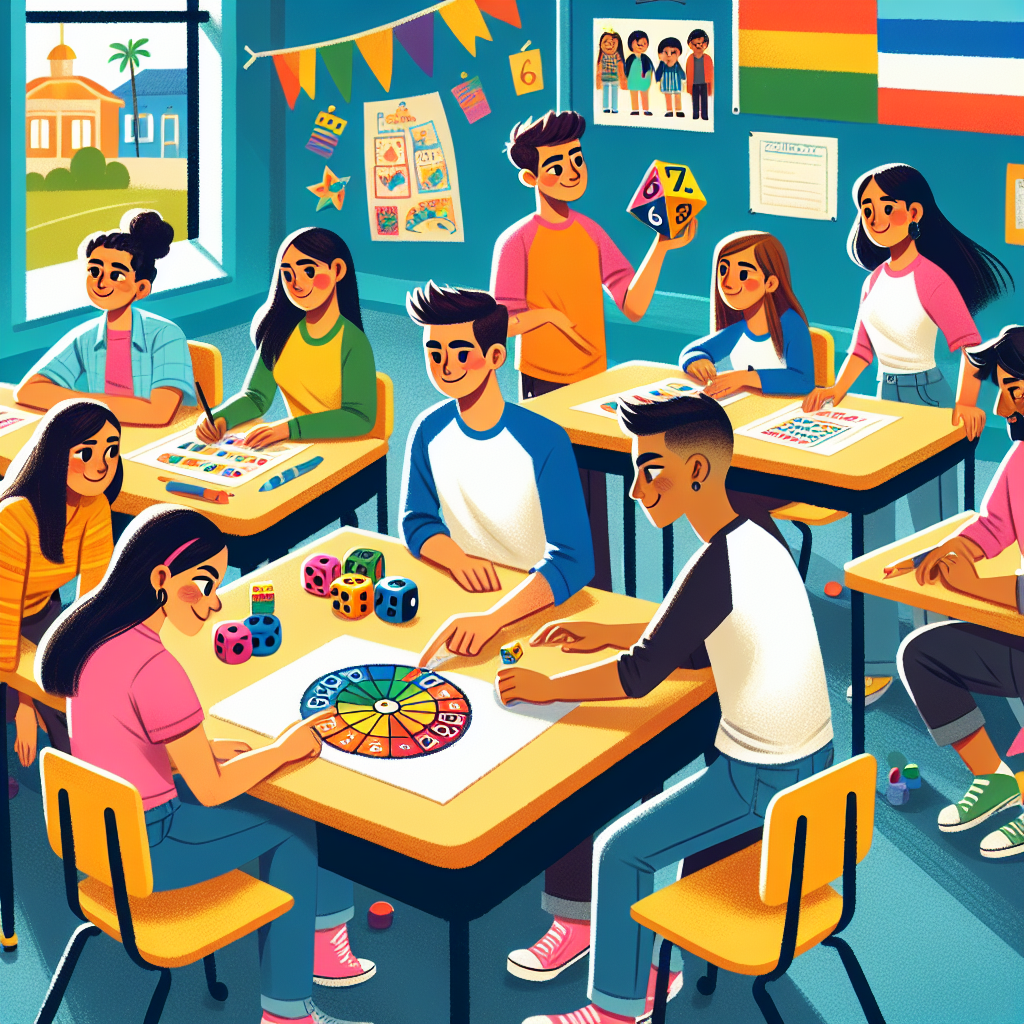
Students will collaboratively design their own board game, incorporating probability in a way that reflects the dynamics of popular Latin American sports and cultural events. This project-based experience allows students to draw from their cultural backgrounds and community knowledge to understand and solve probability challenges. By creating a tangible product, students will demonstrate critical thinking and apply mathematical concepts to meaningful, real-world situations, fostering both individual growth and cultural appreciation.

Learning goals

Guide students in designing and creating their own culturally relevant board games that integrate probability, enhancing comprehension through real-world applications. Engage students in exploring probability by analyzing case studies or given scenarios related to decision-making in their communities. Strengthen skills in data interpretation and presentation through hands-on experiments that explore probability in everyday scenarios. Encourage critical reflection and peer feedback, promoting a deeper understanding of probability's role in community practices and Latin American sports strategies.

Standards
  • [Common Core] CCSS.Math.Content.HSS-IC.A.1 - Understand statistics as a process for making inferences about population parameters based on a random sample from that population.
  • [Common Core] CCSS.Math.Content.HSS-IC.B.6 - Evaluate reports based on data.
  • [Common Core] CCSS.Math.Content.HSS-IC.B.4 - Use data from a sample survey to estimate a population mean or proportion; develop a margin of error through the use of simulation models for random sampling.
  • [Common Core] CCSS.Math.Content.HSS-IC.A.1 - Understand statistics as a process for making inferences about population parameters based on a random sample from that population.
  • [Common Core] CCSS.Math.Content.HSS-ID.A.2 - Use statistics appropriate to the shape of the data distribution to compare center (median, mean) and spread (interquartile range, standard deviation) of two or more different data sets.
  • [Common Core] CCSS.Math.Practice.MP7 - Look for and make use of structure.
  • [Common Core] CCSS.Math.Content.HSS-MD.B.6 - (+) Use probabilities to make fair decisions (e.g., drawing by lots, using a random number generator).
  • [Common Core] CCSS.Math.Content.HSS-ID.A.4 - Use the mean and standard deviation of a data set to fit it to a normal distribution and to estimate population percentages. Recognize that there are data sets for which such a procedure is not appropriate. Use calculators, spreadsheets, and tables to estimate areas under the normal curve.
  • [Common Core] CCSS.Math.Practice.MP4 - Model with mathematics.
  • [Common Core] CCSS.Math.Content.HSS-ID.A.1 - Represent data with plots on the real number line (dot plots, histograms, and box plots).
Competencies
  • Critical Thinking & Problem Solving - Students consider a variety of innovative approaches to address and understand complex questions that are authentic and important to their communities.
  • Collaboration - Students co-design projects with peers, exercise shared-decision making, strengthen relational agency, resolve conflict, and assume leadership roles.
  • Effective Communication - Students practice listening to understand, communicating with empathy, and share their learning through exhibiting, presenting and reflecting on their work.
  • Content Expertise - Students develop key competencies, skills, and dispositions with ample opportunities to apply knowledge and engage in work that matters to them.
  • Academic Mindset - Students establish a sense of place, identity, and belonging to increase self-efficacy while engaging in critical reflection and action.
  • Self Directed Learning - Students use teacher and peer feedback and self-reflection to monitor and direct their own learning while building self knowledge both in and out of the classroom.

Products

Students will design a culturally-specific board game that incorporates soccer strategies with probability concepts, providing rules in both Spanish and English to authentically represent Latin American sports culture. Throughout the project, each student will contribute a video entry that articulates how probability is applied within their board game, showcasing their acquired skills and cultural insights. This hands-on creation will engage students with real-world phenomena, ensuring meaningful participation and success for every student.

Launch

Initiate the project with a lively brainstorming session where students imagine creating board games centered on popular Latin American sports like soccer, integrating culturally significant elements. Guide students to share personal experiences with these sports and how probability factors into games and strategies. Use these discussions to inspire and fuel creativity as students begin designing their culturally relevant board games, leveraging their own perspectives and community insights into the process.

Exhibition

Host a vibrant 'Latin American Probability Showcase' where students proudly unveil their custom-designed board games, illustrating soccer strategies influenced by probability concepts. Arrange interactive game areas where peers and community members can actively participate, playing the games and experiencing first-hand the application of probability in culturally relevant contexts. Ensure that all board games feature bilingual instructions to facilitate inclusive engagement and meaningful cultural exchange among participants.