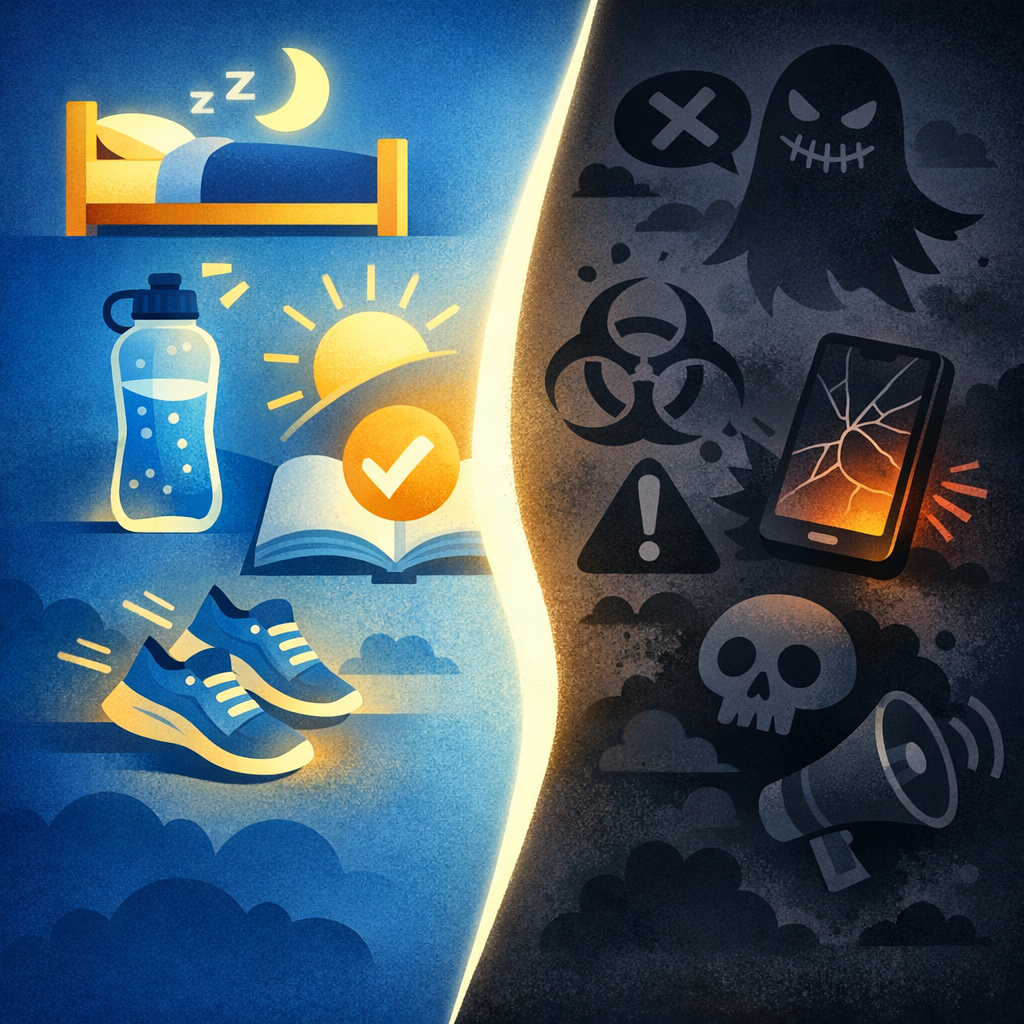
Students investigate how daily habits and popular health claims affect how seventh graders feel, focus, and function by collecting personal habit data, comparing it to class patterns, and building evidence-based arguments about the body as interacting systems. They evaluate misinformation about food, drink, stress, and wellness trends using scientific sources and feedback from a registered dietitian and youth mental health counselor. Through weekly reflection, critique, and revision, they test strategies, refine their claims, and communicate findings in comparative data art, data story posters, video reflections, and a public wellness campaign for their school community.
Learning goals
Students will use evidence from personal habit tracking, anonymous class patterns, and vetted health sources to make and revise claims about which habits help seventh graders feel, focus, and function at their best. They will explain how body systems interact and how daily choices related to nutrition, sleep, movement, stress, and environment affect those systems, using patterns and cause-and-effect reasoning. Students will evaluate health trend claims for credibility, communicate accurate wellness messages through posters, data art, video reflections, and public presentations, and improve their work through feedback from peers, a dietitian, and a mental health counselor. They will also design practical ways to monitor and reduce environmental impacts connected to health habits, such as food and drink choices, while building collaboration, self-direction, and reflective habits.
Standards
[Next Generation Science Standards] LS.2.D - Social Interactions and Group Behavior
[Next Generation Science Standards] MS-ESS3-3 - Apply scientific principles to design a method for monitoring and minimizing a human impact on the environment.
[Next Generation Science Standards] MS-ESS3-3 - Apply scientific principles to design a method for monitoring and minimizing a human impact on the environment.
[Next Generation Science Standards] LS.2.A - Interdependent Relationships in Ecosystems
Critical Thinking & Problem Solving - Students consider a variety of innovative approaches to address and understand complex questions that are authentic and important to their communities.
Self Directed Learning - Students use teacher and peer feedback and self-reflection to monitor and direct their own learning while building self knowledge both in and out of the classroom.
Effective Communication - Students practice listening to understand, communicating with empathy, and share their learning through exhibiting, presenting and reflecting on their work.
Content Expertise - Students develop key competencies, skills, and dispositions with ample opportunities to apply knowledge and engage in work that matters to them.
Collaboration - Students co-design projects with peers, exercise shared-decision making, strengthen relational agency, resolve conflict, and assume leadership roles.
Academic Mindset - Students establish a sense of place, identity, and belonging to increase self-efficacy while engaging in critical reflection and action.
Products
Throughout the project, students create habit trackers, weekly data story posters, short video reflections, and revised claim-check drafts that test whether popular health advice is accurate for seventh graders. They also make comparative data art that layers their own habit patterns with an anonymous class trend and uses evidence from vetted sources, including feedback from the registered dietitian and youth mental health counselor. By the end, small groups produce a student wellness campaign with myth-versus-fact games, interactive signs, and concise evidence-based recommendations about habits that help students feel, focus, and function at their best. Final products are designed for public sharing at the Claim Check Carnival and Healthy Habits Fair with younger students, families, and community partners.
Launch
Open with a “Wellness Under Pressure” simulation: students rotate through short tasks in a loud, chaotic setup and then repeat similar calm, quiet tasks while tracking focus, mood, heart rate, or perceived stress. Debrief by comparing patterns they notice in their body systems and behavior, then introduce several popular teen health claims and challenge teams to sort them into “trust,” “question,” or “need evidence.” Invite the registered dietitian and youth counselor to video-message or visit briefly with one question each that students will investigate over the next five weeks. Close by having students generate first-draft claims about which habits help seventh graders feel, focus, and function at their best, then set up their personal habit trackers.
Exhibition
Host a Claim Check Carnival and Healthy Habits Fair where small groups run interactive booths for younger students, families, and staff using their comparative data art posters, myth-versus-fact games, and short explanations of which habits help seventh graders feel, focus, and function at their best. Students should defend their claims with evidence from personal trackers, anonymous class patterns, and vetted sources, while a registered dietitian and youth mental health counselor ask questions and recognize accurate, useful wellness messages. Include a community circle at the end so visitors can name one health claim they will question differently and one habit they may try, giving students authentic feedback on the clarity and impact of their work. To deepen the public purpose, display QR codes linking to students’ weekly video reflections so guests can see how claims changed through critique, revision, and new evidence.