7th Grade  Project 5 weeks

Spot the Spin

Brent S
Updated
CCSS.ELA-Literacy.WHST.6-8.7
CCSS.ELA-Literacy.W.7.7
CCSS.ELA-Literacy.RST.6-8.9
CCSS.ELA-Literacy.RL.7.9
CCSS.ELA-Literacy.RH.6-8.9
+ 7 more
1-pager

Purpose

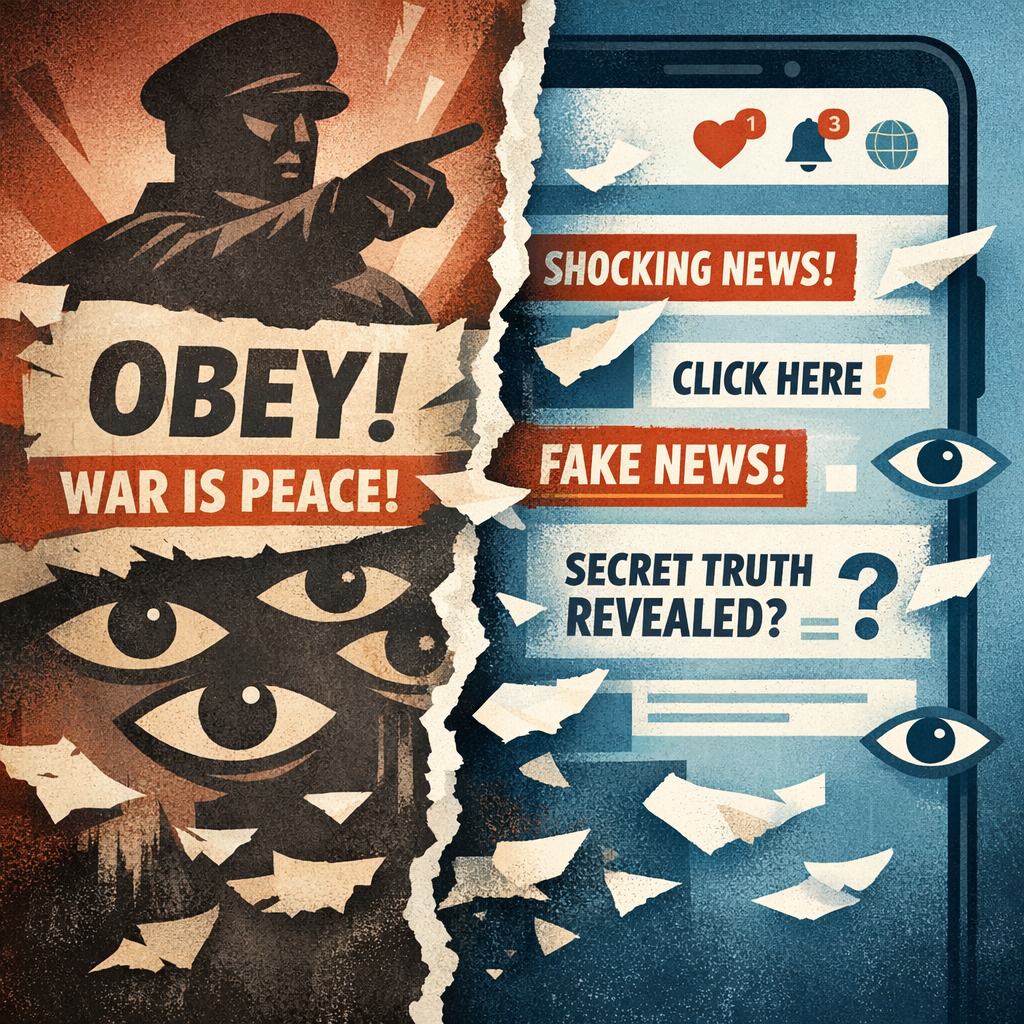
Students investigate how World War II propaganda shaped public opinion and compare those techniques to misinformation and persuasive media they encounter today. Through short research, source analysis, critique, and revision, they learn to evaluate credibility, analyze audience and purpose, and communicate evidence-based conclusions about responsibility in creating and sharing information during conflict. The work leads to a public Then and Now Expo where teams present paired poster stations, written analysis, and an evidence hunt that helps an authentic audience spot persuasive techniques across time.

Learning goals

Students will conduct short research using primary and secondary sources to analyze how World War II propaganda used audience, purpose, tone, imagery, symbols, color, and caption choices to shape public opinion, then compare those techniques to modern media and misinformation. They will evaluate the credibility and accuracy of print, digital, video, and image sources, compare multimedia and text-based accounts, and cite evidence clearly in a written analysis and interactive gallery display. Students will collaborate to critique and revise paired Then and Now poster stations, communicate their findings through captions, evidence-hunt questions, and expo presentations, and reflect on how their responsibility as creators and consumers of information has changed.

Standards
  • [Common Core] CCSS.ELA-Literacy.WHST.6-8.7 - Conduct short research projects to answer a question (including a self-generated question), drawing on several sources and generating additional related, focused questions that allow for multiple avenues of exploration.
  • [Common Core] CCSS.ELA-Literacy.W.7.7 - Conduct short research projects to answer a question, drawing on several sources and generating additional related, focused questions for further research and investigation.
  • [Common Core] CCSS.ELA-Literacy.RST.6-8.9 - Compare and contrast the information gained from experiments, simulations, video, or multimedia sources with that gained from reading a text on the same topic.
  • [Common Core] CCSS.ELA-Literacy.RL.7.9 - Compare and contrast a fictional portrayal of a time, place, or character and a historical account of the same period as a means of understanding how authors of fiction use or alter history.
  • [Common Core] CCSS.ELA-Literacy.RH.6-8.9 - Analyze the relationship between a primary and secondary source on the same topic.
  • [Common Core] CCSS.ELA-Literacy.RH.6-8.10 - By the end of grade 8, read and comprehend history/social studies texts in the grades 6—8 text complexity band independently and proficiently.
  • [Common Core] CCSS.ELA-Literacy.WHST.6-8.8 - Gather relevant information from multiple print and digital sources, using search terms effectively; assess the credibility and accuracy of each source; and quote or paraphrase the data and conclusions of others while avoiding plagiarism and following a standard format for citation.
Competencies
  • Critical Thinking & Problem Solving - Students consider a variety of innovative approaches to address and understand complex questions that are authentic and important to their communities.
  • Effective Communication - Students practice listening to understand, communicating with empathy, and share their learning through exhibiting, presenting and reflecting on their work.
  • Collaboration - Students co-design projects with peers, exercise shared-decision making, strengthen relational agency, resolve conflict, and assume leadership roles.
  • Content Expertise - Students develop key competencies, skills, and dispositions with ample opportunities to apply knowledge and engage in work that matters to them.
  • Self Directed Learning - Students use teacher and peer feedback and self-reflection to monitor and direct their own learning while building self knowledge both in and out of the classroom.

Products

Students will create annotated analyses of World War II propaganda posters, speeches, or film clips; a source credibility tracker with citations; weekly draft posters revised through gallery-style critique; and short video or audio reflections on persuasive techniques and responsibility. In teams, they will produce a digital propaganda-style poster and a written compare/contrast analysis that pairs one WWII message with one modern media example, explaining audience, purpose, tone, imagery, color, symbols, and misinformation clues. By the end, each team will build an interactive Then and Now poster station for the expo with two side-by-side visuals, concise evidence-based captions, a visitor evidence-hunt card, and a before-and-after self-assessment showing how their thinking changed over five weeks.

Launch

Open with a “Truth or Technique Summit” where students rotate through WWII posters, speech clips, headlines, ads, and social media posts, sorting each as informative, persuasive, or misleading and defending their thinking with quick evidence. As a class, build an anchor chart of persuasive moves, misinformation clues, audience, purpose, tone, imagery, and color, then introduce the essential questions and the final Then and Now Expo. End with a brief whole-class debate on who is responsible for questioning messages during conflict, followed by teams choosing one WWII example and one modern media example they want to investigate first.

Exhibition

Host a Then and Now Expo where teams present side-by-side stations featuring one WWII propaganda poster, one modern media example, and concise captions explaining audience, purpose, tone, persuasive techniques, and misinformation clues. Invite families, classmates, a museum educator or archivist, and a media studies or journalism partner to rotate through the gallery while students lead a short evidence hunt using guiding question cards and respond to visitor questions with evidence from primary and secondary sources. Include a listening station with students’ two-minute audio or video reflections about one message they now question more carefully and the strategy that made it persuasive. End with a feedback wall where visitors leave comments about which comparisons felt most relevant today and how responsibly people should create, share, and question information during conflict.