About Us Impact News Pricing Contact Us Explore
Make a copy
About Us Impact News Pricing Contact Us Explore
Tools
Project-Based Learning Performance Assessment Student-Led Conferences Digital Portfolios
Framework
Loading
Loading
    Products & Rubric
12th Grade  Project 10 weeks

Scarcity Seekers: Mapping Healthcare Gaps

Melanie S
Mar 24, 2026
Updated Apr 22, 2026
Critical Thinking & Problem Solving
Effective Communication
Content Expertise
Collaboration
1-pager

Purpose

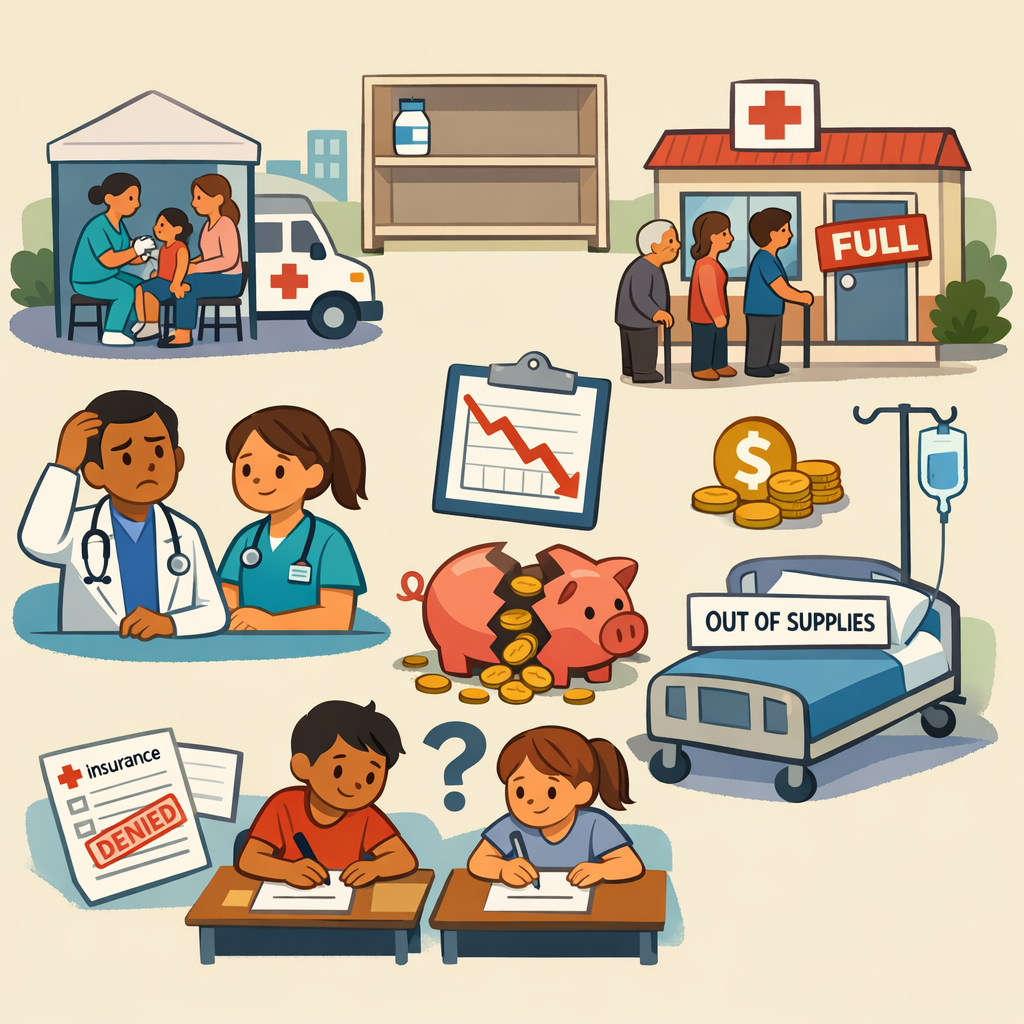
This learning experience centers on understanding healthcare scarcity and its effects on community access, using Tucson as a case study. Students will begin with a classroom roundtable discussing health-related challenges faced by uninsured residents, followed by data collection and engagement with local healthcare partners to gain insight into real-world patient issues. Through collaborative mapping and interactive research, students aim to provide practical solutions, culminating in a digital resource that assists Tucson residents in accessing vital healthcare services.

Learning goals

Through a classroom roundtable discussion, students will explore healthcare scarcity and its myriad effects, guiding their inquiry into local uninsured populations. They will connect with community healthcare partners to gather data on patient challenges and access issues. Students will enhance their research skills via data collection and primary source interviews, compiling findings to inform a collaborative mapping of Tucson's healthcare landscape. They will develop critical thinking by innovating solutions to scarcity and refine communication skills through user-focused presentations, utilizing feedback to improve their project's impact. Collaborative efforts will drive the creation and continuous updating of an accessible website for local healthcare resources.

Competencies
  • Critical Thinking & Problem Solving - Students consider a variety of innovative approaches to address and understand complex questions that are authentic and important to their communities.
  • Effective Communication - Students practice listening to understand, communicating with empathy, and share their learning through exhibiting, presenting and reflecting on their work.
  • Content Expertise - Students develop key competencies, skills, and dispositions with ample opportunities to apply knowledge and engage in work that matters to them.
  • Collaboration - Students co-design projects with peers, exercise shared-decision making, strengthen relational agency, resolve conflict, and assume leadership roles.

Products

Students will collaboratively develop a user-friendly website dedicated to addressing Tucson’s healthcare scarcity, including mental health, addiction, crisis, emergency, dental care, pregnancy services, and children's healthcare resources. Launching with a classroom roundtable to scrutinize healthcare scarcity issues, they will proceed by collecting data on Tucson's uninsured while connecting with local community healthcare partners for insights on patient challenges. Integrating QR code technology for instant access, the website will be unveiled during the JTED community exhibition, allowing for continuous improvement through real-time feedback and student-driven updates.

Launch

Begin with a classroom roundtable discussion, encouraging students to discuss what scarcity means to them and how it impacts healthcare availability in Tucson. Engage in data exploration, examining statistics on uninsured populations and discussing firsthand insights shared by community healthcare partners regarding patient challenges. Set the stage for the project by collaboratively identifying areas of urgent need, focusing on real issues faced by local residents, and laying the groundwork for student-driven research and solutions.

Exhibition

At the JTED community exhibition, invite local healthcare professionals and community partners to interact with digital maps and the resource website created by students, while using QR codes for direct access. Facilitate a classroom roundtable where students discuss their research findings on Tucson’s uninsured and share insights from their collaboration with healthcare partners. Encourage conversations on healthcare scarcity and present the students' digital solutions, allowing visitors to provide real-time feedback and take action using provided resources. This interactive exhibition aims to amplify student impact and foster community dialogue around local healthcare challenges.

Plan
By Phase By Day Calendar
Launch Scarcity Question Method Plan Evidence Collection Map & Verify Analyze & Present Showcase
Launch
Students will launch the Tucson healthcare scarcity investigation by analyzing local access data, building shared understanding of scarcity in healthcare, studying the live website and QR-code product expectations, and generating evidence-based inquiry questions that will guide later research, mapping, and community-connected fieldwork.
Days 1 - 5
📊 Tucson Care Gap Gallery
Launch 50m
🧠 Scarcity in Tucson Healthcare
Knowledge/Skill Building 45m
🗺️ Tucson Access Map Warmup
Knowledge/Skill Building 50m
❓ Evidence Question Tuning
Project Work 55m
✅ Inquiry Notebook Checkpoint
Assessment 50m
No activities have been added to this phase yet.

Edit Phase

Loading...
Scarcity Question
Students will investigate Tucson healthcare scarcity through close reading, partner-informed analysis, and structured inquiry so they can frame a focused research question and defend a testable hypothesis about which access gaps matter most in the community.
Days 6 - 13
🧩 Tucson Care Gap Mystery
Launch 50m
📚 Scarcity Signals in Articles
Knowledge/Skill Building 50m
🗺️ Tucson Access Pattern Sort
Knowledge/Skill Building 50m
🎯 Strong Questions and Hypotheses
Knowledge/Skill Building 50m
✍️ Question and Hypothesis Draft
Deliverable 50m
💬 Peer Tuning on Inquiry Drafts
Project Work 50m
🔍 Partner Lens Revision Check
Project Work 50m
✅ Tucson Inquiry Gate
Assessment 50m
No activities have been added to this phase yet.

Edit Phase

Loading...
Method Plan
Students will design and refine a transparent investigation plan for Tucson healthcare access by selecting evidence categories, building interview tools, testing documentation systems, and getting critique from peers and community partners before beginning fieldwork for the live resource website and QR-linked public resource.
Days 14 - 21
🧭 Tucson Evidence Plan Launch
Launch 45m
📋 Source Credibility and Data Fields
Knowledge/Skill Building 50m
🎙️ Clinic Interview Protocol Studio
Knowledge/Skill Building 50m
🗂️ Research Toolkit Build
Project Work 55m
🔍 Method Critique on Google Docs
Deliverable 50m
🤝 Partner Feedback with JTED Caregiver Class
Community Experience 50m
🛠️ Revised Fieldwork Packet
Project Work 50m
✅ Tucson Method Approval Conference
Assessment 45m
No activities have been added to this phase yet.

Edit Phase

Loading...
Evidence Collection
Students will gather and document verifiable Tucson healthcare access evidence through live website checks, partner-informed outreach, and structured field research. They will use their Phase 3 methods to collect comparable details across service categories, test the reliability of sources, track uncertainty, and revise records through peer critique before advancing to dataset building and mapping.
Days 22 - 29
🧭 Evidence Standards for Tucson Services
Knowledge/Skill Building 45m
📞 Outreach Scripts for Clinic Check-Ins
Knowledge/Skill Building 45m
💻 Tucson Resource Search Sprint
Research 50m
🏥 Clinic and Partner Check-Ins
Community Experience 50m
🚌 Transportation and Vaccine Access Pull
Research 50m
🔍 Source Reliability Peer Audit
Deliverable 50m
🗂 Verified Evidence Log Checkpoint
Assessment 60m
🔁 Gap-Fill Revision Round
Project Work 50m
No activities have been added to this phase yet.

Edit Phase

Loading...
Map & Verify
Students will organize fieldwork evidence into a traceable Tucson healthcare access dataset, build a shared digital map tied to the live website/QR resource, and verify accuracy through structured peer review, source checks, and partner-informed revisions before moving into formal analysis.
Days 30 - 37
🗺️ Tucson Access Map Criteria
Knowledge/Skill Building 45m
📊 Shared Resource Dataset Build
Project Work 50m
🧭 Source Reliability Sorting
Knowledge/Skill Building 45m
📍 Google My Maps Layer Draft
Deliverable 50m
🔍 Two-Peer Dataset Audit
Deliverable 50m
☎️ Clinic Verification Sprint
Community Experience 50m
🧩 Gap and Limitation Review
Research 50m
✅ Verified Map Readiness Check
Assessment 50m
No activities have been added to this phase yet.

Edit Phase

Loading...
Analyze & Present
Students will analyze the Tucson healthcare access dataset and collaborative map to identify patterns, anomalies, and service gaps; test interpretations against contradictory evidence; refine the live resource website and QR-linked pages for public use; and share evidence-based conclusions with the JTED community and local healthcare partners for critique that informs final revisions.
Days 38 - 45
📊 Tucson Access Pattern Mini-Lesson
Knowledge/Skill Building 50m
🗺️ Scarcity Claims with Map Evidence
Project Work 50m
🧭 Limits, Bias, and Uncertainty Check
Knowledge/Skill Building 50m
🗣️ Evidence Debate and Peer Critique
Deliverable 50m
💻 Website Evidence Panels Draft
Project Work 50m
🎤 JTED Exhibition Talk Rehearsal
Knowledge/Skill Building 50m
🤝 JTED Community QR Feedback Session
Community Experience 50m
✅ Tucson Scarcity Findings Defense
Assessment 50m
No activities have been added to this phase yet.

Edit Phase

Loading...
Showcase
Students will finalize and publicly share their Tucson healthcare access website and QR-linked resources with the JTED community and local healthcare partners, respond to critique using evidence from their investigation, and document how their understanding of scarcity, access, and community responsibility evolved through the project.
Days 46 - 50
🎤 Tucson Website Showcase Rehearsal
Knowledge/Skill Building 40m
🗣️ Feedback Carousel on QR Pages
Deliverable 50m
🛠️ Final Website and QR Update
Project Work 50m
🏥 JTED Health Access Exhibition
Community Experience 60m
📊 Scarcity Roundtable and Defense
Assessment 50m
No activities have been added to this phase yet.

Edit Phase

Loading...
Launch Days 1–5
Day 1
📊 Tucson Care Gap Gallery
Launch 50m
Day 2
🧠 Scarcity in Tucson Healthcare
Knowledge/Skill Building 45m
Day 3
🗺️ Tucson Access Map Warmup
Knowledge/Skill Building 50m
Day 4
❓ Evidence Question Tuning
Project Work 55m
Day 5
✅ Inquiry Notebook Checkpoint
Assessment 50m
Scarcity Question Days 6–13
Day 6
🧩 Tucson Care Gap Mystery
Launch 50m
Day 7
📚 Scarcity Signals in Articles
Knowledge/Skill Building 50m
Day 8
🗺️ Tucson Access Pattern Sort
Knowledge/Skill Building 50m
Day 9
🎯 Strong Questions and Hypotheses
Knowledge/Skill Building 50m
Day 10
✍️ Question and Hypothesis Draft
Deliverable 50m
Day 11
💬 Peer Tuning on Inquiry Drafts
Project Work 50m
Day 12
🔍 Partner Lens Revision Check
Project Work 50m
Day 13
✅ Tucson Inquiry Gate
Assessment 50m
Method Plan Days 14–21
Day 14
🧭 Tucson Evidence Plan Launch
Launch 45m
Day 15
📋 Source Credibility and Data Fields
Knowledge/Skill Building 50m
Day 16
🎙️ Clinic Interview Protocol Studio
Knowledge/Skill Building 50m
Day 17
🗂️ Research Toolkit Build
Project Work 55m
Day 18
🔍 Method Critique on Google Docs
Deliverable 50m
Day 19
🤝 Partner Feedback with JTED Caregiver Class
Community Experience 50m
Day 20
🛠️ Revised Fieldwork Packet
Project Work 50m
Day 21
✅ Tucson Method Approval Conference
Assessment 45m
Evidence Collection Days 22–29
Day 22
🧭 Evidence Standards for Tucson Services
Knowledge/Skill Building 45m
Day 23
📞 Outreach Scripts for Clinic Check-Ins
Knowledge/Skill Building 45m
Day 24
💻 Tucson Resource Search Sprint
Research 50m
Day 25
🏥 Clinic and Partner Check-Ins
Community Experience 50m
Day 26
🚌 Transportation and Vaccine Access Pull
Research 50m
Day 27
🔍 Source Reliability Peer Audit
Deliverable 50m
Day 28
🗂 Verified Evidence Log Checkpoint
Assessment 60m
Day 29
🔁 Gap-Fill Revision Round
Project Work 50m
Map & Verify Days 30–37
Day 30
🗺️ Tucson Access Map Criteria
Knowledge/Skill Building 45m
Day 31
📊 Shared Resource Dataset Build
Project Work 50m
Day 32
🧭 Source Reliability Sorting
Knowledge/Skill Building 45m
Day 33
📍 Google My Maps Layer Draft
Deliverable 50m
Day 34
🔍 Two-Peer Dataset Audit
Deliverable 50m
Day 35
☎️ Clinic Verification Sprint
Community Experience 50m
Day 36
🧩 Gap and Limitation Review
Research 50m
Day 37
✅ Verified Map Readiness Check
Assessment 50m
Analyze & Present Days 38–45
Day 38
📊 Tucson Access Pattern Mini-Lesson
Knowledge/Skill Building 50m
Day 39
🗺️ Scarcity Claims with Map Evidence
Project Work 50m
Day 40
🧭 Limits, Bias, and Uncertainty Check
Knowledge/Skill Building 50m
Day 41
🗣️ Evidence Debate and Peer Critique
Deliverable 50m
Day 42
💻 Website Evidence Panels Draft
Project Work 50m
Day 43
🎤 JTED Exhibition Talk Rehearsal
Knowledge/Skill Building 50m
Day 44
🤝 JTED Community QR Feedback Session
Community Experience 50m
Day 45
✅ Tucson Scarcity Findings Defense
Assessment 50m
Showcase Days 46–50
Day 46
🎤 Tucson Website Showcase Rehearsal
Knowledge/Skill Building 40m
Day 47
🗣️ Feedback Carousel on QR Pages
Deliverable 50m
Day 48
🛠️ Final Website and QR Update
Project Work 50m
Day 49
🏥 JTED Health Access Exhibition
Community Experience 60m
Day 50
📊 Scarcity Roundtable and Defense
Assessment 50m

June 2026

Mon
Tue
Wed
Thu
Fri
8 Day 1
Launch
📊 Tucson Care Gap Gallery
9 Day 2
🧠 Scarcity in Tucson Healthcare
10 Day 3
🗺️ Tucson Access Map Warmup
11 Day 4
❓ Evidence Question Tuning
12 Day 5
✅ Inquiry Notebook Checkpoint
15 Day 6
Scarcity Question
🧩 Tucson Care Gap Mystery
16 Day 7
📚 Scarcity Signals in Articles
17 Day 8
🗺️ Tucson Access Pattern Sort
18 Day 9
🎯 Strong Questions and Hypotheses
19 Day 10
✍️ Question and Hypothesis Draft
22 Day 11
💬 Peer Tuning on Inquiry Drafts
23 Day 12
🔍 Partner Lens Revision Check
24 Day 13
✅ Tucson Inquiry Gate
25 Day 14
Method Plan
🧭 Tucson Evidence Plan Launch
26 Day 15
📋 Source Credibility and Data Fields

July 2026

Mon
Tue
Wed
Thu
Fri
29 Day 16
🎙️ Clinic Interview Protocol Studio
30 Day 17
🗂️ Research Toolkit Build
1 Day 18
🔍 Method Critique on Google Docs
2 Day 19
🤝 Partner Feedback with JTED Caregiver Class
3 Day 20
🛠️ Revised Fieldwork Packet
6 Day 21
✅ Tucson Method Approval Conference
7 Day 22
Evidence Collection
🧭 Evidence Standards for Tucson Services
8 Day 23
📞 Outreach Scripts for Clinic Check-Ins
9 Day 24
💻 Tucson Resource Search Sprint
10 Day 25
🏥 Clinic and Partner Check-Ins
13 Day 26
🚌 Transportation and Vaccine Access Pull
14 Day 27
🔍 Source Reliability Peer Audit
15 Day 28
🗂 Verified Evidence Log Checkpoint
16 Day 29
🔁 Gap-Fill Revision Round
17 Day 30
Map & Verify
🗺️ Tucson Access Map Criteria
20 Day 31
📊 Shared Resource Dataset Build
21 Day 32
🧭 Source Reliability Sorting
22 Day 33
📍 Google My Maps Layer Draft
23 Day 34
🔍 Two-Peer Dataset Audit
24 Day 35
☎️ Clinic Verification Sprint
27 Day 36
🧩 Gap and Limitation Review
28 Day 37
✅ Verified Map Readiness Check
29 Day 38
Analyze & Present
📊 Tucson Access Pattern Mini-Lesson
30 Day 39
🗺️ Scarcity Claims with Map Evidence
31 Day 40
🧭 Limits, Bias, and Uncertainty Check

August 2026

Mon
Tue
Wed
Thu
Fri
3 Day 41
🗣️ Evidence Debate and Peer Critique
4 Day 42
💻 Website Evidence Panels Draft
5 Day 43
🎤 JTED Exhibition Talk Rehearsal
6 Day 44
🤝 JTED Community QR Feedback Session
7 Day 45
✅ Tucson Scarcity Findings Defense
10 Day 46
Showcase
🎤 Tucson Website Showcase Rehearsal
11 Day 47
🗣️ Feedback Carousel on QR Pages
12 Day 48
🛠️ Final Website and QR Update
13 Day 49
🏥 JTED Health Access Exhibition
14 Day 50
📊 Scarcity Roundtable and Defense
Share
Activities
Loading
Loading
Loading
Get it on Google Play
© 2026 Inkwire Inc
Contact Us Privacy Policy Terms of Service