About Us Impact News Pricing Contact Us Explore
Make a copy
About Us Impact News Pricing Contact Us Explore
Tools
Project-Based Learning Performance Assessment Student-Led Conferences Digital Portfolios
Framework
Loading
Loading
    Products & Rubric
High School Grade  Project 4 weeks

Farm the Future: Solutions for Food Scarcity

Michael P
Jan 15, 2026
Updated Feb 4, 2026
CCSS.Math.Content.HSN-VM.A.1
CCSS.Math.Content.HSA-SSE.A.2
CCSS.Math.Practice.MP6
CCSS.ELA-Literacy.CCRA.W.7
HS-PS1-8
+ 5 more
1-pager

Purpose

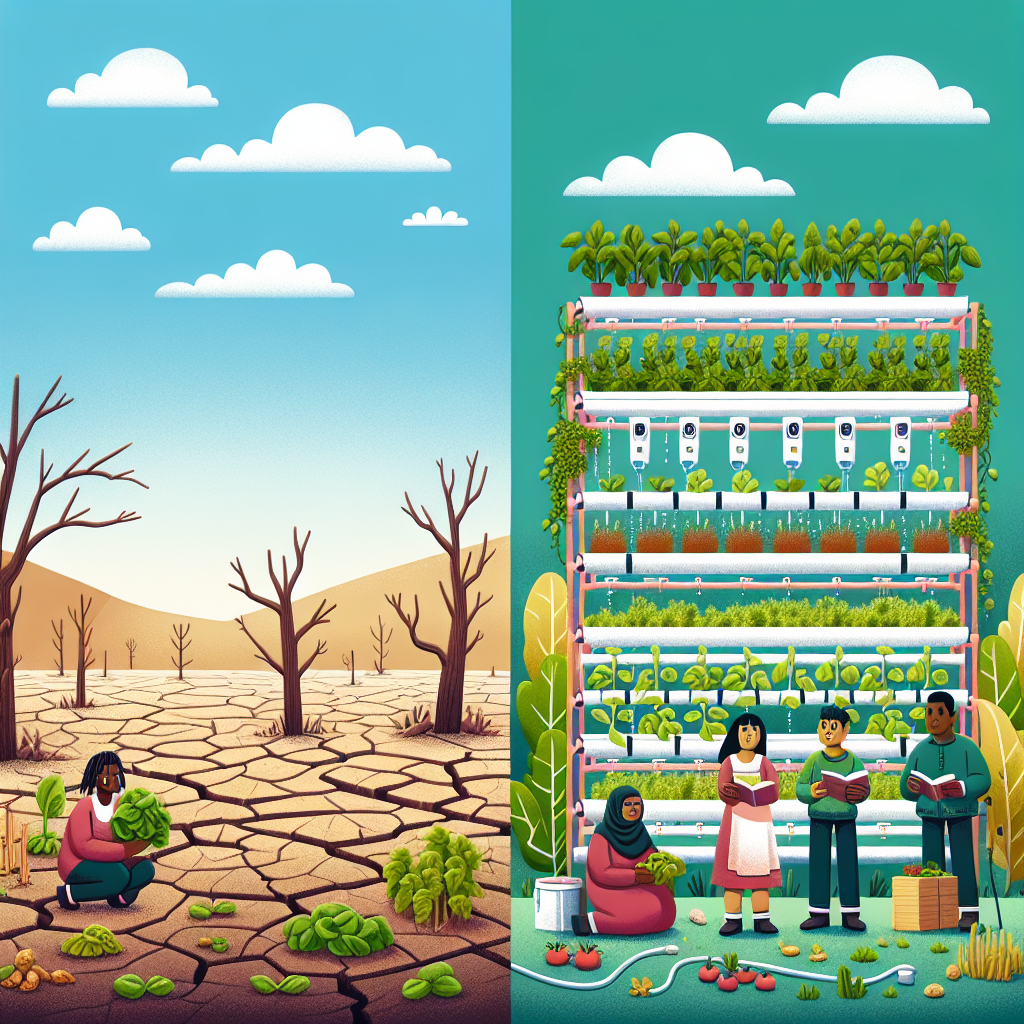
The 5-Day Food Scarcity Investigation: Seeds of Change aims to equip high school students with a deep understanding of global food scarcity and empower them to explore and implement innovative urban farming solutions like hydroponics and vertical farming. Through hands-on activities, expert engagement, and community collaboration, students investigate real-world food challenges and apply interdisciplinary skills to develop sustainable food production strategies. This project-based learning experience fosters critical thinking, communication, and problem-solving, ultimately preparing students to contribute meaningful solutions to enhance urban food security.

Learning goals

The learning goals for this experience encompass developing competencies in interdisciplinary collaboration, where students actively engage with environmental science professionals and community partners to address food scarcity. Students will apply critical thinking and problem-solving skills to design innovative urban farming solutions, such as hydroponics and vertical farming, tailored to local urban needs. They will enhance effective communication through presentations and feedback sessions with peers and experts, while fostering a sense of responsibility to their communities by contributing to sustainable food systems and analyzing socio-economic impacts of food scarcity. Additionally, students will cultivate self-directed learning by reflecting on their progress and incorporating feedback to refine their projects.

Standards
  • [Common Core] CCSS.Math.Content.HSN-VM.A.1 - (+) Recognize vector quantities as having both magnitude and direction. Represent vector quantities by directed line segments, and use appropriate symbols for vectors and their magnitudes (e.g., v, |v|, ||v||, v).
  • [Common Core] CCSS.Math.Content.HSA-SSE.A.2 - Use the structure of an expression to identify ways to rewrite it.
  • [Common Core] CCSS.Math.Practice.MP6 - Attend to precision.
  • [Common Core] CCSS.ELA-Literacy.CCRA.W.7 - Conduct short as well as more sustained research projects based on focused questions, demonstrating understanding of the subject under investigation.
  • [Next Generation Science Standards] HS-PS1-8 - Develop models to illustrate the changes in the composition of the nucleus of the atom and the energy released during the processes of fission, fusion, and radioactive decay.
Competencies
  • Self Directed Learning - Students use teacher and peer feedback and self-reflection to monitor and direct their own learning while building self knowledge both in and out of the classroom.
  • Academic Mindset - Students establish a sense of place, identity, and belonging to increase self-efficacy while engaging in critical reflection and action.
  • Critical Thinking & Problem Solving - Students consider a variety of innovative approaches to address and understand complex questions that are authentic and important to their communities.
  • Content Expertise - Students develop key competencies, skills, and dispositions with ample opportunities to apply knowledge and engage in work that matters to them.
  • Effective Communication - Students practice listening to understand, communicating with empathy, and share their learning through exhibiting, presenting and reflecting on their work.

Products

Throughout the investigation, students will create detailed research posters, interactive system diagrams, and design plans for a hydroponic city garden. By the end, they will build a working model of a hydroponic vertical farm. Additionally, students will develop dishes using produce from the farm to present during the showcase event, connecting culinary skills with sustainable agriculture knowledge. Each product emphasizes practical application and real-world relevance, encouraging students to share these creations during public exhibitions and digital storytelling presentations.

Launch

Invite students to a dramatic viewing of "Starved: Our Insecurity Crisis," pausing at key moments to facilitate reflective discussions on the realities of food scarcity. Follow this with an interactive, expert-led session where students envision adaptive urban farming solutions, using brainstormed ideas to draft initial project concepts for a community vertical garden. To inspire creative thinking, present real cases of innovative urban farming that succeeded against the odds, asking students to connect these examples to potential local applications.

Exhibition

Students will host a "Community Garden Showcase" in April, inviting families, community members, and local leaders to explore a student-built vertical hydroponic garden. Attendees will learn about innovative urban farming techniques and how these practices can create sustainable communities. The showcase will feature presentations, a Q&A session on food security challenges and solutions, and opportunities to taste dishes prepared from the garden's produce, highlighting the practical applications of students' work and its impact on the local community.

Plan
By Phase By Day Calendar
Building activities
Ask Imagine Plan Create Test Improve Share
Ask
Students will explore urban food scarcity issues through interactive sessions with community partners, analyze key socio-economic data, and develop focused research questions that define the problem and identify constraints for sustainable urban farming solutions.
Days 1 - 3
75 min over capacity (180 min available across 3 days)
Socio-Economic Data Exploration
Activity 45m
Community Partner Dialogue
Launch 60m
Peer Feedback Session
Deliverable 30m
creating menu with produce (120 min)
Activity 120m
Research Question Presentation
Assessment
Data Analysis Report
Assessment
No activities have been added to this phase yet.

Edit Phase

Loading...
Imagine
Students will collaborate in groups to brainstorm and sketch potential urban farming solutions, incorporating innovative techniques like hydroponics and vertical farming, and leverage insights from community partners to refine ideas for real-world application.
Days 3 - 5
Community Insight Sharing
Launch 45m
Sketching Urban Farming Solutions
Activity 60m
Peer Feedback Roundtable
Deliverable 45m
Research Documentation and Reflection
Assessment
Collaborative Sketch Presentation
Assessment
No activities have been added to this phase yet.

Edit Phase

Loading...
Plan
Students will collaborate with community partners and environmental science experts to select an urban farming solution, then create a detailed implementation plan for a hydroponic vertical farm that aligns with local food needs and sustainability goals, incorporating feedback and reflecting on the scalability of their designs.
Days 5 - 7
Peer Design Feedback Workshop
Deliverable 45m
Design Finalization and Practice Presentations
Activity 60m
Scalability Brainstorm and Analysis
Activity 45m
Reflection and Integration Journal
Deliverable 30m
Hydroponic Vertical Farm Design Presentation
Assessment
No activities have been added to this phase yet.

Edit Phase

Loading...
Create
Students will use collaborative teamwork to construct and test individual hydroponic vertical farming prototypes, incorporating iterative feedback from community partners and reflection sessions, as they actively engage in innovative problem-solving to address urban food scarcity.
Days 7 - 9
Peer Critique and Feedback Workshop
Deliverable 60m
Hydroponic Vertical Farm Prototype Presentation
Assessment
No activities have been added to this phase yet.

Edit Phase

Loading...
Test
Students will conduct controlled experiments to test the effectiveness of their urban farming prototypes, analyze data with the guidance of community partners, and use peer feedback to assess solution viability, preparing for improvements in the next phase.
Days 9 - 11
Introducing the Prototype Testing Framework
Launch 45m
Community Partner Q&A Preparation
Activity 60m
Peer Presentation and Feedback Session
Assessment
No activities have been added to this phase yet.

Edit Phase

Loading...
Improve
Students will refine their urban farming models through collaborative feedback sessions with environmental experts, iteratively test design improvements in hands-on workshops, and adapt strategies based on peer and expert critiques, enhancing the effectiveness and viability of their community garden plans.
Days 11 - 13
Reflective Discussion and Action Planning
Deliverable 30m
Digital Storytelling Draft Development
Activity 45m
No activities have been added to this phase yet.

Edit Phase

Loading...
Share
Students will present their urban farming solutions at the 'Community Garden Showcase,' engage in meaningful discussions about food security with community members, and reflect on their project journey to identify insights and future improvements.
Days 13 - 14
Collaborative Feedback Sessions
Deliverable 45m
Engaging Presentation Rehearsals
Deliverable 60m
Community Garden Showcase Presentation
Assessment
No activities have been added to this phase yet.

Edit Phase

Loading...
Ask Days 1–3
Day 1
Socio-Economic Data Exploration
Activity 45m
Community Partner Dialogue
Launch 60m
Day 2
Peer Feedback Session
Deliverable 30m
creating menu with produce (120 min)
Activity 120m
Imagine Days 3–5
Day 3
Community Insight Sharing
Launch 45m
Research Question Presentation
Assessment
Sketching Urban Farming Solutions
Activity 60m
Data Analysis Report
Assessment
Day 4
Peer Feedback Roundtable
Deliverable 45m
Plan Days 5–7
Day 5
Peer Design Feedback Workshop
Deliverable 45m
Research Documentation and Reflection
Assessment
Collaborative Sketch Presentation
Assessment
Day 6
Design Finalization and Practice Presentations
Activity 60m
Scalability Brainstorm and Analysis
Activity 45m
Reflection and Integration Journal
Deliverable 30m
Create Days 7–9
Day 7
Hydroponic Vertical Farm Design Presentation
Assessment
Day 8
Peer Critique and Feedback Workshop
Deliverable 60m
Test Days 9–11
Day 9
Introducing the Prototype Testing Framework
Launch 45m
Hydroponic Vertical Farm Prototype Presentation
Assessment
Day 10
Community Partner Q&A Preparation
Activity 60m
Improve Days 11–13
Day 11
Peer Presentation and Feedback Session
Assessment
Day 12
Reflective Discussion and Action Planning
Deliverable 30m
Digital Storytelling Draft Development
Activity 45m
Share Days 13–14
Day 13
Collaborative Feedback Sessions
Deliverable 45m
Engaging Presentation Rehearsals
Deliverable 60m
Day 14
Community Garden Showcase Presentation
Assessment
Day 15
Day 16
Day 17
Day 18
Day 19
Day 20

May 2026

Mon
Tue
Wed
Thu
Fri
4 Day 1
Ask
Socio-Economic Data Exploration
Community Partner Dialogue
5 Day 2
Peer Feedback Session
creating menu with produce (120 min)
6 Day 3
Imagine
Community Insight Sharing
Research Question Presentation
Sketching Urban Farming Solutions
Data Analysis Report
7 Day 4
Peer Feedback Roundtable
8 Day 5
Plan
Peer Design Feedback Workshop
Research Documentation and Reflection
Collaborative Sketch Presentation
11 Day 6
Design Finalization and Practice Presentations
Scalability Brainstorm and Analysis
Reflection and Integration Journal
12 Day 7
Create
Hydroponic Vertical Farm Design Presentation
13 Day 8
Peer Critique and Feedback Workshop
14 Day 9
Test
Introducing the Prototype Testing Framework
Hydroponic Vertical Farm Prototype Presentation
15 Day 10
Community Partner Q&A Preparation
18 Day 11
Improve
Peer Presentation and Feedback Session
19 Day 12
Reflective Discussion and Action Planning
Digital Storytelling Draft Development
20 Day 13
Share
Collaborative Feedback Sessions
Engaging Presentation Rehearsals
21 Day 14
Community Garden Showcase Presentation
22 Day 15
25 Day 16
26 Day 17
27 Day 18
28 Day 19
29 Day 20
Share
Activities
Loading
Loading
Loading
Get it on Google Play
© 2026 Inkwire Inc
Contact Us Privacy Policy Terms of Service