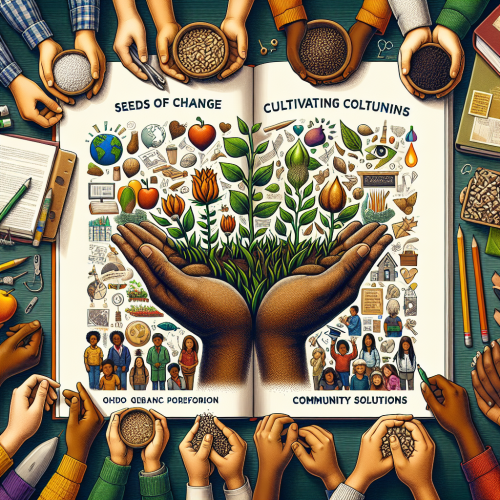
This project aims to deepen students' understanding of the interconnectedness between plants, animals, and human communities through the lens of seed dispersal. By developing models that illustrate how animals disperse seeds and pollen, students will explore the vital role these processes play in sustaining ecosystems and addressing community needs, such as food security. Through hands-on activities, students will investigate various seed dispersal methods, analyze plant growth conditions, and reflect on the importance of community gardens and food banks. The project will culminate in the creation of a community garden, fostering active citizenship and environmental stewardship. Students will also enhance their skills in map reading, economic understanding, and cultural awareness, aligning with the key competencies of being informed and engaged citizens. This project not only meets educational standards but also empowers students to contribute positively to their community and environment.
Learning goals
In this project, students will explore the interconnectedness of ecosystems by examining how animals contribute to seed dispersal and pollination. They will develop models to illustrate these processes and investigate the essential conditions for plant growth. Students will also engage in community-based learning by creating a community garden, understanding the importance of food banks, and considering how these initiatives can address local environmental challenges. Additionally, they will learn about active citizenship, including how individuals can contribute to community improvement and problem-solving. Through map skills, students will interpret and use maps to gather information about their region, enhancing their understanding of local geography. The project will also cover economic concepts such as consumption, production, and the role of goods and services, as well as cultural studies by comparing regional characteristics and histories across the United States. Overall, students will develop critical thinking, collaboration, and problem-solving skills as they engage with their community and contribute to meaningful change.
Standards
Next Generation Science Standards - 2-LS2-1: Plan and conduct an investigation to determine if plants need sunlight and water to grow.
Next Generation Science Standards - 2-LS2-2: Develop a simple model that mimics the function of an animal in dispersing seeds or pollinating plants.
Common Core State Standards - CCSS.ELA-LITERACY.W.2.7: Participate in shared research and writing projects (e.g., read a number of books on a single topic to produce a report; record science observations).
Products
In this project, students will collaboratively create a community garden that serves as both a learning tool and a resource for the local community. This garden will be designed to demonstrate the process of seed dispersal by animals, incorporating models and explanations of how various elements contribute to this natural phenomenon. Students will conduct investigations to understand plant needs, make predictions, and analyze results, which will inform the design and maintenance of the garden.
Additionally, students will organize an event to collect food and resources for a local food bank, emphasizing the importance of community support and active citizenship. Through this project, students will develop maps to plan the garden layout, compare cultural characteristics related to gardening practices, and explore economic concepts such as consumption, production, and barter systems within their region. The project will culminate in an exhibition for the 2nd-grade classes and the wider school community, showcasing the garden and highlighting the students' learning journey and contributions to solving environmental challenges in their community.
Launch
To kick off the project, organize a "Nature Exploration Day" where students spend time in a local park or natural area. Begin by guiding them on a nature walk to observe various plants and animals, emphasizing how animals might help in seed dispersal. Encourage students to collect natural materials like seeds, leaves, and twigs that they find interesting. After the walk, facilitate a group discussion where students share their observations and brainstorm how these natural processes might relate to community challenges, such as food scarcity or environmental sustainability. This hands-on experience will engage students and set the stage for deeper inquiry into how understanding seed dispersal can address environmental challenges in their community.
Exhibition
At the end of the project, students will host a "Community Garden Festival" where they will showcase their learning and contributions to the community garden. This event will serve as the exhibition of their project work. Students will present their models of seed dispersal and explain the process to visitors, highlighting the connection between plants and animals. They will also display maps they have created, showing the location and layout of the community garden, and discuss the economic and cultural benefits of the garden to the community. Additionally, students will organize a collection drive for the food bank, inviting community members to donate seeds, plants, or non-perishable food items. This exhibition will provide an opportunity for students to demonstrate their understanding of civic engagement, environmental responsibility, and the importance of community collaboration. The event will also include a reflection segment where students share insights on why community gardens and food banks are essential and how they contribute to solving environmental challenges in the community.
Copied from
Growing Together: Seeds, Animals, and Community!