All grades
Project
3 weeks
Dive Deep: Plan, Breathe, Stay Warm
Updated
PS.Chm.7.1
PS.Chm.7.1
PS.Chm.7.2
PS.Chm.7.3
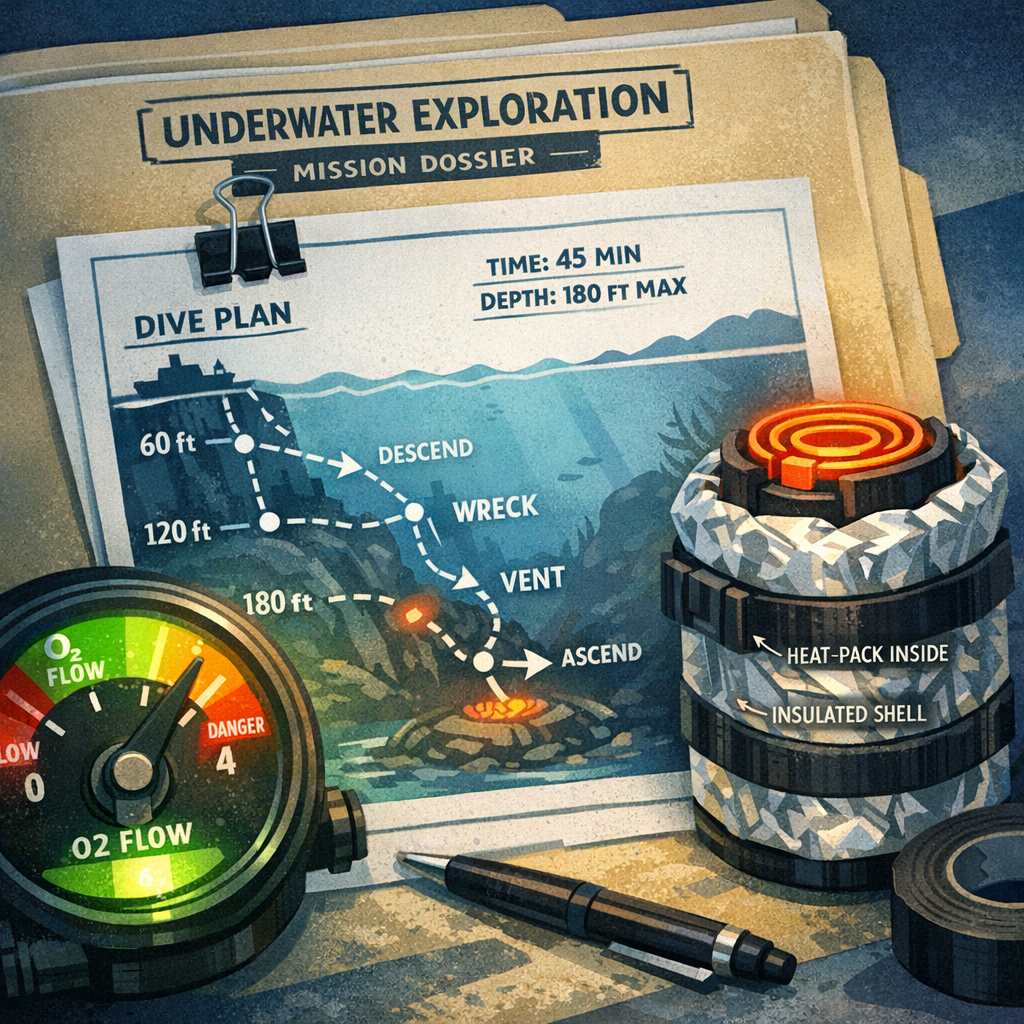
1-pager
Research & Plan
Research & Plan
Students will gather user and context evidence from marine safety and underwater-environment experts, build early science explanations about gas behavior and heat loss in scuba situations, and organize those findings into a planning artifact that will guide later dive-plan and warming-device design.
Days 3 - 6
Showcase
Showcase
Students will present their completed dive-safety briefing boards, air calculations, particle models, route maps, safety checklists, and tested warming-device prototypes to a Coast Guard or marine safety guest and other visitors, answer questions with evidence, and show how critique led to final revisions.
Day 15
Launch
Days 1–2
Day 1
🚨 Coast Guard Mission Briefing
Launch
75m
Day 2
🫧 Syringe, Balloon, and Ice Tests
Knowledge/Skill Building
75m
Research & Plan
Days 3–6
Day 3
🛟 Coast Guard Dive Needs Interview
Community Experience
75m
Day 4
🎈 Syringe Tank Particle Models
Knowledge/Skill Building
75m
Day 5
🌊 Aquarium Cold-Water Evidence Map
Community Experience
75m
Day 6
📋 Dive Evidence Planning Checkpoint
Assessment
75m
Define & Ideate
Days 7–10
Day 7
🧭 Dive Needs Wall Sort
Knowledge/Skill Building
75m
Day 8
🌡️ Particle Models for Dive Choices
Knowledge/Skill Building
75m
Day 9
✏️ How Might We Concept Set
Project Work
90m
Day 10
✅ Concept Gate Pitch
Assessment
60m
Prototype & Present
Days 11–14
Day 11
🧪 Prototype Build and Test Plan
Project Work
75m
Day 12
📊 Data Review and Calculation Tune-Up
Knowledge/Skill Building
60m
Day 13
🔁 Peer Critique and Revision Round
Deliverable
75m
Day 14
⚓ Coast Guard Plan Review
Community Experience
75m
Showcase
Days 15–15
Day 15
🚨 Dive Safety Showcase Briefing
Assessment
75m
May 2026
Mon
Tue
Wed
Thu
Fri
18
Day 1
Launch
🚨 Coast Guard Mission Briefing
19
Day 2
🫧 Syringe, Balloon, and Ice Tests
20
Day 3
Research & Plan
🛟 Coast Guard Dive Needs Interview
21
Day 4
🎈 Syringe Tank Particle Models
22
Day 5
🌊 Aquarium Cold-Water Evidence Map
25
Day 6
📋 Dive Evidence Planning Checkpoint
26
Day 7
Define & Ideate
🧭 Dive Needs Wall Sort
27
Day 8
🌡️ Particle Models for Dive Choices
28
Day 9
✏️ How Might We Concept Set
29
Day 10
✅ Concept Gate Pitch
June 2026
Mon
Tue
Wed
Thu
Fri
1
Day 11
Prototype & Present
🧪 Prototype Build and Test Plan
2
Day 12
📊 Data Review and Calculation Tune-Up
3
Day 13
🔁 Peer Critique and Revision Round
4
Day 14
⚓ Coast Guard Plan Review
5
Day 15
Showcase
🚨 Dive Safety Showcase Briefing