High School Grade  Project 4 weeks

Weather Wizards: Build a Weather Station

Luca P
Updated
Critical Thinking & Problem Solving
Effective Communication
Collaboration
Academic Mindset
1-pager

Purpose

You will investigate a real community weather question by building and testing simple weather instruments, collecting local data, and using patterns you find to explain what is happening where you live. With support from a nearby college or university science partner, you will check your tools, strengthen your analysis, and connect your results to larger weather and climate research. After each data session, you will reflect on one scientific insight and one teamwork strength to track how your thinking develops. The project builds toward a data-story presentation and a Forecast Fest showcase where you share your evidence, conclusions, and process with others.

Learning goals

You will design, test, and calibrate simple weather instruments, collect reliable local data, and use math tools such as graphing, averaging, and comparing trends to investigate the question, “How can you use weather data from your community to answer a real question that matters to people where you live?” You will work with a nearby college or university science partner to check your methods, strengthen your interpretation of patterns, and connect your findings to larger weather and climate research. You will build collaboration and communication skills by making shared decisions, contributing during circle reflections after each data collection session, and identifying one scientific insight and one teamwork strength each day. You will create a clear data-story presentation and prepare for the Forecast Fest showcase so you can explain your evidence, answer your community question, and reflect on how your thinking changed over time.

Competencies
  • Critical Thinking & Problem Solving - Students consider a variety of innovative approaches to address and understand complex questions that are authentic and important to their communities.
  • Effective Communication - Students practice listening to understand, communicating with empathy, and share their learning through exhibiting, presenting and reflecting on their work.
  • Collaboration - Students co-design projects with peers, exercise shared-decision making, strengthen relational agency, resolve conflict, and assume leadership roles.
  • Academic Mindset - Students establish a sense of place, identity, and belonging to increase self-efficacy while engaging in critical reflection and action.

Products

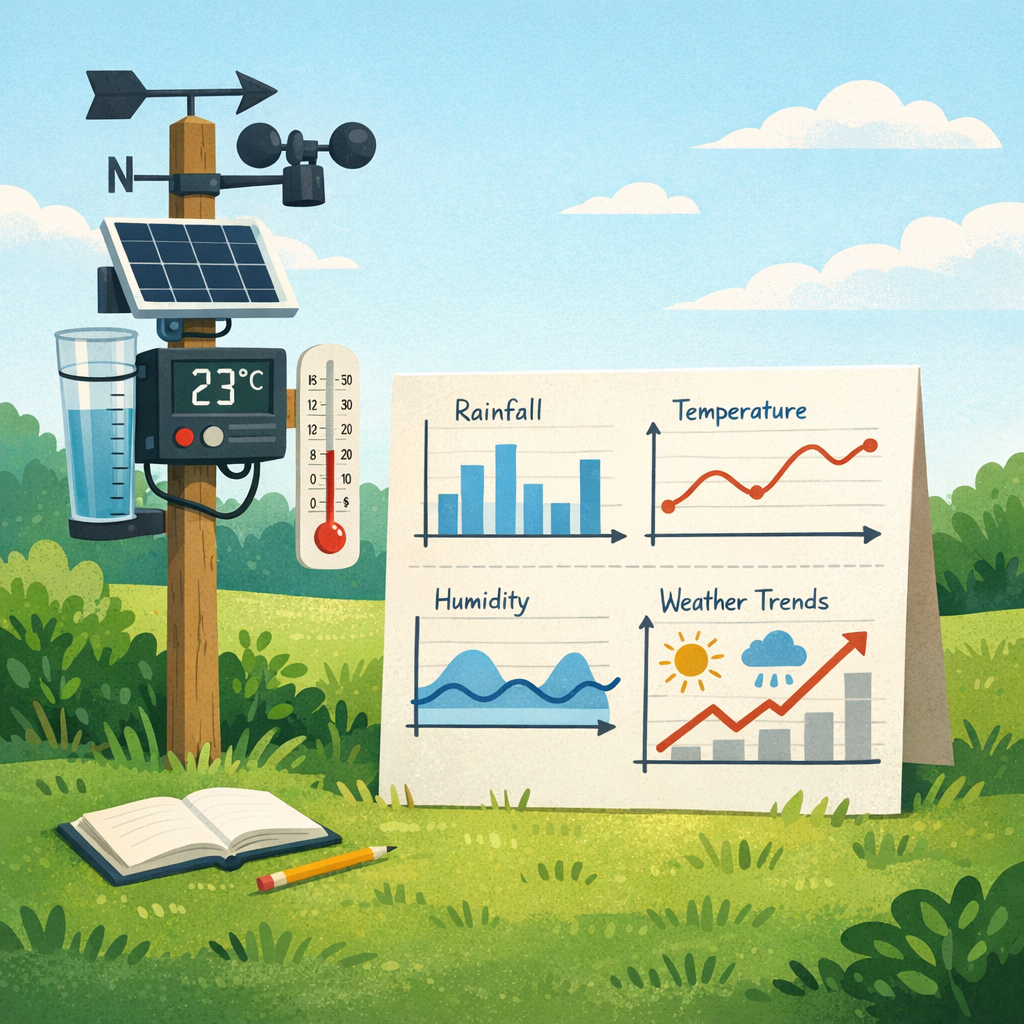
You will create and calibrate simple weather instruments, a shared field notebook or digital log, and weekly data displays that track local patterns tied to a community question. After each collection session, you will add a brief circle reflection note naming one scientific insight and one teamwork strength, building a record of how your thinking changes over time. With feedback from a nearby college or university science partner, you will produce a short data-story presentation that explains your findings and answers the essential question using charts, claims, and evidence. For the final Forecast Fest, you will also prepare an exhibition station with your instruments, annotated graphs, reflection samples, and a concise conclusion for guests to explore.

Launch

Start with a “Weather Mystery Walk” around campus or your neighborhood where you use simple tools and your senses to notice temperature shifts, wind patterns, shade, humidity clues, and drainage, then record questions about how weather affects daily life in your community. Bring in a scientist from a nearby university or community college to help you test a few sample instruments, react to your observations, and introduce how local weather data can answer real community questions. End by choosing one question connected to the essential question and holding a short circle reflection where you name one scientific insight and one collaboration move you used during the launch. Preview the final Forecast Fest by showing examples of data-story presentations, charts, and instrument stations you will build toward over the project.

Exhibition

Run a Forecast Fest where you set up interactive stations to demonstrate your weather instruments, explain how they were calibrated with feedback from a local college or university science partner, and share the community question that guided your investigation. Invite families, peers, school staff, and community guests to rotate through displays of your data charts, field notes, and reflection highlights that show one scientific insight and one teamwork strength from each collection session. Include a short data-story presentation at each station or on a shared stage so you can explain the weather patterns you found, answer your community question with evidence, and describe how your thinking changed over the project. End with a live Q&A or feedback wall where guests respond to your conclusions and connections to local weather or climate concerns.