High School Grade  Lesson 45 minutes

Mind of Gatsby: AI Character Couch

Renee B
Updated
Critical Thinking & Problem Solving
Collaboration
Effective Communication
1-pager

Purpose

Students investigate the essential question, “What motivates humans?” by acting as psychologists who use close reading, AI tools, and counselor-style questioning to analyze one character from The Great Gatsby. In a dramatic intake-session launch, they gather and revise evidence-based questions, examine motivation, relationships, and behavior with textual support, and build an AI-assisted case file poster. The work culminates in a Gatsby Case File Expo where students defend their interpretations to peers and a local psychologist or counselor, using critique, revision, and reflection to strengthen their analysis and communication.

Learning goals

Students will analyze one character’s motivation, relationships, and behavior using strong textual evidence and inference, building a clear interpretation aligned to literary analysis standards. They will ask, test, and revise evidence-based questions during the intake session and use AI responsibly to help organize insights into a character case file. Students will collaborate with peers and consider feedback from classmates and a psychologist or counselor to strengthen their claims through critique and revision. They will communicate their analysis in a case file poster and brief presentation that explains what motivates their character and how that reflects the essential question about human behavior.

Competencies
  • Critical Thinking & Problem Solving - Students consider a variety of innovative approaches to address and understand complex questions that are authentic and important to their communities.
  • Collaboration - Students co-design projects with peers, exercise shared-decision making, strengthen relational agency, resolve conflict, and assume leadership roles.
  • Effective Communication - Students practice listening to understand, communicating with empathy, and share their learning through exhibiting, presenting and reflecting on their work.

Products

Students create investigation notes during the Roaring Twenties Intake Session, including evidence-based interview questions and initial claims about what motivates their assigned character. Using close reading, AI-generated questioning or synthesis, and feedback from a local psychologist or counselor, each student develops an AI-assisted character case file poster that profiles motivation, relationships, behavior patterns, and key textual evidence. During the gallery walk, students produce sticky-note critique and complete at least one revision to strengthen specificity and proof. The culminating product is a presented case file at the Gatsby Case File Expo, where students defend their interpretation and respond to peer and community-partner questions.

Launch

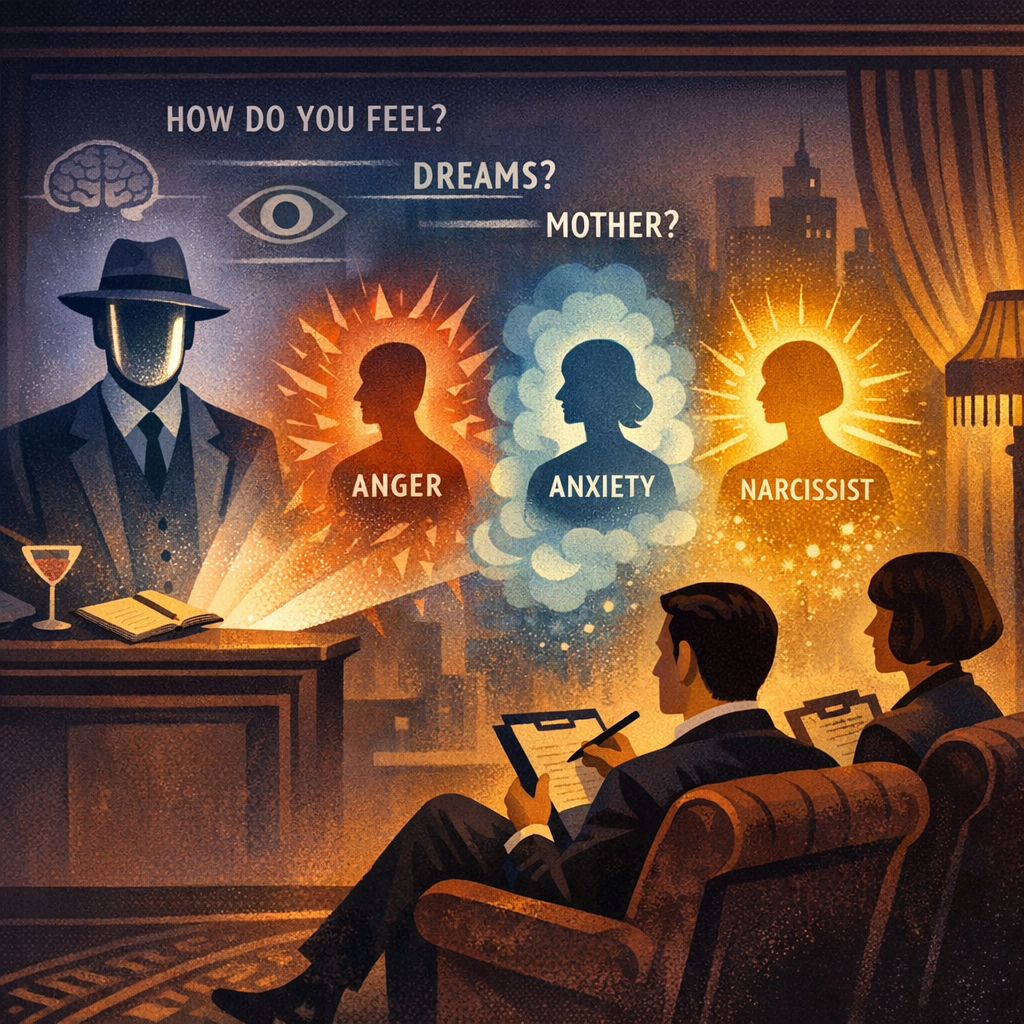
Open with a “Roaring Twenties Intake Session” by dimming the lights, playing jazz, and giving each group a sealed case file with a Gatsby character’s quotes, key actions, and relationship clues. Students act as psychologists-in-training, generate first hypotheses about what motivates their character, and use AI to help draft 2–3 interview questions they want to test against the text. Invite a local psychologist or counselor to respond to a few student questions about how professionals analyze motivation and behavior, then have students post one evidence-based theory and one uncertainty on a class board around the question, “What motivates humans?” This launch sets up the case file poster, revision cycle, and expo presentation by framing the novel as a real investigation of human behavior.

Exhibition

Host a Gatsby Case File Expo as a mini symposium where students display their AI-assisted character posters and present a 2-minute defense of each character’s motivation, relationships, and behavior using quoted textual evidence. Invite a local psychologist or licensed counselor, classmates, and other ELA students to circulate, ask questions, and challenge interpretations as if reviewing professional case files. Include a feedback station with sentence stems so visitors can note which evidence was most convincing and what claim needs stronger proof, and require students to name one revision they made based on critique. End with a brief reflection circle in which students compare how the novel’s characters reveal the essential question, “What motivates humans?”