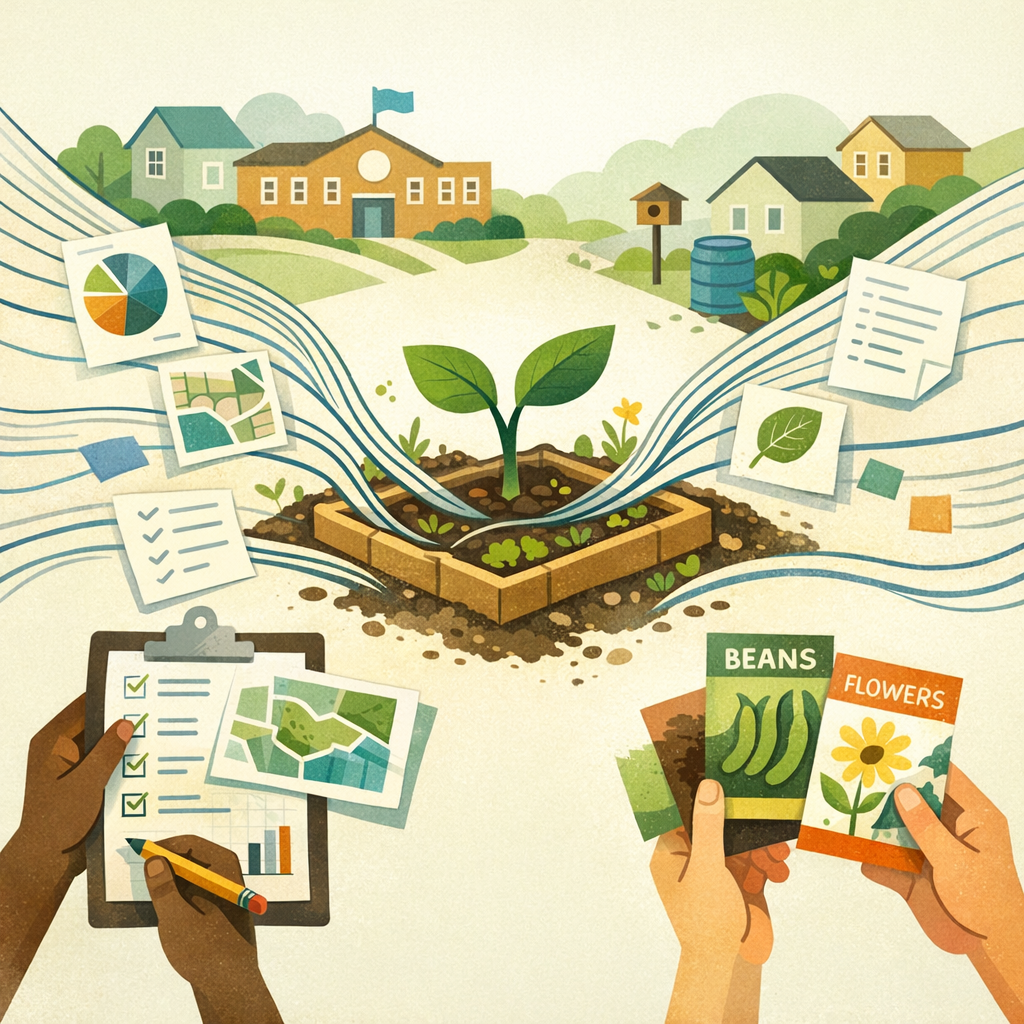
Students investigate how everyday choices at school affect people, plants, and animals, then work in teams to answer the question, “How can our school community take action to care for the environment in ways that help people, plants, and animals?” They launch the work through a Change Circle and idea wall, gather local examples from a nature center or wildlife rehabilitation partner, and create a podcast-based public awareness campaign that shares clear actions their peers can take. Midpoint gallery walks and sticky-note feedback help groups refine their ideas, and the project ends with a presentation day, a shared podcast link for a real audience, and a short reflection on how their thinking and actions changed.
Learning goals
Students will investigate local environmental issues and explain how caring for habitats, water, and natural spaces affects people, plants, and animals. They will work in teams to research one action the school community can take, evaluate feedback during gallery walks, and revise a public awareness campaign that answers the question of how the school can help. Students will create a clear, evidence-based podcast using information from a nature center or wildlife rehabilitation source, photos or stories, and their own group research. They will present their campaign and podcast to an authentic audience, share the podcast link, and reflect on how their thinking and actions changed during the project.
Products
Students will create an idea wall from the Change Circle launch, group research notes, and a campaign plan that identifies one environmental action the school community can take. During the project, each group will also produce draft campaign materials such as posters, scripts, recorded interview questions, and photo- or story-based evidence inspired by the nature center or wildlife rehabilitation partner. Midway through, groups will share campaign drafts in a gallery walk, collect sticky-note feedback, and revise their message and action steps. By the end, each group will publish a podcast in Adobe Podcast as the final public awareness campaign, present it to an authentic audience, share a link to the podcast, and complete a short reflection on how their thinking and actions changed.
Launch
Begin with a Spark the Change Circle where students study a few vivid photos or short stories from a nearby nature center or wildlife rehabilitation group showing how clean and unhealthy habitats affect animals, plants, and people. Students then share what they notice, discuss the question “How can our school community take action to care for the environment in ways that help people, plants, and animals?”, and add ideas to an idea wall with possible campaign themes and actions. End the launch with students voting on the themes they most want to investigate and a brief introduction to the final public awareness podcast they will create and share with others.
Exhibition
Host a school Eco Action Showcase where each group presents its campaign, plays a short excerpt from its Adobe podcast, and explains one action the audience can take to help people, plants, and animals. Invite families, another 4th grade class, school staff, and a nearby nature center or wildlife rehabilitation partner as the authentic audience, and display campaign visuals with QR codes or short links to the full podcasts. Publish the podcast links on the school website, newsletter, or morning announcements so the learning reaches the wider school community. End the event with a brief student reflection on how their thinking and actions changed during the project.