High School Grade  Project 4 weeks

Lighting the Past, Circuits of Change

Akilah C
Updated
CCSS.ELA-Literacy.W.11-12.7
CCSS.ELA-Literacy.WHST.11-12.7
CCSS.ELA-Literacy.W.9-10.7
CCSS.ELA-Literacy.WHST.9-10.7
CCSS.ELA-Literacy.CCRA.W.7
+ 5 more
1-pager

Purpose

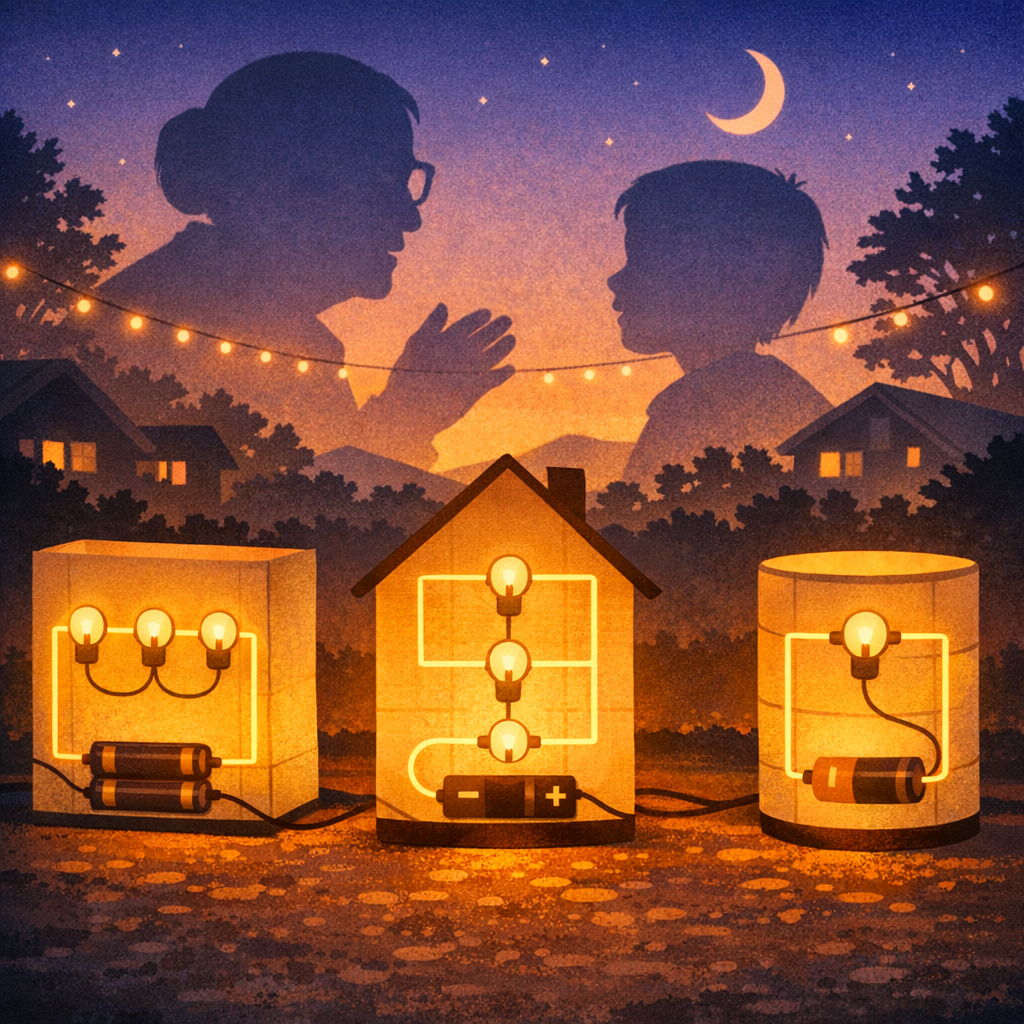
Students investigate what happens when people stop reading, sharing, and questioning ideas by connecting Fahrenheit 451 to real community voices and scientific design. Through interviews with senior citizens, elementary students, and other community members, close analysis of the novel’s themes, and the construction of lanterns with parallel and series circuits, they synthesize research, storytelling, and engineering into a public message. The work culminates in Pages, Voices, and Light, where students present collaborative exhibit stations featuring interview clips, live circuit demonstrations, and spoken reflections supported by feedback, revision, and ongoing audio or video check-ins.

Learning goals

Students will analyze how censorship, conformity, memory, and questioning shape meaning in Fahrenheit 451, using text evidence, interviews, and discussion to answer the question of what happens when people stop reading, sharing, and questioning ideas. They will conduct and synthesize short research from senior citizens, elementary students, and community members, then use those findings to plan and revise a collaborative exhibit station. Students will apply basic circuit knowledge by designing, testing, and explaining lanterns with parallel and series circuits that symbolize key themes from the novel. They will strengthen collaboration, speaking, and self-direction through critique, public presentation, and end-of-class audio or video reflections on teamwork, confidence, and changing thinking.

Standards
  • [Common Core] CCSS.ELA-Literacy.W.11-12.7 - Conduct short as well as more sustained research projects to answer a question (including a self-generated question) or solve a problem; narrow or broaden the inquiry when appropriate; synthesize multiple sources on the subject, demonstrating understanding of the subject under investigation.
  • [Common Core] CCSS.ELA-Literacy.WHST.11-12.7 - Conduct short as well as more sustained research projects to answer a question (including a self-generated question) or solve a problem; narrow or broaden the inquiry when appropriate; synthesize multiple sources on the subject, demonstrating understanding of the subject under investigation.
  • [Common Core] CCSS.ELA-Literacy.W.9-10.7 - Conduct short as well as more sustained research projects to answer a question (including a self-generated question) or solve a problem; narrow or broaden the inquiry when appropriate; synthesize multiple sources on the subject, demonstrating understanding of the subject under investigation.
  • [Common Core] CCSS.ELA-Literacy.WHST.9-10.7 - Conduct short as well as more sustained research projects to answer a question (including a self-generated question) or solve a problem; narrow or broaden the inquiry when appropriate; synthesize multiple sources on the subject, demonstrating understanding of the subject under investigation.
  • [Common Core] CCSS.ELA-Literacy.CCRA.W.7 - Conduct short as well as more sustained research projects based on focused questions, demonstrating understanding of the subject under investigation.
Competencies
  • Critical Thinking & Problem Solving - Students consider a variety of innovative approaches to address and understand complex questions that are authentic and important to their communities.
  • Collaboration - Students co-design projects with peers, exercise shared-decision making, strengthen relational agency, resolve conflict, and assume leadership roles.
  • Effective Communication - Students practice listening to understand, communicating with empathy, and share their learning through exhibiting, presenting and reflecting on their work.
  • Content Expertise - Students develop key competencies, skills, and dispositions with ample opportunities to apply knowledge and engage in work that matters to them.
  • Self Directed Learning - Students use teacher and peer feedback and self-reflection to monitor and direct their own learning while building self knowledge both in and out of the classroom.

Products

Students will create interview questions, research notes, annotated text evidence, and circuit practice prototypes as they investigate how censorship, conformity, memory, and questioning connect to lived community experiences. Throughout the project, teams will produce lantern mockups, wiring diagrams for parallel and series circuits, written explanation cards, short presentation scripts, and end-of-class audio or video reflections documenting teamwork growth and shifts in thinking. By the end, each team will build a finished working lantern and a collaborative exhibit station that includes interview sound clips, visual labels, and a live presentation linking the novel’s themes to their community research. The culminating public showcase, Pages, Voices, and Light, will feature rotating small-group presentations, scenes or reflections coached by an arts partner, and demonstrations of how each circuit design symbolizes ideas from the text.

Launch

Open with a Connections Carousel in which small groups rotate through three fast-paced stations: practicing interview questions with peers role-playing senior citizens, elementary students, and community members; building simple parallel and series circuits to light mini LEDs; and matching key quotes from the novel to themes of censorship, conformity, memory, and questioning. After the rotations, invite students to respond to the essential question and identify what they noticed when voices, stories, and access to ideas were limited or shared. Close with a brief whole-class debrief and a first video or audio check-in where students name one skill they want to strengthen in research, collaboration, or public speaking during the project.

Exhibition

Host “Pages, Voices, and Light” as an evening public exhibit with rotating small-group stations where students present working lanterns, demonstrate parallel and series circuits live, and explain how each design connects to censorship, conformity, memory, and curiosity in the novel. Include curated interview audio clips and quotes from senior citizens, elementary students, and community members so visitors can hear multiple perspectives alongside students’ research findings and text evidence. Partner with a local theater or arts council member to coach students on delivery, staging, and brief dramatic readings or reflections that deepen the exhibit experience. End with a community feedback wall and a QR code gallery of student audio/video reflections documenting teamwork growth, speaking confidence, and how their thinking changed over the project.