11th Grade  Project 4 weeks

Bug Hunt: Art from the Collection

Jennifer S
Updated
VA:Cn10.1.IIa
Effective Communication
Critical Thinking & Problem Solving
Content Expertise
Collaboration
+ 1 more
1-pager

Purpose

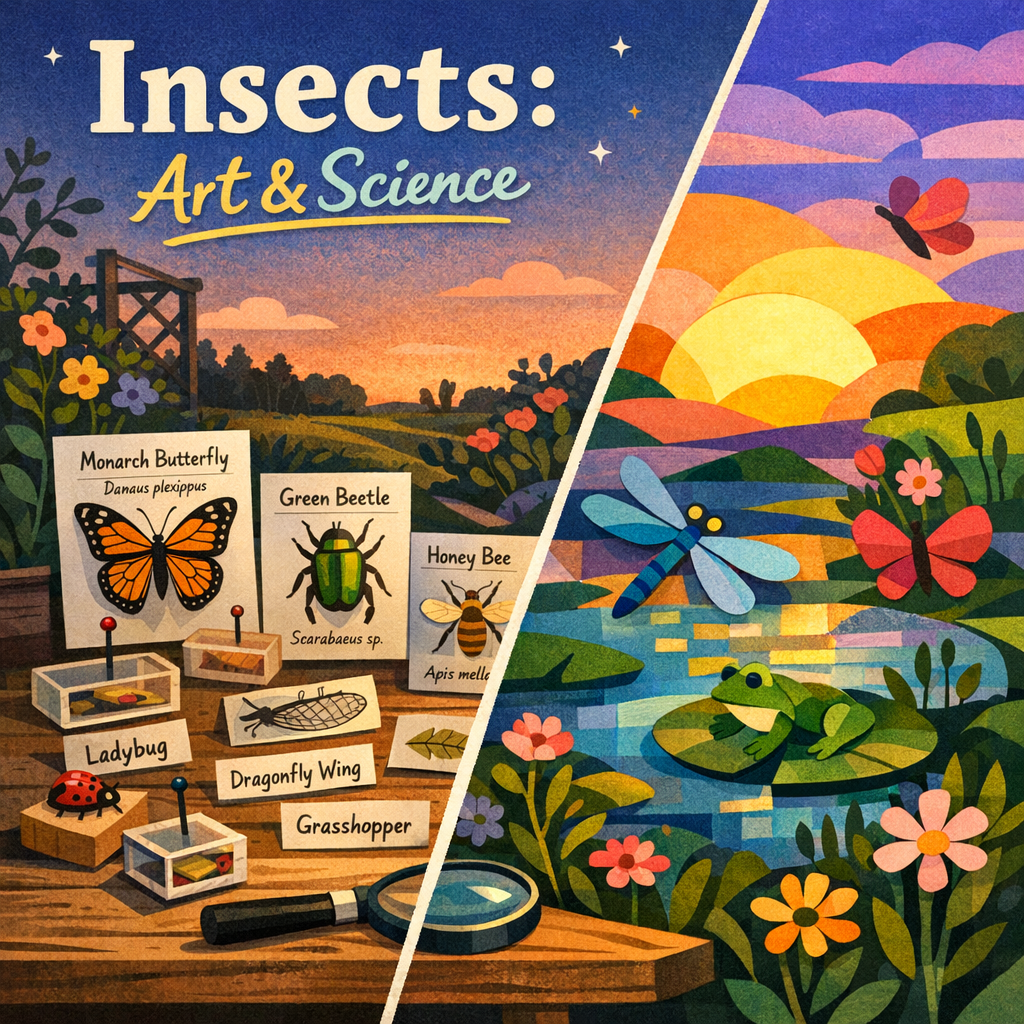
Students investigate neighborhood insects and use careful observation and identification to turn a local collection into meaningful art and writing. With support from a nearby nature center or botanical garden, they study insect anatomy, habitats, and classification while building a shared collection. The project builds observation, communication, collaboration, and revision skills as students create exhibition boards for a public Insect Habitat Gallery Walk.

Learning goals

Students will use close observation and research to collect, identify, and organize local insects using accurate anatomy, habitat, and classification vocabulary. They will create one visual artwork and one original writing piece that turn scientific observations into meaningful creative choices for an audience. Students will collaborate, use weekly feedback to revise their work, and reflect on how studying neighborhood insects connects science, art, and place.

Standards
  • [National Core Arts Standards] VA:Cn10.1.IIa - Utilize inquiry methods of observation, research, and experimentation to explore unfamiliar subjects through art-making.
Competencies
  • Effective Communication - Students practice listening to understand, communicating with empathy, and share their learning through exhibiting, presenting and reflecting on their work.
  • Critical Thinking & Problem Solving - Students consider a variety of innovative approaches to address and understand complex questions that are authentic and important to their communities.
  • Content Expertise - Students develop key competencies, skills, and dispositions with ample opportunities to apply knowledge and engage in work that matters to them.
  • Collaboration - Students co-design projects with peers, exercise shared-decision making, strengthen relational agency, resolve conflict, and assume leadership roles.
  • Academic Mindset - Students establish a sense of place, identity, and belonging to increase self-efficacy while engaging in critical reflection and action.

Products

Students will create an insect collection log and shared class database with photos or specimens, habitat notes, and classification tags. Along the way, they will develop weekly drafts: one insect finding, one art study, one writing draft, and brief reflection notes for critique and revision. By the end, each student will contribute an interactive exhibition board with insect evidence, habitat connections, a finished artwork, and a polished creative writing piece. They will present their work at the Insect Habitat Gallery Walk, using drafts and reflections to show how observation shaped their choices.

Launch

Launch with a Bug Hunt Kickoff Lab: teams search the schoolyard or nearby block for insects, photograph or briefly collect specimens, and sort them by visible traits and habitat. Back in class, students use nature center or botanical garden field guides to make first-pass identifications and add labeled finds to a shared class collection board. Introduce the essential question, then have students create a quick sketch and 6-line freewrite from one specimen to show how close observation can shape art and writing.

Exhibition

Host an “Insect Habitat Gallery Walk” at school where students present interactive boards with insect specimens or photos, classification tags, habitat notes, and their final art and writing pieces. Invite peers, teachers, families, and guests from the nearby nature center or botanical garden, with students sharing how observation and identification shaped their work. Include collection logs, draft-to-final samples, and brief reflections to highlight revision, accuracy, and growth.