All grades  Project 7 weeks

Physics & Fiction: Thrill-Seekers Unite!

Michelle M
Updated
PS.2.A
HS-PS3-5
PS.2.B
Critical Thinking & Problem Solving
Content Expertise
+ 4 more
1-pager

Purpose

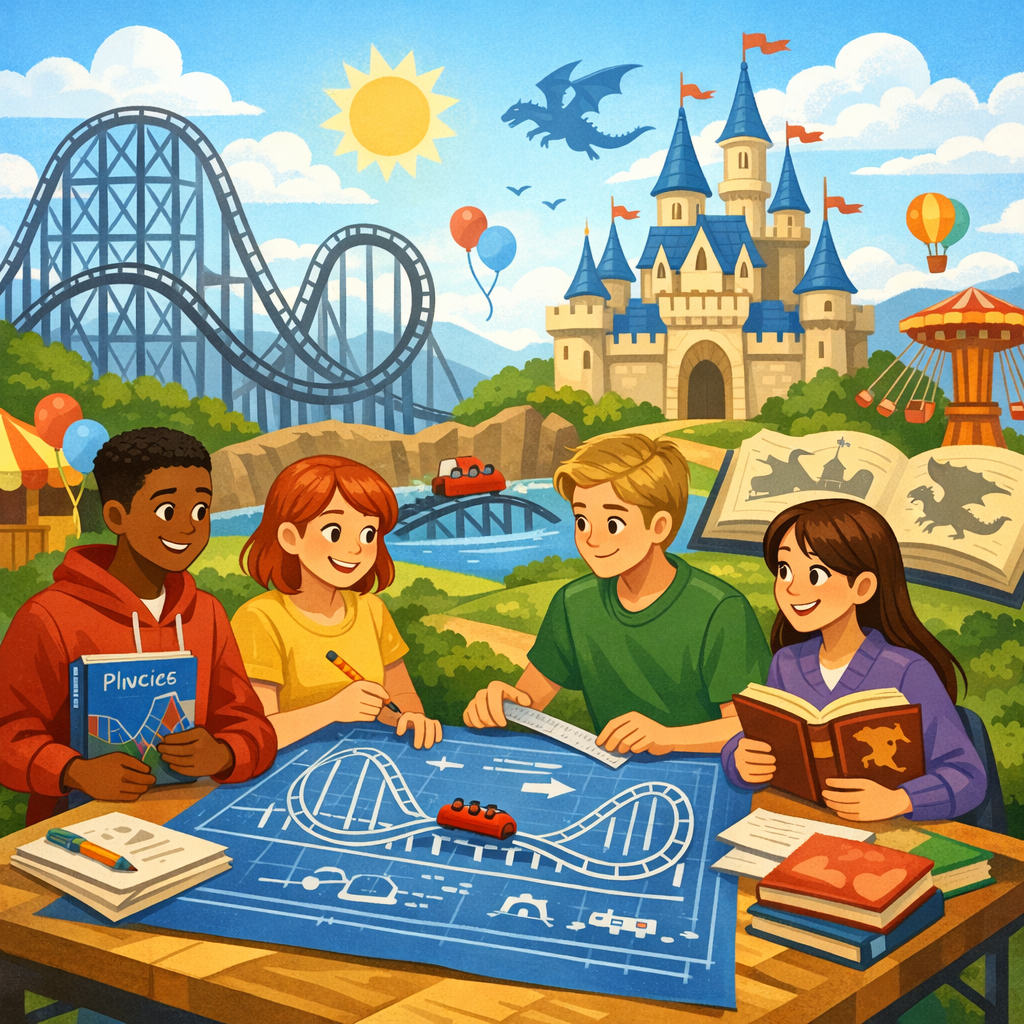
The purpose of this learning experience is to integrate physics and literature by having students design theme park rides that embody narrative elements from their chosen books. Through hands-on projects, students will apply physics concepts such as energy conservation and forces, while exploring themes of friendship and loneliness in literature. This interdisciplinary approach aims to deepen students' understanding of both subjects, fostering critical thinking, collaboration, and effective communication skills.

Learning goals

Students will apply physics principles, such as energy conservation and force interactions, to design and construct theme park ride models. They will analyze narrative elements and themes of friendship and loneliness in literature, connecting them to their ride designs. Students will develop critical thinking, collaboration, and communication skills through Socratic seminars, literature circles, and project presentations.

Standards
  • [Next Generation Science Standards] PS.2.A - Forces and Motion
  • [Next Generation Science Standards] HS-PS3-5 - Develop and use a model of two objects interacting through electric or magnetic fields to illustrate the forces between objects and the changes in energy of the objects due to the interaction.
  • [Next Generation Science Standards] PS.2.B - Types of Interactions
Competencies
  • Critical Thinking & Problem Solving - Students consider a variety of innovative approaches to address and understand complex questions that are authentic and important to their communities.
  • Content Expertise - Students develop key competencies, skills, and dispositions with ample opportunities to apply knowledge and engage in work that matters to them.
  • Collaboration - Students co-design projects with peers, exercise shared-decision making, strengthen relational agency, resolve conflict, and assume leadership roles.
  • Effective Communication - Students practice listening to understand, communicating with empathy, and share their learning through exhibiting, presenting and reflecting on their work.
  • Self Directed Learning - Students use teacher and peer feedback and self-reflection to monitor and direct their own learning while building self knowledge both in and out of the classroom.
  • Academic Mindset - Students establish a sense of place, identity, and belonging to increase self-efficacy while engaging in critical reflection and action.

Products

Students will create scaled-down models of theme park rides that integrate physics principles and narrative elements from their chosen books. Throughout the project, they will develop digital portfolios containing sketches, calculations, and annotations that demonstrate their understanding of physics and thematic connections. These portfolios will be showcased at the Physics & Fiction Fair, alongside their interactive ride models, allowing guests to experience the intersection of physics and storytelling.

Launch

Begin with "Launchpad Literature & Loops," where students form teams to create a simple ride prototype using everyday materials like cardboard and rubber bands. Challenge them to incorporate themes from "The Great Gatsby," such as ambition and the pursuit of dreams, into their design. This activity will spark creativity and set the stage for integrating physics and narrative elements in their upcoming projects.

Exhibition

Organize a "Physics & Fiction Fair" where students set up interactive booths showcasing their ride models and digital portfolios. Invite community partners, peers, and family members to engage with the exhibits, allowing students to explain the physics principles and narrative connections of their designs. Include hands-on activities at each booth to demonstrate the ride mechanics and thematic elements, encouraging visitors to interact and ask questions.