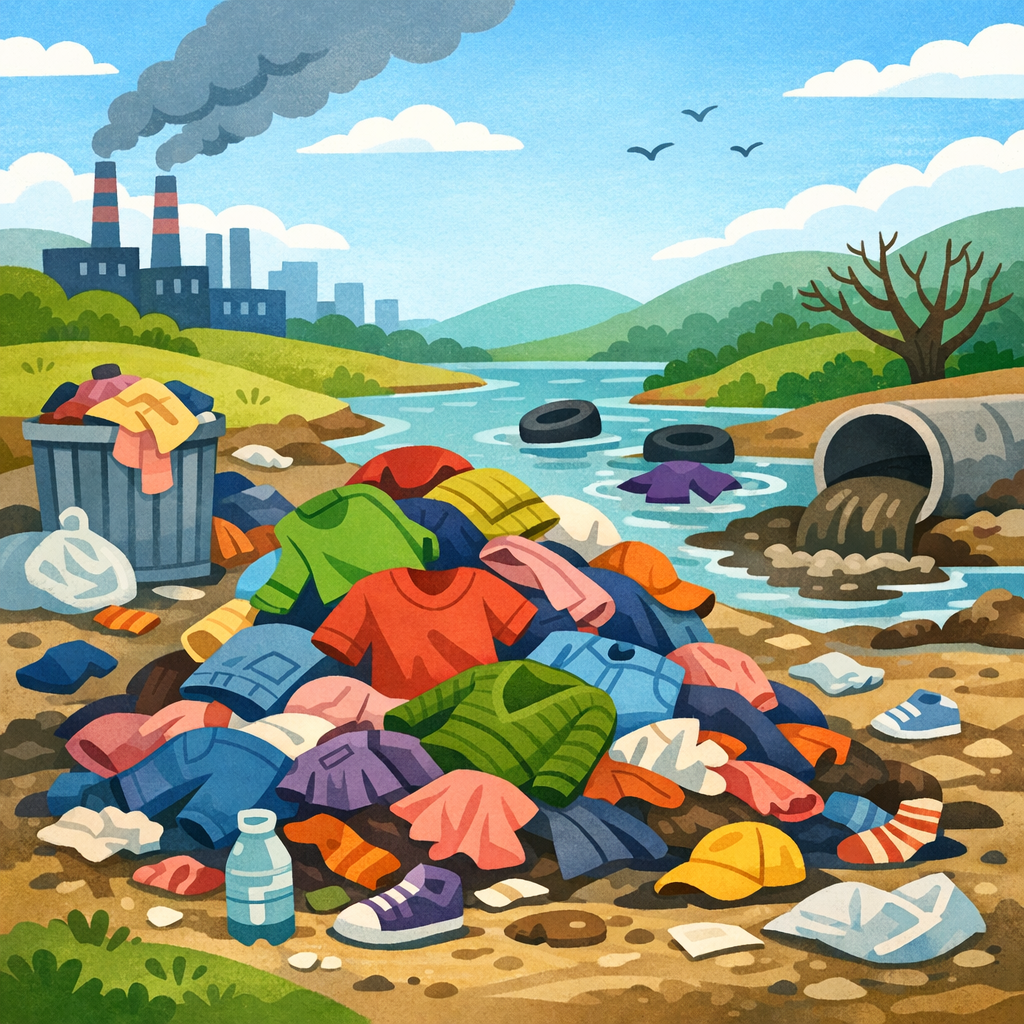
The purpose of this learning experience is to engage high school students in addressing environmental issues by transforming discarded clothing into valuable community resources. Through hands-on projects, students will explore sustainable practices, develop critical thinking and problem-solving skills, and foster a sense of social responsibility. This project aims to connect students with their community, enhancing their understanding of the environmental impact of textile waste and the importance of sustainable fashion.
Learning goals
Students will analyze the environmental impact of textile waste and propose sustainable solutions through the transformation of discarded clothing. They will develop data analysis skills by calculating the environmental costs associated with clothing production and recycling. Students will enhance their persuasive communication abilities by crafting and presenting compelling awareness campaigns. Additionally, they will explore the chemical and physical properties of textile materials, understanding their decomposition processes.
Products
Students will create functional items such as tote bags, blankets, and accessories from repurposed clothing. They will document the transformation process and compile a portfolio showcasing their designs and the environmental impact of their work. The project culminates in a community exhibition where students present their creations and engage the public in discussions about sustainable fashion.
Launch
Begin with a field trip to a local landfill or recycling center in Batavia to observe firsthand the impact of textile waste on the environment. Follow this with a guest speaker session featuring a representative from a local environmental organization who can discuss the importance of sustainable practices in fashion. Conclude the launch by having students participate in a hands-on workshop where they brainstorm and sketch initial ideas for transforming discarded clothing into new products.
Exhibition
Host a community showcase at a local venue in Batavia, where students display their upcycled clothing creations alongside informative posters detailing the environmental impact of textile waste. Invite community members, local environmental organizations, and family to engage with students as they present their projects and discuss the sustainable practices they've learned. Include interactive stations where attendees can try simple upcycling techniques, fostering a hands-on understanding of the project's goals.