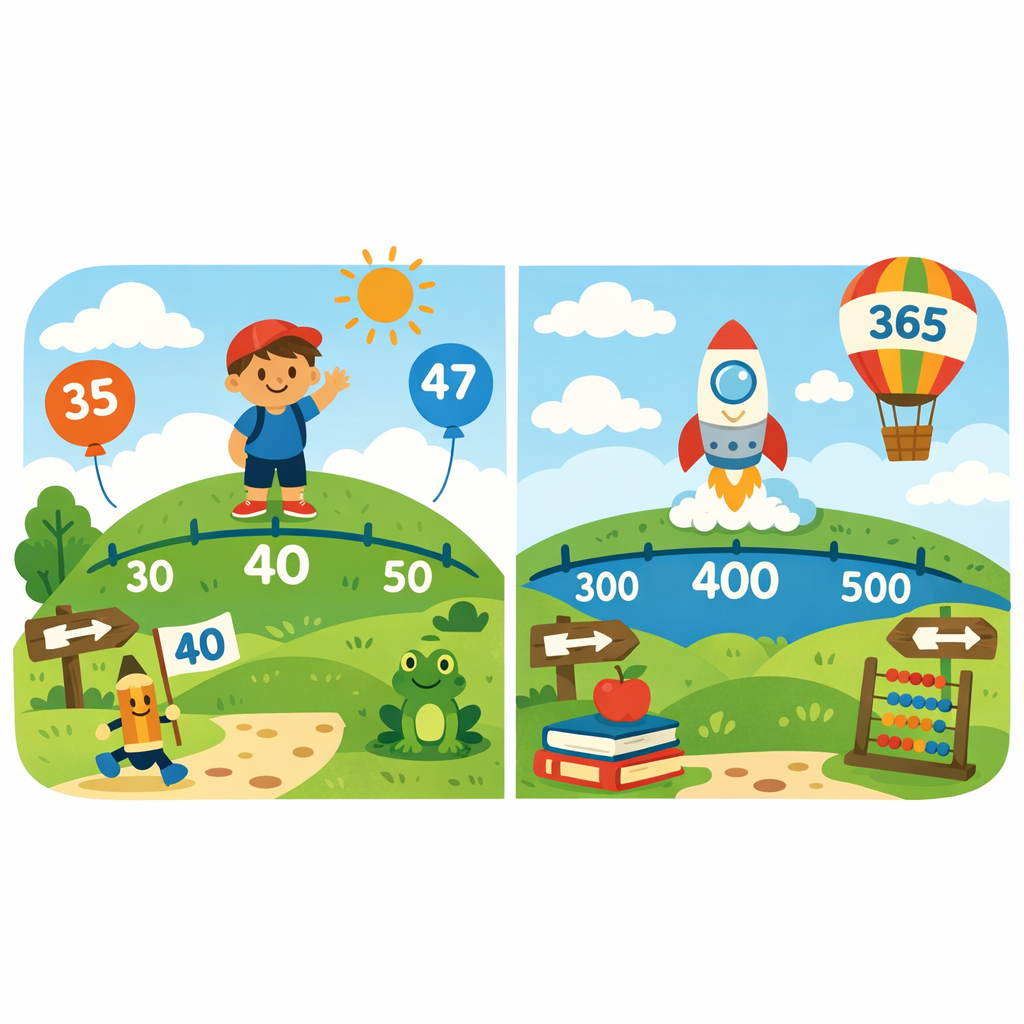
3rd Grade  Lesson 45 minutes

Round-Up Rodeo: Tens & Hundreds Adventure

Savannah F
Updated
KY.3.NBT.1
1-pager

Purpose

The purpose of this learning experience is to help students understand and apply the concept of rounding numbers to the nearest ten and hundred in real-world contexts. By engaging in hands-on activities and projects, students will develop a deeper understanding of place value and its practical applications. This lesson aims to enhance students' problem-solving skills and their ability to make estimations in everyday situations.

Learning goals

Students will understand how to use place value to round whole numbers to the nearest ten or hundred. They will apply rounding techniques in practical scenarios, such as estimating costs, to enhance their problem-solving skills. Students will also develop the ability to critique and revise their work through peer feedback, improving their accuracy and understanding of rounding concepts.

Standards
  • [Kentucky] KY.3.NBT.1 - Use place value understanding to round whole numbers to the nearest 10 or 100.

Products

Throughout the learning experience, students will create a poster showcasing various rounding techniques and their practical applications. Additionally, they will compile a list of rounded item prices from the scavenger hunt, demonstrating their ability to apply rounding in real-world contexts. By the end, students will have a portfolio of role-play reflections illustrating scenarios where rounding is useful.

Launch

Begin with the "Rounding Rally" scavenger hunt, where students search the classroom for items labeled with numbers. As they find each item, they round the numbers to the nearest ten or hundred, earning points for correct answers. This interactive activity sets the stage for understanding the practical application of rounding in everyday situations.

Exhibition

Host a "Rounding Showcase" where students present their posters and demonstrate their scavenger hunt findings to classmates and teachers. Invite students to explain their rounding strategies and applications in everyday scenarios during the showcase. Organize a gallery walk where students can view each other's work and leave positive feedback or questions on sticky notes.