About Us Impact News Pricing Contact Us Explore
Make a copy
About Us Impact News Pricing Contact Us Explore
Tools
Project-Based Learning Performance Assessment Student-Led Conferences Digital Portfolios
Framework
Loading
Loading
    Products & Rubric
    Design for Mastery Kit
    NEW
3rd Grade  Project 3 weeks

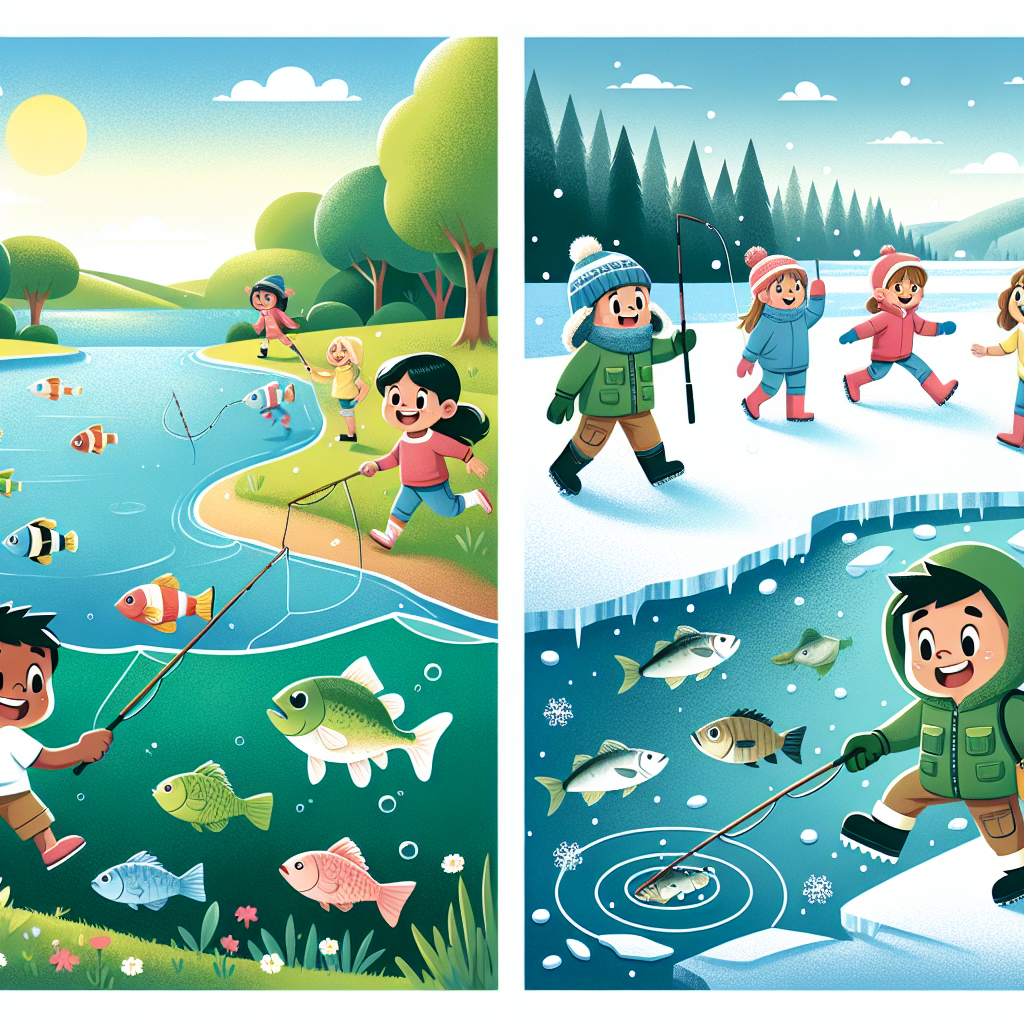
Fish Tales: Seasons & Water Types Adventure

Madelyn F
Feb 21, 2026
Updated Mar 31, 2026
SCI.3.CC.2
SCI.3.CC.1
SCI.3.CC.4
SS.Geog1.a.4-5
SS.Geog1.c.4-5
+ 5 more
1-pager

Purpose

The purpose of this project is to engage third-grade students in exploring the relationship between water types, seasonal changes, and local fishing practices within their community. Through hands-on investigations, field visits, and collaborative storytelling, students will deepen their understanding of environmental sustainability, fish habitats, and traditional ecological knowledge. This project aims to develop critical thinking, effective communication, and self-directed learning competencies by encouraging students to connect local cultural practices with broader ecological challenges.

Learning goals

Students will explore the relationships between water types, seasons, and fish biodiversity in their community, developing scientific inquiry skills through hands-on investigations. They will learn to create and interpret maps and replicas, while understanding the importance of sustainable fishing practices and environmental stewardship. Through collaboration with community partners, students will gain insights into cultural perspectives on fishing and develop effective communication skills by sharing their findings with peers and a broader audience.

Standards
  • [Wisconsin] SCI.3.CC.2 - Students use science and engineering practices, disciplinary core ideas, and cause and effect relationships to make sense of phenomena and solve problems.
  • [Wisconsin] SCI.3.CC.1 - Students use science and engineering practices, disciplinary core ideas, and patterns to make sense of phenomena and solve problems.
  • [Wisconsin] SCI.3.CC.4 - Students use science and engineering practices, disciplinary core ideas, and an understanding of systems and models to make sense of phenomena and solve problems.
  • [Wisconsin] SS.Geog1.a.4-5 - Summarize how location (absolute and relative) affects people, places, and environment. Construct maps (paper or digital), charts, and graphs using appropriate elements (i.e., date, orientation, grid, scale, title, author, index, legend, situation)
  • [Wisconsin] SS.Geog1.c.4-5 - Create and label a map (paper or digital) of the local community, state, tribal lands, and country, including both physical (e.g., oceans and continents) and human (e.g., roads, buildings) characteristics. Identify and construct regions (digital or paper) in Wisconsin and the United States.
  • [Wisconsin] SCI.3.CC.1 - Students use science and engineering practices, disciplinary core ideas, and patterns to make sense of phenomena and solve problems.
Competencies
  • Critical Thinking & Problem Solving - Students consider a variety of innovative approaches to address and understand complex questions that are authentic and important to their communities.
  • Effective Communication - Students practice listening to understand, communicating with empathy, and share their learning through exhibiting, presenting and reflecting on their work.
  • Self Directed Learning - Students use teacher and peer feedback and self-reflection to monitor and direct their own learning while building self knowledge both in and out of the classroom.
  • Academic Mindset - Students establish a sense of place, identity, and belonging to increase self-efficacy while engaging in critical reflection and action.

Products

Students will individually pick a type of fish and become an expert. The students will present their fish findings at fish market, the whole 3rd grade is doing this. Each student will have a stand with their fish, and their findings, and the goal is to sell their fish to people that come to their stand. Friends, families, and other grade levels can go to the market to see the fish market.

Launch

Kick off the project by organizing a 'Fishing Explorers Day,' where students participate in interactive stations simulating local fishing methods across seasons. Include storytelling sessions with tribal community leaders to introduce traditional ecological knowledge and cultural narratives surrounding fishing. Wrap up with a collaborative presentation, where students brainstorm ideas on sustainability's role in preserving fish habitats, laying the foundation for their project exploration.

Exhibition

Students will organize a 'Fishing Through the Seasons Fair' to exhibit their learning outcomes. They will present their maps and replicas of local fishing environments, showcasing how different seasons and types of water influence fish populations and fishing strategies. The event will serve as an interactive platform for students to share insights with community members, encouraging dialogue and reflection on the sustainability and environmental challenges faced by local fish habitats about cultural narratives.

Plan
By Phase By Day Calendar
Question Design Collect Analyze Conclude
Question
Students will encounter a puzzling spring fishing phenomenon in their community and develop focused, investigable research questions about how one local fish responds to one type of water in the spring. They will refine questions through peer feedback and craft a clear hypothesis with rationale to guide the rest of their investigation.
Days 1 - 2
🌊 Water Chronicles Exhibit Walk
Launch 45m
❓ Spring Fish Research Question Draft
Deliverable 45m
No activities have been added to this phase yet.

Edit Phase

Loading...
Design
Students will design a clear, grade-appropriate investigation plan to answer their focused research question about one local fish and one spring water type. They will select a methodology that matches their question, identify variables or data sources, plan systematic data collection with quality checks, and revise their plan after structured peer feedback before beginning Phase 3 data collection.
Days 3 - 5
📝 Fish Habitat Method Plan
Deliverable 45m
🔍 Method Feedback & Revision Gate
Assessment 45m
🧪 Choosing Our Investigation Method
Knowledge/Skill Building 45m
No activities have been added to this phase yet.

Edit Phase

Loading...
Collect
Students will systematically gather and document high-quality data about one local fish and one spring water type, carefully recording conditions, observations, and any unexpected results so their later analysis is grounded in organized evidence.
Days 6 - 8
📊 Spring Habitat Data Collection
Deliverable 45m
✅ Data Quality Check & Peer Review
Knowledge/Skill Building 45m
🧪 Methodology & Data Checkpoint
Assessment 45m
No activities have been added to this phase yet.

Edit Phase

Loading...
Analyze
Students will analyze their collected fish habitat data by creating visualizations, identifying patterns and anomalies, challenging interpretations with peers, and drafting preliminary findings that connect evidence back to their original research questions and hypotheses about spring water types.
Days 9 - 12
📊 Bar Graphs & Habitat Charts
Knowledge/Skill Building 45m
🔍 Pattern & Anomaly Hunt
Knowledge/Skill Building 45m
💬 Data Talk Peer Review
Project Work 45m
📝 Preliminary Findings Report
Deliverable 45m
No activities have been added to this phase yet.

Edit Phase

Loading...
Conclude
Students will draw evidence-based conclusions about how spring water types affect local fish populations, explicitly acknowledge limitations in their investigations, generate new research questions, and present their full investigation process to an authentic audience at the Fishing Through the Seasons Fair.
Days 13 - 15
🧠 Evidence-Based Conclusions Workshop
Knowledge/Skill Building 45m
🎣 Fish Market Booth Rehearsal
Project Work 45m
🌊 Fishing Through the Seasons Fair
Assessment 45m
No activities have been added to this phase yet.

Edit Phase

Loading...
Question Days 1–2
Day 1
🌊 Water Chronicles Exhibit Walk
Launch 45m
❓ Spring Fish Research Question Draft
Deliverable 45m
Day 2
Design Days 3–5
Day 3
📝 Fish Habitat Method Plan
Deliverable 45m
🔍 Method Feedback & Revision Gate
Assessment 45m
🧪 Choosing Our Investigation Method
Knowledge/Skill Building 45m
Day 4
Day 5
Collect Days 6–8
Day 6
Day 7
📊 Spring Habitat Data Collection
Deliverable 45m
✅ Data Quality Check & Peer Review
Knowledge/Skill Building 45m
Day 8
🧪 Methodology & Data Checkpoint
Assessment 45m
Analyze Days 9–12
Day 9
📊 Bar Graphs & Habitat Charts
Knowledge/Skill Building 45m
Day 10
🔍 Pattern & Anomaly Hunt
Knowledge/Skill Building 45m
Day 11
💬 Data Talk Peer Review
Project Work 45m
Day 12
📝 Preliminary Findings Report
Deliverable 45m
Conclude Days 13–15
Day 13
🧠 Evidence-Based Conclusions Workshop
Knowledge/Skill Building 45m
Day 14
🎣 Fish Market Booth Rehearsal
Project Work 45m
Day 15
🌊 Fishing Through the Seasons Fair
Assessment 45m

April 2026

Mon
Tue
Wed
Thu
Fri
20 Day 1
Question
🌊 Water Chronicles Exhibit Walk
❓ Spring Fish Research Question Draft
21 Day 2
22 Day 3
Design
📝 Fish Habitat Method Plan
🔍 Method Feedback & Revision Gate
🧪 Choosing Our Investigation Method
23 Day 4
24 Day 5
27 Day 6
Collect
28 Day 7
📊 Spring Habitat Data Collection
✅ Data Quality Check & Peer Review
29 Day 8
🧪 Methodology & Data Checkpoint
30 Day 9
Analyze
📊 Bar Graphs & Habitat Charts
1 Day 10
🔍 Pattern & Anomaly Hunt

May 2026

Mon
Tue
Wed
Thu
Fri
4 Day 11
💬 Data Talk Peer Review
5 Day 12
📝 Preliminary Findings Report
6 Day 13
Conclude
🧠 Evidence-Based Conclusions Workshop
7 Day 14
🎣 Fish Market Booth Rehearsal
8 Day 15
🌊 Fishing Through the Seasons Fair
Share
Activities
Loading
Loading
Loading
Get it on Google Play
© 2026 Inkwire Inc
Contact Us Privacy Policy Terms of Service