About Us Impact News Pricing Contact Us Explore
Make a copy
About Us Impact News Pricing Contact Us Explore
Tools
Project-Based Learning Performance Assessment Student-Led Conferences Digital Portfolios
HTH GSE Kaleidoscope
Personalize your design more by filling out the framework elements.
Designed by the Professional Learning team at the High Tech High Graduate School of Education.
Learn more
Essential Question
What question will guide the project and learning?
Community Partners
What organizations and individuals will collaborate and enhance the learning experience?
Reflection
What opportunities are there for us to reflect on our academic and socio-emotional development?
Assessment
In what ways can we demonstrate what we have learned and how we have grown?
Exhibition
How and who will we celebrate our learning with?
Project Launch
What shared experiences will engage us in the content, skills, and mindsets of the project?
Core Content
What will we need to learn and practice in order to engage in the project?
Critique and Revision
How will opportunities for feedback and refinement be embedded in the project?
Product
What will we make, build, or do that will have an impact on us or the world around us?
Next
What question will guide the project and learning?

(1) How do changes in weather (hot, cold, snow, rain) affect how our families live, play, and travel?
(2) How do different weather patterns and climate conditions shape the identity and culture of our community over the seasons?

    Design for Mastery Kit
    NEW
2nd Grade  Project 3 weeks

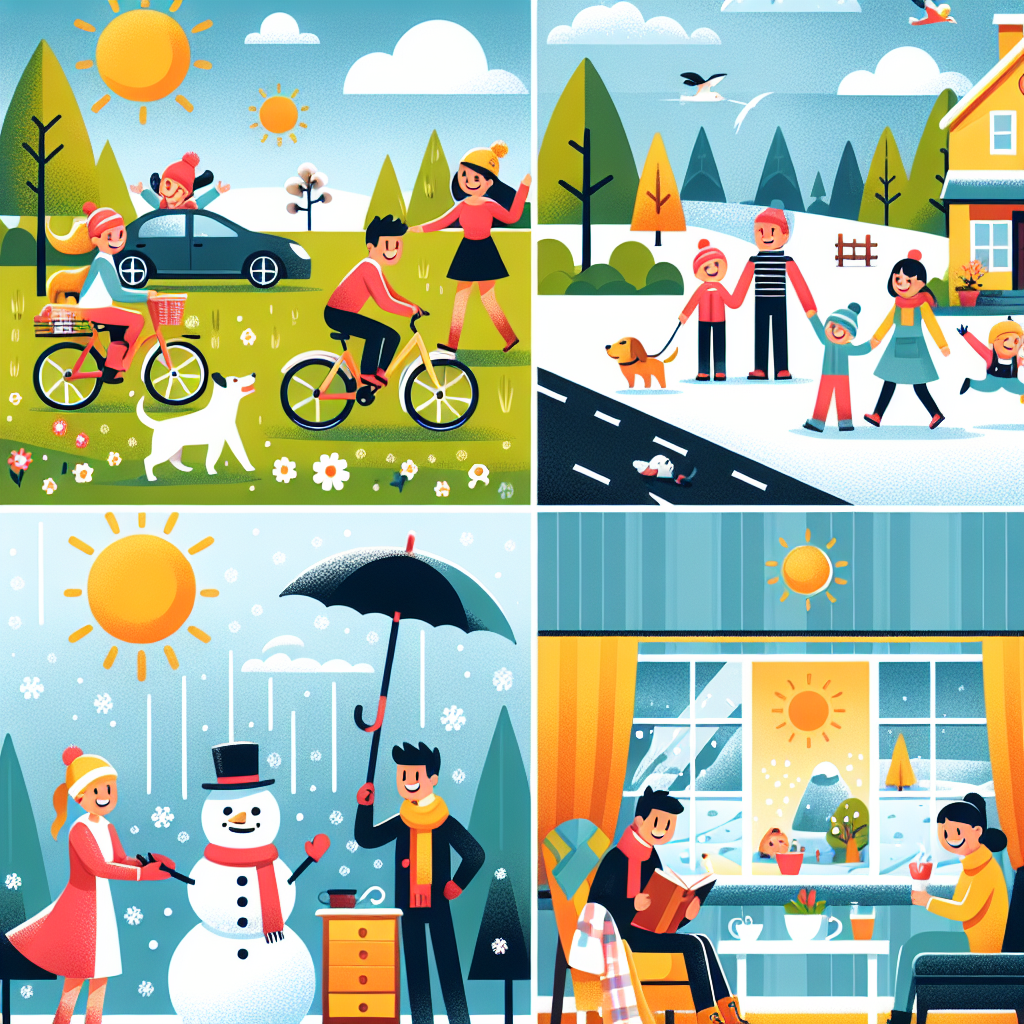
Weather Wizards: Family Fun Forecasts!

Skylie W
SCI.2.ESS.1
SCI.2.ESS.3
ELA.2.R.1
ELA.2.W.2.b
M.2.MD.D.10
+ 6 more
1-pager

Purpose

The project invites second-grade students of all abilities to explore how weather influences our lives and communities in engaging ways. Through hands-on activities, students will investigate real world questions, collaborating with peers to develop critical thinking, communication, and teamwork skills. This experience allows students to understand the cultural and practical impacts of weather, as they create creative projects and exhibitions highlighting their discoveries about community life.

Learning goals

Students will explore how weather patterns influence daily life and cultural identity in their community. They will enhance critical thinking by collecting and interpreting weather data, and they will practice communication and collaboration by engaging in interviews, role-plays, and storytelling activities. Students will create stories and animations showcasing community adaptations to weather, allowing them to understand different perspectives and solve problems creatively while connecting learning to real-world contexts.
Standards
  • [Wisconsin] SCI.2.ESS.1 - Students use science and engineering practices, crosscutting concepts, and an understanding of Earth’s place in the universe to make sense of phenomena and solve problems.
  • [Wisconsin] SCI.2.ESS.3 - Students use science and engineering practices, crosscutting concepts, and an understanding of the Earth and human activity to make sense of phenomena and solve problems.
  • [Wisconsin] ELA.2.R.1 - Develop and answer questions to demonstrate an understanding of key ideas and details in a text. (RI&RL)
  • [Wisconsin] ELA.2.W.2.b - Informative/explanatory text in which they introduce a topic, use facts and definitions to develop points, and provide a concluding statement or section.
  • [Wisconsin] M.2.MD.D.10 - Draw a picture graph and a bar graph (with single-unit scale) to represent a data set with up to four categories. Solve simple put together, take-apart, and compare problems using information presented in a bar graph.
  • [Wisconsin] M.2.MD.D.9 - Generate measurement data by measuring lengths of several objects to the nearest whole unit, or by making repeated measurements of the same object. Show the measurements by making a line plot, where the horizontal scale is marked off in whole-number units.
  • [Wisconsin] SS.Geog4.a.2 - Categorize characteristics of the local community (e.g., weather and climate, population, landforms, vegetation, culture, industry). Describe how certain places have meanings that distinguish them from other places. (e.g., shopping mall, park, places of worship).
  • [Wisconsin] SS.Geog3.b.2 - Compare and contrast the different modes of transportation and communication used by families in work and daily lives.
Competencies
  • Critical Thinking & Problem Solving - Students consider a variety of innovative approaches to address and understand complex questions that are authentic and important to their communities.
  • Effective Communication - Students practice listening to understand, communicating with empathy, and share their learning through exhibiting, presenting and reflecting on their work.
  • Collaboration - Students co-design projects with peers, exercise shared-decision making, strengthen relational agency, resolve conflict, and assume leadership roles.

Products

Throughout the learning experience, students will create a simple storybook showcasing familiar community characters experiencing diverse weather conditions, highlighting adaptive responses and cultural nuances. By discussing with family members, students will also produce basic animated slideshows that narrate how weather changes impact daily life, integrating personal stories with weather data. At the project's end, students will craft models of their neighborhood depicting different weather scenarios, blending creativity with the learned content to reflect the project's themes.

Launch

Begin the project with the 'Seasons of Our Community Festival' by transforming the classroom into a seasonal wonderland featuring stations dedicated to each type of weather. Host simple, interactive activities like crafting weather instruments and dressing paper dolls for different weather conditions. Encourage students to share stories of family activities in various weather scenarios and collaborate on a large mural illustrating a day in their community for each season, ensuring that activities are accessible for all ability levels.

Exhibition

Host a 'Weather Whiz Presentation Day' where students, as junior meteorologists, share simple weather-related stories. These can be presented through colorful drawings and short, narrated weather reports. Inclusive of every student's abilities, these presentations enable each child to express their understanding of weather impacts on their community in engaging and accessible ways.
Learning Journey
Plan

No plan yet

Create a Learning Journey first to generate your activity plan. The plan view will show your activities organized by day and week.

Share
Loading
Loading
Get it on Google Play
© 2026 Inkwire Inc
Contact Us Privacy Policy Terms of Service