11th Grade  Project 3 weeks

Water Wars: Niagara's Power Play

Maria V
Updated
Critical Thinking & Problem Solving
Collaboration
Effective Communication
Content Expertise
Self Directed Learning
1-pager

Purpose

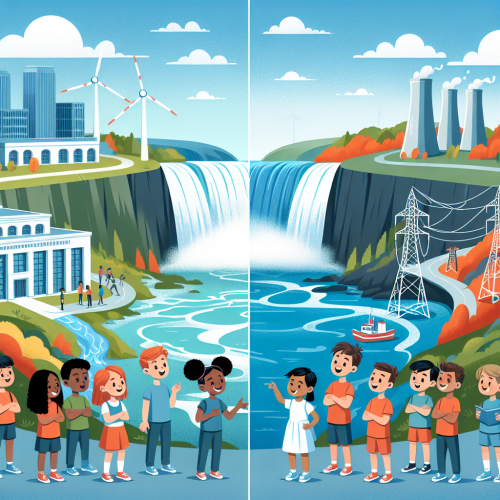
This project-based learning unit engages students in exploring the dynamic interplay between hydropower and electric energy solutions in Niagara Falls, NY, through a comprehensive, real-world lens. By critically analyzing historical, technological, and environmental impacts, students develop key competencies in critical thinking, collaboration, effective communication, and content expertise. The hands-on activities, including site visits, software simulations, and a public STEM Expo, allow students to address complex, community-relevant questions, integrating math and engineering concepts with a focus on sustainability and future innovations. Through this experience, learners are equipped to apply and share their insights, contributing thoughtfully to regional and global energy discussions.

Learning goals

In this learning experience, students will explore the interplay between hydropower and electric energy solutions, using eigenvalues and eigenvectors to model energy dynamics at Niagara Falls. They will develop proficiency with MATLAB to create simulations that reflect real-world energy scenarios and technological advancements. Through collaboration with industry experts and community partners, students will deepen their understanding of both historical contexts and future prospects of energy landscapes. The project will also enhance their critical thinking, effective communication, and self-directed learning as they produce short documentaries and participate in a public STEM Expo.

Competencies
  • Critical Thinking & Problem Solving - Students consider a variety of innovative approaches to address and understand complex questions that are authentic and important to their communities.
  • Collaboration - Students co-design projects with peers, exercise shared-decision making, strengthen relational agency, resolve conflict, and assume leadership roles.
  • Effective Communication - Students practice listening to understand, communicating with empathy, and share their learning through exhibiting, presenting and reflecting on their work.
  • Content Expertise - Students develop key competencies, skills, and dispositions with ample opportunities to apply knowledge and engage in work that matters to them.
  • Self Directed Learning - Students use teacher and peer feedback and self-reflection to monitor and direct their own learning while building self knowledge both in and out of the classroom.

Products

Throughout the learning experience, students will produce a series of interactive simulation models using eigenvectors to demonstrate the dynamics of electricity generation at Niagara Falls. Additionally, they will create short documentaries featuring local engineers, highlighting the community and environmental impacts of hydropower. These products allow students to apply scientific concepts learned and connect them meaningfully to real-world energy challenges. Finally, students will prepare and present their findings at an interactive 'STEM Expo: Powering Niagara,' engaging with members of the community and industry experts.

Launch

To kick off this engaging learning experience, organize a site visit to the Niagara Power Project where students can explore the hydropower facility. This visit will include an interactive tour and a Q&A session with engineers to gain firsthand insights into hydropower generation. By witnessing the real-world implications of renewable energy and its impact on the community, students will set the stage for their projects to analyze and simulate the dynamics of electricity generation using eigenvector applications.

Exhibition

At the 'STEM Expo: Powering Niagara,' students will demonstrate their electric generation simulations using interactive displays, offering visitors a hands-on experience to manipulate and understand energy solutions. This public exhibition will feature short documentaries that students created, showcasing interviews with local engineers discussing hydropower's community impact. With community members, local businesses, and tech firms in attendance, students will present their findings and engage in discussions about future energy advancements for the Niagara region. The event will facilitate meaningful dialogue between students and industry experts, allowing students to receive valuable insights and feedback.