3rd Grade  Project 6 weeks

Culture Craze: Explore, Share, Connect!

Maite L
Updated
CCSS.ELA-Literacy.W.3.2
CCSS.ELA-Literacy.W.3.4
CCSS.ELA-Literacy.W.3.5
CCSS.ELA-Literacy.W.3.6
CCSS.ELA-Literacy.W.3.7
+ 10 more
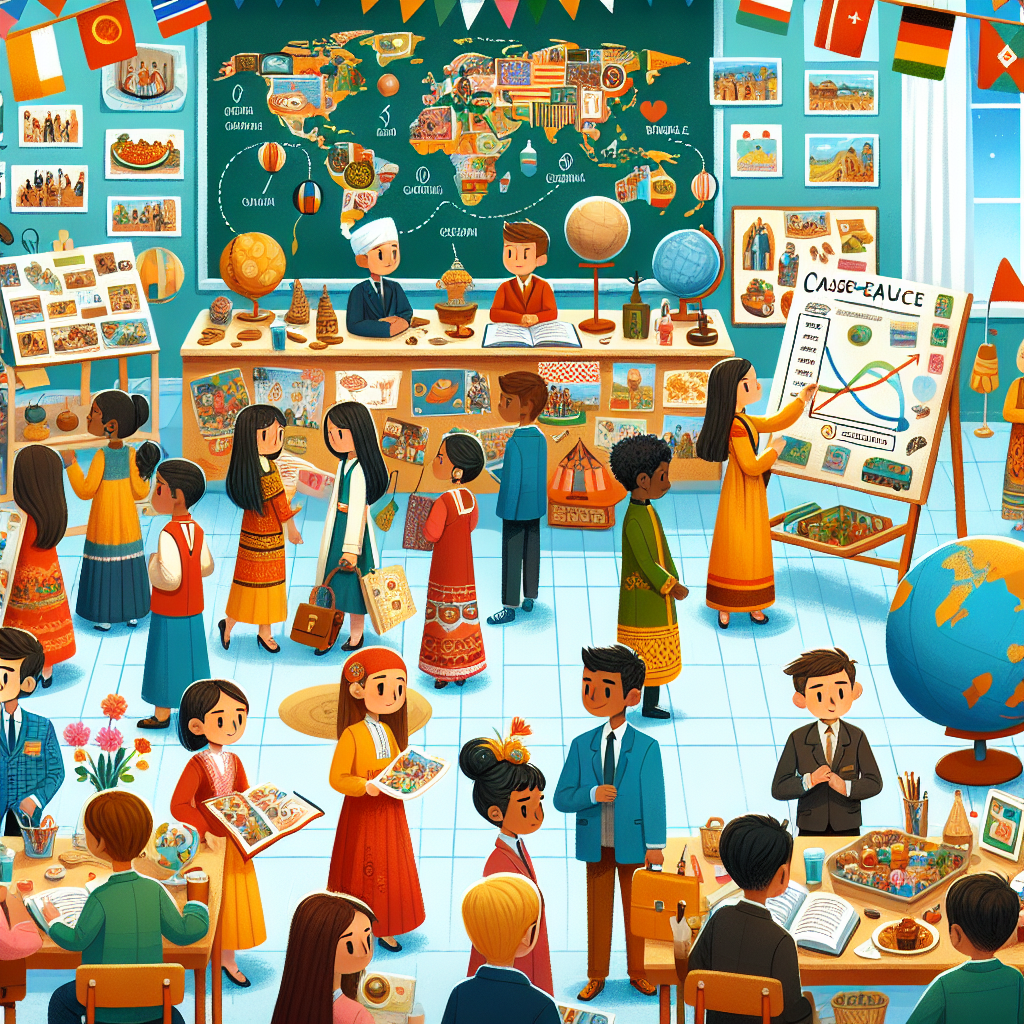
1-pager

Purpose

The purpose of this 6-week project is to immerse 3rd-grade students in a comprehensive exploration of global cultures through a travel agency fair. Students will engage in collaborative research to examine the cultural aspects and historical evolution of a specific culture, showcasing their findings in an interactive exhibition. This experience deepens understanding of cultural diversity and cause-and-effect relationships, promoting critical thinking, effective communication, and self-directed learning while facilitating real-world interactions with international community partners.

Learning goals

Students will conduct comprehensive research on various global cultures, focusing on their historical journeys and distinct cultural aspects to understand change over time through cause and effect relationships. They will interact with community partners from different countries for authentic exchanges, enriching their cultural perspectives. The project will culminate in a "Time Travel Agency" exhibition where students present informed narratives about the past, present, and future of selected cultures, demonstrating global interconnectedness and empathy. Through self-reflection, students will document insights in personalized passports, showcasing learning from cultures beyond their own focus, and gain feedback to refine their presentations. This process allows students to develop critical competencies such as effective communication, critical thinking, and self-directed learning.

Standards
  • [Common Core] CCSS.ELA-Literacy.W.3.2 - Write informative/explanatory texts to examine a topic and convey ideas and information clearly.
  • [Common Core] CCSS.ELA-Literacy.W.3.4 - With guidance and support from adults, produce writing in which the development and organization are appropriate to task and purpose.
  • [Common Core] CCSS.ELA-Literacy.W.3.5 - With guidance and support from peers and adults, develop and strengthen writing as needed by planning, revising, and editing.
  • [Common Core] CCSS.ELA-Literacy.W.3.6 - With guidance and support from adults, use technology to produce and publish writing (using keyboarding skills) as well as to interact and collaborate with others.
  • [Common Core] CCSS.ELA-Literacy.W.3.7 - Conduct short research projects that build knowledge about a topic.
  • [Common Core] CCSS.ELA-Literacy.W.3.8 - Recall information from experiences or gather information from print and digital sources; take brief notes on sources and sort evidence into provided categories.
  • [Common Core] CCSS.ELA-Literacy.RI.3.3 - Describe the relationship between a series of historical events, scientific ideas or concepts, or steps in technical procedures in a text, using language that pertains to time, sequence, and cause/effect.
  • [Common Core] CCSS.ELA-Literacy.RI.3.7 - Use information gained from illustrations (e.g., maps, photographs) and the words in a text to demonstrate understanding of the text (e.g., where, when, why, and how key events occur).
  • [Common Core] CCSS.ELA-Literacy.RI.3.8 - Describe the logical connection between particular sentences and paragraphs in a text (e.g., comparison, cause/effect, first/second/third in a sequence).
Competencies
  • Collaboration - Students co-design projects with peers, exercise shared-decision making, strengthen relational agency, resolve conflict, and assume leadership roles.
  • Critical Thinking & Problem Solving - Students consider a variety of innovative approaches to address and understand complex questions that are authentic and important to their communities.
  • Effective Communication - Students practice listening to understand, communicating with empathy, and share their learning through exhibiting, presenting and reflecting on their work.
  • Content Expertise - Students develop key competencies, skills, and dispositions with ample opportunities to apply knowledge and engage in work that matters to them.
  • Academic Mindset - Students establish a sense of place, identity, and belonging to increase self-efficacy while engaging in critical reflection and action.
  • Self Directed Learning - Students use teacher and peer feedback and self-reflection to monitor and direct their own learning while building self knowledge both in and out of the classroom.

Products

Students will collaboratively or individually research a specific culture, using online and print resources to examine the past, present, and future aspects of that culture. They will create a comprehensive exhibit for a culture fair, incorporating interactive components such as informative displays, cultural artifacts, and multimedia presentations that clearly communicate their findings. The exhibit will illustrate cause and effect relationships and cultural changes over time, presented in a "Time Travel Agency" booth. Additionally, students will produce a personalized passport featuring reflections and facts about other cultures, fostering an appreciation for global diversity.

Launch

The project will begin with a virtual tour and class exchange, introducing students to another culture's daily activities and traditions. This will provide a foundation for their research, where they will delve into various cultural aspects, examining historical changes and their causes and effects. The interaction with global peers will enhance empathy and set the tone for meaningful research, preparing them to share insights at the culture fair.

Exhibition

Students will host a Culture Fair where they will present their in-depth research on a specific culture’s past, present, and future, engaging classmates, peers, and parents with interactive exhibits. They will display their findings through creative and informative presentations, supported by cultural artifacts and research data to showcase cause and effect relationships within cultural evolutions. The exhibition will include storytelling elements, such as a cultural dance or song, enhancing the audience's understanding and appreciation of diverse cultures. This event aims to create meaningful dialogue and allows students to receive constructive feedback for refining their communication and research skills.