About Us Impact News Pricing Contact Us Explore
Make a copy
About Us Impact News Pricing Contact Us Explore
Tools
Project-Based Learning Performance Assessment Student-Led Conferences Digital Portfolios
Framework
Loading
Loading
    Products & Rubric
2nd, 4th Grades  Project 12 weeks

Veggie Patch Playground

Christine H
Feb 4, 2026
Updated Feb 4, 2026
SS.PS3.d.1
SS.PS4.a.e
SS.PS4.b.2
SS.Inq1.a.e
SS.Inq1.b.e
+ 24 more
1-pager

Purpose

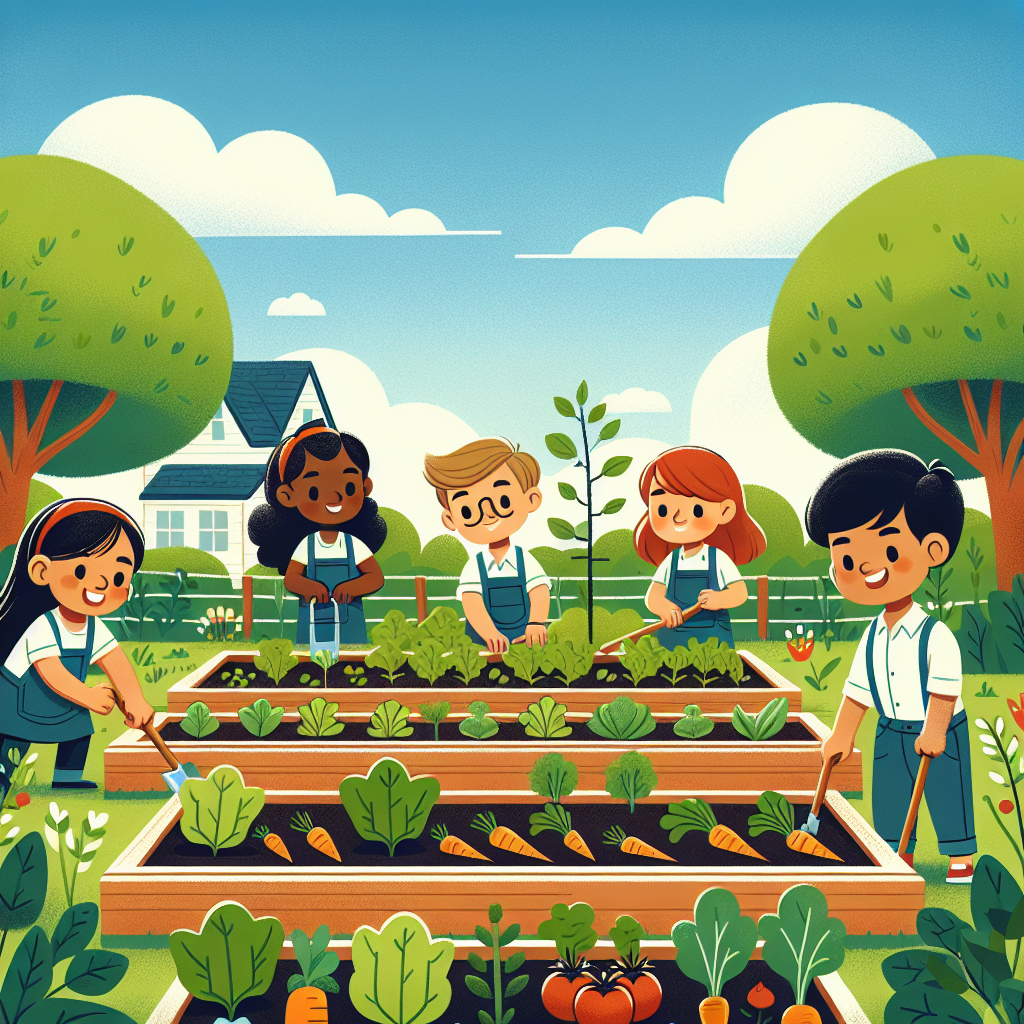
The purpose of this project is to immerse students in a hands-on, collaborative journey of designing and nurturing raised vegetable gardens. By actively engaging in the planting process, performing scientific experiments, and participating in community discussions, students will deepen their understanding of sustainable agriculture and the impact of local resources. This experience promotes curiosity, fosters problem-solving, and builds communication skills as students document their learning journey to share the value of gardening with their peers and community.

Learning goals

By participating in the raised vegetable garden project, students will learn to effectively collaborate and communicate their ideas, enhancing their problem-solving skills to address real-world challenges in agriculture. They will gain hands-on experience with scientific inquiry through soil testing and growth observations, developing an understanding of the nutritional benefits and economic significance of locally grown produce. Through this immersive process, students will cultivate a deeper appreciation for their community’s agricultural resources and the environmental impact of gardening. Additionally, they will gain practical skills in map-making and data documentation, integrating art and science to visually narrate their garden's growth journey.

Standards
  • [Wisconsin] SS.PS3.d.1 - Predict how people come up with different ideas to solve a problem.
  • [Wisconsin] SS.PS4.a.e - Compare and contrast perspectives on the same topic.
  • [Wisconsin] SS.PS4.b.2 - Give an example of a compromise.
  • [Wisconsin] SS.Inq1.a.e - Explain why or how a teacher- or text-provided question is important to a topic or issue.
  • [Wisconsin] SS.Inq1.b.e - When provided with a question, determine what other questions are needed to support the research (i.e., “What more do we need to know?”).
  • [Wisconsin] SS.Inq2.a.e - Brainstorm what resources would be valuable to guide the inquiry.
  • [Wisconsin] SS.Inq2.b.e - Review and ask questions about books, photos, artifacts, websites, and other sources that will give insight into the inquiry.
  • [Wisconsin] SS.Inq3.a.e - With prompting and support, state a claim to answer a question that the class is considering.
  • [Wisconsin] SS.Inq3.b.e - Determine which evidence in teacher-provided sources support a claim that answers a compelling question.
  • [Wisconsin] SS.Inq3.c.e - Explain how evidence supports a claim for a class inquiry.
  • [Wisconsin] SS.Inq4.a.e - Communicate conclusions.
  • [Wisconsin] SS.Inq4.b.e - Respond effectively to questions about their inquiry.
  • [Wisconsin] SS.Inq5.a.e - Explore opportunities for personal or collaborative civic engagement with community, school, state, tribal, national, and/or global implications.
  • [Wisconsin] SS.Econ1.a.1 - Differentiate between a “want” and a “need”. Describe resources that are important or useful to you, your family, community, and country.
  • [Wisconsin] SS.Econ2.a.1 - Differentiate between buyers (consumers) and sellers (producers).
  • [Wisconsin] SS.Econ2.c.2 - Predict how producers use the factors of production (i.e., land, labor, human and physical capital, and entrepreneurship) to make goods, deliver services, and earn profits.
  • [Wisconsin] SS.Econ2.b.2 - Define product market and categorize prices of products in a local market.
  • [Wisconsin] SS.Econ3.a.1 - Identify the cost of everyday goods (e.g., milk, bread, fruit, vegetables, cheese).
  • [Wisconsin] SS.Econ3.b.1 - Categorize types of money (e.g., coins, bills) and explain why money is used. Formulate reasons why people save.
  • [Wisconsin] SS.Econ4.a.2 - Hypothesize how a good gets to the local community market.
  • [Wisconsin] SS.Geog1.c.1 - Construct a map (paper or digital) of a familiar place (i.e., bedroom, classroom, playground) using title, compass rose, and symbols.
  • [Wisconsin] SS.Geog2.b.2 - Explain why people have moved to and away from their community.
  • [Wisconsin] SS.Geog2.d.1 - Identify and explain differences between rural and urban areas.
  • [Wisconsin] SS.Geog3.a.1 - Analyze how different access to resources can create stress in a society (e.g., Who sits closer to the bathroom? Who gets to the lunchroom first?)
  • [Wisconsin] SS.Geog4.a.2 - Categorize characteristics of the local community (e.g., weather and climate, population, landforms, vegetation, culture, industry). Describe how certain places have meanings that distinguish them from other places. (e.g., shopping mall, park, places of worship).
  • [Wisconsin] SS.Geog5.a.1 - Provide examples of human changes to the environment surrounding the school or neighborhood.
  • [Wisconsin] SS.Geog5.b.2 - Identify natural resources (e.g., fertile soil, forests, mining) of a place and provide examples of how those resources are used.
  • [Wisconsin] SS.Hist1.a.e - Identify one or more causes of an event, issue, or problem.
  • [Wisconsin] SS.Hist1.b.e - Identify one or more effects of an event, issue, or problem.

Products

Students will collaboratively create a garden-themed mural, using illustrations, photographs, and plant samples, transforming the school hallway into a dynamic narrative of their project's progress. Additionally, they will produce a 'Garden Recipe Book' featuring student-contributed recipes that use garden-grown vegetables, which will include illustrations and personal reflections. During the 'Reflection Celebration,' these creative artifacts will be shared with the broader community, showcasing the students’ learning and achievements throughout the project.

Launch

Kick off the project with an exciting 'Hands-in-the-Soil Challenge' event, engaging students with rotating stations featuring interactive planting techniques like seed sowing and soil testing. Encourage collaboration as students explore their stations, allowing them to delve into the real-world aspects of gardening from the very start. This hands-on experience sets the stage for inquiry-based learning, cultivating curiosity and teamwork as they embark on their raised garden journey.

Exhibition

Students will transform the school hallway into an interactive exhibit inspired by the garden's growth journey. A large map pinboard, adorned with their art, crafts, and artifacts, will guide visitors through the project's lifecycle. This exhibit allows students to engage visitors with personal narratives, offering insights into their learning experiences and the impact of their garden project on the community.

Plan
By Phase By Day Calendar
Empathize Define Ideate Prototype Test/Present
Empathize
Students will engage with a local farm to interview farmers, gathering insights on agricultural practices and plant growth, while documenting their findings and reflecting on how these insights might guide their own raised vegetable garden project.
Days 1 - 5
265 min over capacity (225 min available across 5 days)
Meet the Farmers
Launch 60m
Farm Life Sneak Peek: Watch and Sketch
Knowledge/Skill Building 45m
Question Cards for Farmers: Empathy Interview
Knowledge/Skill Building 50m
Farmer Insight Journal
Deliverable 75m
Community Helpers: Invite a Guest
Knowledge/Skill Building 40m
Empathize Circle: Sharing Understandings
Knowledge/Skill Building 35m
Ethical Empathy: Respectful Observing Practices
Knowledge/Skill Building 35m
Community Case Study: Simple Scenario
Knowledge/Skill Building 45m
Empathy Summary: Our User Profile
Knowledge/Skill Building 45m
Milestone Prep: Empathize to Design Plan
Knowledge/Skill Building 60m
No activities have been added to this phase yet.

Edit Phase

Loading...
Define
Students will collaboratively combine insights from a local farm visit and soil tests to develop a shared problem statement that addresses the environmental and community impact of their raised vegetable gardens.
Days 6 - 10
Garden Perspectives Mapping Across Viewpoints
Knowledge/Skill Building 45m
How Might We for Garden POV
Knowledge/Skill Building 50m
Garden POV and HMW Studio
Deliverable 45m
Identifying Garden Roles and Plant Needs
Knowledge/Skill Building 45m
No activities have been added to this phase yet.

Edit Phase

Loading...
Ideate
Students will brainstorm and sketch diverse design ideas for their raised vegetable gardens, utilizing collaborative group discussions and imaginative thinking to explore various planting strategies, and will integrate learnings from field visits and soil experiments to refine their plans, ensuring all ideas align with their essential question and community impact goals.
Days 11 - 17
75 min over capacity (315 min available across 7 days)
Mind Mapping Garden Ideas Together
Knowledge/Skill Building 45m
Soil, Sun, Water: Garden Science
Knowledge/Skill Building 45m
Observe Local Gardens and Collect Data
Knowledge/Skill Building 50m
Mini-Lessons on Soil, Sun, and Water
Knowledge/Skill Building 45m
Brainstorm Garden Ideas and Sketch Concepts
Knowledge/Skill Building 60m
Prototype Plan with Roles and Materials
Knowledge/Skill Building 45m
Gallery Walk: Final Concept Drafts
Knowledge/Skill Building 40m
Garden Concept Studio
Deliverable 60m
No activities have been added to this phase yet.

Edit Phase

Loading...
Prototype
Students will focus on building and testing model garden structures, experimenting with various designs to optimize plant health and growth, while documenting their findings and refining concepts through feedback from peers and local farmers.
Days 18 - 26
110 min over capacity (405 min available across 9 days)
Clarify Audience Needs and Goals
Knowledge/Skill Building 45m
Generate Design Ideas with Criteria
Knowledge/Skill Building 50m
Sketch Concepts and Storyboard Solutions
Knowledge/Skill Building 45m
Build Quick Paper Prototype Models
Knowledge/Skill Building 60m
Peer Testing and Feedback Reflection
Knowledge/Skill Building 45m
Paper Prototype Iteration
Deliverable 60m
Plan Roles and Scenarios for Testing
Knowledge/Skill Building 45m
Practice Observation Logs and Data Recording
Knowledge/Skill Building 45m
Create Visual User Test Report Drafts
Knowledge/Skill Building 60m
User Testing Documentation
Deliverable 60m
No activities have been added to this phase yet.

Edit Phase

Loading...
Test/Present
Students will showcase their multimedia presentations and interactive garden map exhibit to parents, peers, and community members, inviting them to participate in garden-inspired activities, sample recipes from the 'Garden Recipe Book,' and contribute to the collaborative mural while engaging with feedback from local farmers to refine their garden projects.
Days 27 - 35
70 min over capacity (405 min available across 9 days)
Plan Garden Exhibit Roles and Rubrics
Knowledge/Skill Building 50m
Measure Plant Growth with Simple Tools
Knowledge/Skill Building 45m
Create Exhibit Posters and Labels
Knowledge/Skill Building 40m
Practice Presentations and Peer Feedback
Knowledge/Skill Building 40m
Set Up Practice Exhibit and Reflect
Knowledge/Skill Building 60m
Refine Garden Models with Evidence
Knowledge/Skill Building 45m
Practice Public Speaking for Exhibit
Knowledge/Skill Building 40m
Science Inquiry: Testing Garden Results
Knowledge/Skill Building 50m
Design Session: Final Exhibit Layout
Knowledge/Skill Building 60m
Peer Review and Revision Before Showcase
Knowledge/Skill Building 45m
Final Garden Exhibit
Assessment
No activities have been added to this phase yet.

Edit Phase

Loading...
Empathize Days 1–5
Day 1
Meet the Farmers
Launch 60m
Farm Life Sneak Peek: Watch and Sketch
Knowledge/Skill Building 45m
Day 2
Question Cards for Farmers: Empathy Interview
Knowledge/Skill Building 50m
Day 3
Farmer Insight Journal
Deliverable 75m
Mind Mapping Garden Ideas Together
Knowledge/Skill Building 45m
Day 4
Garden Perspectives Mapping Across Viewpoints
Knowledge/Skill Building 45m
Day 5
How Might We for Garden POV
Knowledge/Skill Building 50m
Define Days 6–10
Day 6
Garden POV and HMW Studio
Deliverable 45m
Soil, Sun, Water: Garden Science
Knowledge/Skill Building 45m
Day 7
Identifying Garden Roles and Plant Needs
Knowledge/Skill Building 45m
Day 8
Observe Local Gardens and Collect Data
Knowledge/Skill Building 50m
Day 9
Mini-Lessons on Soil, Sun, and Water
Knowledge/Skill Building 45m
Day 10
Brainstorm Garden Ideas and Sketch Concepts
Knowledge/Skill Building 60m
Ideate Days 11–17
Day 11
Prototype Plan with Roles and Materials
Knowledge/Skill Building 45m
Day 12
Gallery Walk: Final Concept Drafts
Knowledge/Skill Building 40m
Day 13
Garden Concept Studio
Deliverable 60m
Community Helpers: Invite a Guest
Knowledge/Skill Building 40m
Day 14
Clarify Audience Needs and Goals
Knowledge/Skill Building 45m
Day 15
Generate Design Ideas with Criteria
Knowledge/Skill Building 50m
Day 16
Sketch Concepts and Storyboard Solutions
Knowledge/Skill Building 45m
Day 17
Build Quick Paper Prototype Models
Knowledge/Skill Building 60m
Prototype Days 18–26
Day 18
Peer Testing and Feedback Reflection
Knowledge/Skill Building 45m
Day 19
Paper Prototype Iteration
Deliverable 60m
Empathize Circle: Sharing Understandings
Knowledge/Skill Building 35m
Day 20
Plan Roles and Scenarios for Testing
Knowledge/Skill Building 45m
Day 21
Practice Observation Logs and Data Recording
Knowledge/Skill Building 45m
Day 22
Create Visual User Test Report Drafts
Knowledge/Skill Building 60m
Day 23
User Testing Documentation
Deliverable 60m
Ethical Empathy: Respectful Observing Practices
Knowledge/Skill Building 35m
Day 24
Plan Garden Exhibit Roles and Rubrics
Knowledge/Skill Building 50m
Day 25
Measure Plant Growth with Simple Tools
Knowledge/Skill Building 45m
Day 26
Create Exhibit Posters and Labels
Knowledge/Skill Building 40m
Test/Present Days 27–35
Day 27
Practice Presentations and Peer Feedback
Knowledge/Skill Building 40m
Day 28
Set Up Practice Exhibit and Reflect
Knowledge/Skill Building 60m
Day 29
Refine Garden Models with Evidence
Knowledge/Skill Building 45m
Day 30
Practice Public Speaking for Exhibit
Knowledge/Skill Building 40m
Day 31
Science Inquiry: Testing Garden Results
Knowledge/Skill Building 50m
Day 32
Design Session: Final Exhibit Layout
Knowledge/Skill Building 60m
Day 33
Peer Review and Revision Before Showcase
Knowledge/Skill Building 45m
Day 34
Community Case Study: Simple Scenario
Knowledge/Skill Building 45m
Day 35
Final Garden Exhibit
Assessment
Empathy Summary: Our User Profile
Knowledge/Skill Building 45m
Day 36
Milestone Prep: Empathize to Design Plan
Knowledge/Skill Building 60m

May 2026

Mon
Tue
Wed
Thu
Fri
18 Day 1
Empathize
Meet the Farmers
Farm Life Sneak Peek: Watch and Sketch
19 Day 2
Question Cards for Farmers: Empathy Interview
20 Day 3
Farmer Insight Journal
Mind Mapping Garden Ideas Together
25 Day 4
Garden Perspectives Mapping Across Viewpoints
26 Day 5
How Might We for Garden POV
27 Day 6
Define
Garden POV and HMW Studio
Soil, Sun, Water: Garden Science

June 2026

Mon
Tue
Wed
Thu
Fri
1 Day 7
Identifying Garden Roles and Plant Needs
2 Day 8
Observe Local Gardens and Collect Data
3 Day 9
Mini-Lessons on Soil, Sun, and Water
8 Day 10
Brainstorm Garden Ideas and Sketch Concepts
9 Day 11
Ideate
Prototype Plan with Roles and Materials
10 Day 12
Gallery Walk: Final Concept Drafts
15 Day 13
Garden Concept Studio
Community Helpers: Invite a Guest
16 Day 14
Clarify Audience Needs and Goals
17 Day 15
Generate Design Ideas with Criteria
22 Day 16
Sketch Concepts and Storyboard Solutions
23 Day 17
Build Quick Paper Prototype Models
24 Day 18
Prototype
Peer Testing and Feedback Reflection

July 2026

Mon
Tue
Wed
Thu
Fri
29 Day 19
Paper Prototype Iteration
Empathize Circle: Sharing Understandings
30 Day 20
Plan Roles and Scenarios for Testing
1 Day 21
Practice Observation Logs and Data Recording
6 Day 22
Create Visual User Test Report Drafts
7 Day 23
User Testing Documentation
Ethical Empathy: Respectful Observing Practices
8 Day 24
Plan Garden Exhibit Roles and Rubrics
13 Day 25
Measure Plant Growth with Simple Tools
14 Day 26
Create Exhibit Posters and Labels
15 Day 27
Test/Present
Practice Presentations and Peer Feedback
20 Day 28
Set Up Practice Exhibit and Reflect
21 Day 29
Refine Garden Models with Evidence
22 Day 30
Practice Public Speaking for Exhibit
27 Day 31
Science Inquiry: Testing Garden Results
28 Day 32
Design Session: Final Exhibit Layout
29 Day 33
Peer Review and Revision Before Showcase

August 2026

Mon
Tue
Wed
Thu
Fri
3 Day 34
Community Case Study: Simple Scenario
4 Day 35
Final Garden Exhibit
Empathy Summary: Our User Profile
5 Day 36
Milestone Prep: Empathize to Design Plan
Share
Activities
Loading
Loading
Loading
Get it on Google Play
© 2026 Inkwire Inc
Contact Us Privacy Policy Terms of Service