6th Grade  Project 4 weeks

Heat Wave: Water Cycle Adventure!

Amber F
Updated
MS-PS1-4
MS-PS1-4
MS-ESS2-4
Represent and communicate information mathematically
Evaluate use of techniques and technology
+ 3 more
1-pager

Purpose

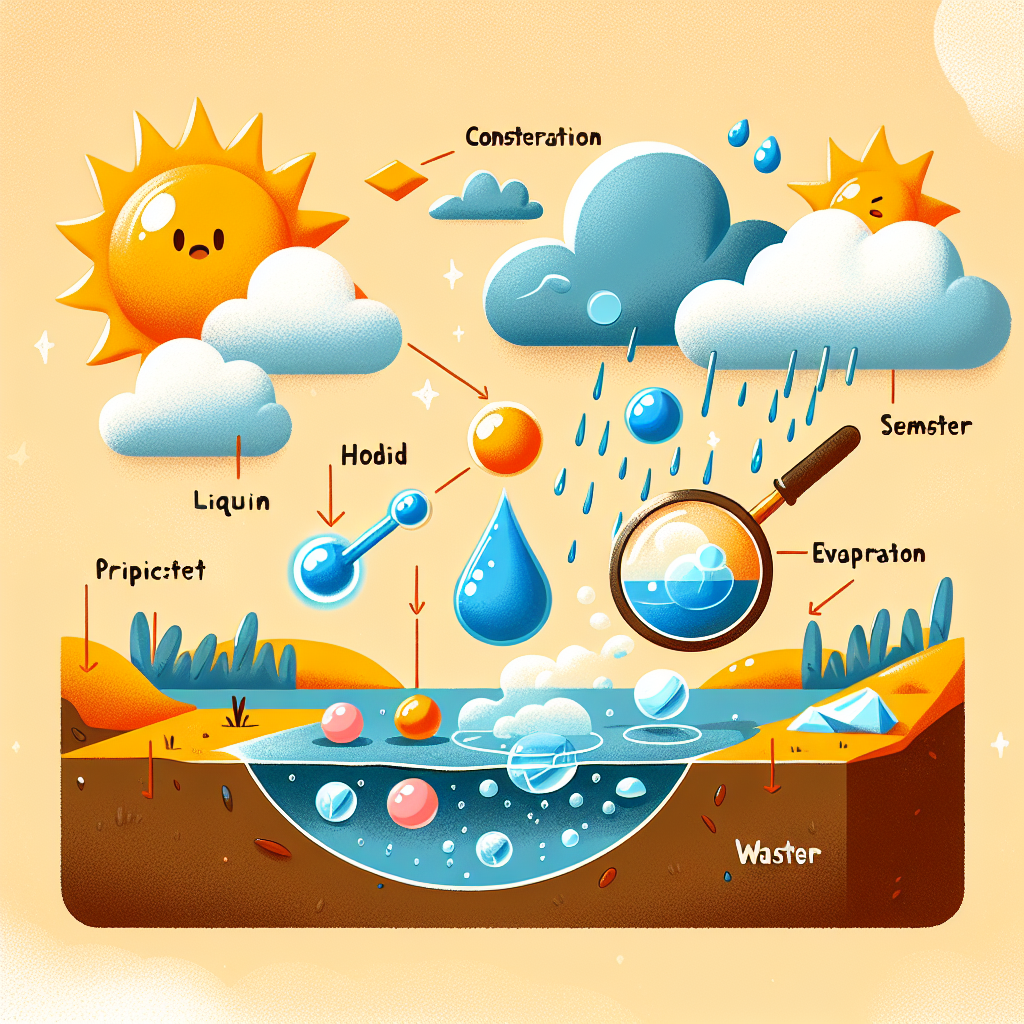
Students will engage in a comprehensive, hands-on learning experience to explore the effects of thermal energy on water and its role in the water cycle. Through experiments and collaborative teamwork, students will develop and refine models that depict these processes accurately. The integration of core scientific concepts with real-world applications will deepen their understanding and spark curiosity. By reflecting on their findings, students will enhance their communication skills through clear written explanations and sharing their models in a class exhibition.

Learning goals

Students will develop and utilize scientific models to predict and describe changes in particle motion, temperature, and states of matter in relation to thermal energy. They will apply their understanding to the water cycle, exploring how energy from the sun and gravity influence this cycle in Earth's systems. Students will analyze real-world examples of these scientific principles in natural environments, ensuring deeper understanding and accurate representation in their final project presentations through continuous feedback and iterative revisions.

Standards
  • [Next Generation Science Standards] MS-PS1-4 - Develop a model that predicts and describes changes in particle motion, temperature, and state of a pure substance when thermal energy is added or removed.
  • [Next Generation Science Standards] MS-PS1-4 - Develop a model that predicts and describes changes in particle motion, temperature, and state of a pure substance when thermal energy is added or removed.
  • [Next Generation Science Standards] MS-ESS2-4 - Develop a model to describe the cycling of water through Earth's systems driven by energy from the sun and the force of gravity.
Competencies
  • Reason Quantitatively - Represent and communicate information mathematically (RQ.3)
  • Read The World - Evaluate use of techniques and technology (RW.3)
  • Design Solutions - Build models, prototypes, or action plans (DS.2)
  • Design Solutions - Test, act, iterate (DS.3)
  • Reason Quantitatively - Pose and solve problems (RQ.1)

Products

Students will collaborate to design scientific models and diagrams representing the water cycle and temperature changes in states of matter. They will compose written explanations that describe their models, connecting theoretical concepts to real-world observations. Additionally, students will prepare digital presentations to share their findings and insights with classmates, highlighting connections between their models and natural environments.

Launch

Begin the learning experience with a simulated weather station activity where students explore how thermal energy affects particle motion and changes in water state. Use mini-labs with thermal imaging cameras and hands-on experiments to mimic weather conditions. Students will measure temperature changes and correlate them with particle motion and state transitions. These interactive scenarios will spark curiosity and facilitate initial discussions on water's natural behavior and its environmental implications linked to the essential question.

Exhibition

Students will present their water cycle models and explanations in a science fair-style exhibition for classmates. Groups will demonstrate their models while explaining how changes in particle motion and thermal energy affect the state of water, as well as the water cycle. The exhibition will feature visual aids and interactive elements, stimulating discussion and inquiry. After the exhibition, teachers will lead reflection sessions, allowing students to share insights and learnings from their peer interactions and project experiences.