High School Grade  Project 4 weeks

Recycle Racers: Physics-Powered Eco Cars!

Paul K
Updated
HS-PS3-3
HS-PS2-3
HS-PS3-3
HS-PS2-3
Collaboration
+ 4 more
1-pager

Purpose

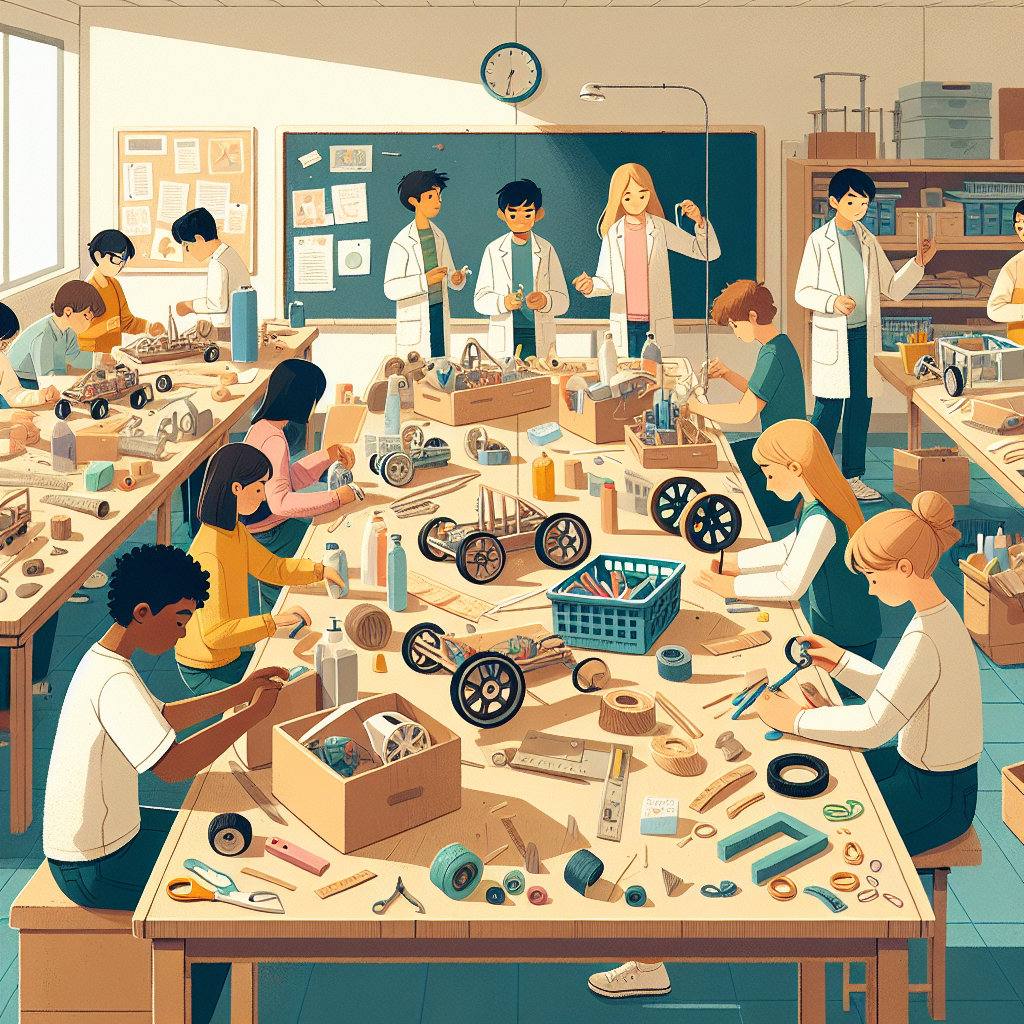
In this project, high school physics students will collaboratively design and construct vehicles using recycled materials, applying core physics principles and engineering constraints to convert energy and minimize collision forces. Through hands-on experimentation and iterative design, students will deepen their understanding of real-world applications of force, motion, and material impact on performance. Engaging with community partners and mentors, students will enhance their collaborative, critical thinking, and communication skills while developing meaningful competencies that emphasize self-directed learning and reflection.

Learning goals

Students will enhance their understanding of fundamental physics principles, such as force, motion, and energy conversion, by actively applying these concepts in designing and constructing a vehicle. They will develop collaborative skills through co-design and shared decision-making with peers and mentors. The project will foster critical thinking and problem-solving as students iteratively test prototypes, refine designs, and effectively communicate their learning processes. Through self-directed learning, students will engage in reflection to adapt their strategies and increase the vehicle’s efficiency, speed, and safety.

Standards
  • [Next Generation Science Standards] HS-PS3-3 - Design, build, and refine a device that works within given constraints to convert one form of energy into another form of energy.
  • [Next Generation Science Standards] HS-PS2-3 - Apply scientific and engineering ideas to design, evaluate, and refine a device that minimizes the force on a macroscopic object during a collision.
  • [Next Generation Science Standards] HS-PS3-3 - Design, build, and refine a device that works within given constraints to convert one form of energy into another form of energy.
  • [Next Generation Science Standards] HS-PS2-3 - Apply scientific and engineering ideas to design, evaluate, and refine a device that minimizes the force on a macroscopic object during a collision.
Competencies
  • Collaboration - Students co-design projects with peers, exercise shared-decision making, strengthen relational agency, resolve conflict, and assume leadership roles.
  • Critical Thinking & Problem Solving - Students consider a variety of innovative approaches to address and understand complex questions that are authentic and important to their communities.
  • Effective Communication - Students practice listening to understand, communicating with empathy, and share their learning through exhibiting, presenting and reflecting on their work.
  • Content Expertise - Students develop key competencies, skills, and dispositions with ample opportunities to apply knowledge and engage in work that matters to them.
  • Self Directed Learning - Students use teacher and peer feedback and self-reflection to monitor and direct their own learning while building self knowledge both in and out of the classroom.

Products

Students will create a functional, small-scale car using recycled materials, documenting their design iterations and engineering decisions in a comprehensive portfolio. This portfolio will include sketches, reflective journal entries, and peer evaluation insights to reveal the evolution of their ideas. They will conduct a public demonstration of their cars at the 'Physics in Motion Showdown,' showcasing their cars' performance and design in various competition categories.

Launch

Kick off the project with a dynamic 'Design Sprint Challenge,' where students engage in rapid brainstorming and sketching sessions, utilizing only a selection of recycled materials. Encourage students to draw upon principles of physics to inform their initial car design concepts. Facilitate group reflections on these concepts to inspire discussion on how scientific principles can guide practical design decisions before construction begins.

Exhibition

Host the 'Physics in Motion Showdown,' a dynamic showcase where students present their recycled material cars in a series of races and demonstrations. Celebrate achievements across various categories such as speed, creativity in design, and energy efficiency, highlighting student innovation. Invite family members, community partners, and local makerspace representatives to experience the results of the students' hard work and reflective process. Encourage students to articulate their design journey and the physics principles applied, fostering public speaking skills and reinforcing their learning.