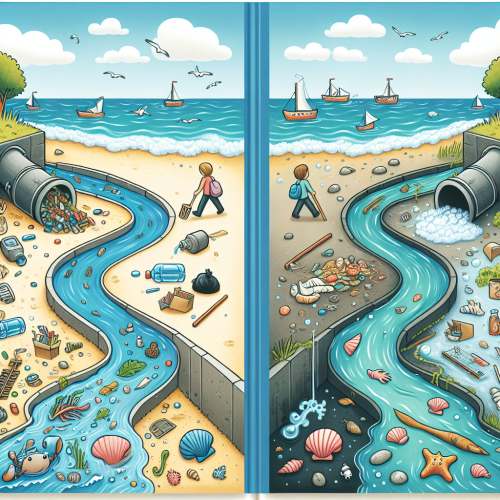
The purpose of this project is to engage first-grade students in understanding the movement and impact of trash and pollutants on ocean ecosystems through hands-on, real-world learning experiences. By collaborating with community partners and utilizing interactive activities, students will explore their role in pollution and develop actionable strategies to protect marine life. The project aims to foster critical thinking, effective communication, and a sense of environmental responsibility, culminating in creative expressions that showcase their learning and commitment to change.
Learning goals
Students will understand the impact of pollution on marine life and the role humans play in contributing to ocean pollution. They will develop critical thinking skills by analyzing real-world data and proposing solutions to reduce pollution. Through hands-on activities, students will enhance their content expertise in environmental science and mathematics, applying measurement and numerical understanding to real-world scenarios. Effective communication will be practiced as students present their findings and artwork to peers and community members, fostering a sense of identity and belonging. Self-directed learning will be encouraged through reflection and peer feedback, empowering students to take responsibility for their learning journey.
Standards
[California] 1.NBT.B.2 - Understand that the two digits of a two-digit number represent amounts of tens and ones. Understand the following as special cases:
[California] 1.MD.A.2 - Express the length of an object as a whole number of length units, by laying multiple copies of a shorter object (the length unit) end to end; understand that the length measurement of an object is the number of same-size length units that span it with no gaps or overlaps.
[California] WL.CM3.S - Superior Deliver complex presentations with precision of expression in culturally appropriate ways, for a wide variety of audiences, on topics ranging from broad general interests to unfamiliar, abstract, and hypothetical areas of specialized professional and academic expertise. Use a wide variety of text types with cohesive discourse through spoken, written, or signed language, using the most suitable media and technologies to present and publish.
[California] 4.2.8 - Discuss the period of Mexican rule in California and its attributes, including land grants, secularization of the missions, and the rise of the rancho economy.
[California] 1.NBT.C.5 - Given a two-digit number, mentally find 10 more or 10 less than the number, without having to count; explain the reasoning used.
Competencies
Self Directed Learning - Students use teacher and peer feedback and self-reflection to monitor and direct their own learning while building self knowledge both in and out of the classroom.
Academic Mindset - Students establish a sense of place, identity, and belonging to increase self-efficacy while engaging in critical reflection and action.
Critical Thinking & Problem Solving - Students consider a variety of innovative approaches to address and understand complex questions that are authentic and important to their communities.
Content Expertise - Students develop key competencies, skills, and dispositions with ample opportunities to apply knowledge and engage in work that matters to them.
Effective Communication - Students practice listening to understand, communicating with empathy, and share their learning through exhibiting, presenting and reflecting on their work.
Products
Students will create a collaborative mural using recycled materials that illustrates the journey of trash from storm drains to the ocean, showcasing their understanding of pollution pathways. Additionally, they will design and construct sculptures representing the impact of pollution on marine life, using recycled materials, which will be displayed during the 'Trash to Treasure Art Walk.' Throughout the project, students will also develop presentations explaining storm drain and sewer systems, proposing actionable solutions to reduce pollution, and sharing their insights during a community showcase.
Launch
Kick off the project with the 'Marine Habitat Adventure,' where students embark on a virtual aquarium tour to explore the effects of pollution on marine life. During the tour, students will engage in interactive activities, such as identifying different marine species and noting signs of pollution. The experience will culminate in a live Q&A session with a marine biologist, allowing students to ask questions and deepen their understanding of the essential question: "What role do humans play in ocean pollution, and how can we change our behaviors to help?"
Exhibition
Students will present their sculptures made from recycled materials during the 'Trash to Treasure Art Walk' at a local park. Each piece will be accompanied by a student explanation detailing how it represents the impact of pollution on marine life and potential solutions for mitigation. The exhibition will serve as a community event, inviting parents and local residents to engage with the students' work and learn about the importance of reducing ocean pollution.