5th Grade  Project 4 weeks

Mission: Solve Santa Monica!

Amanda S
D4.7.3-5
Self Directed Learning
Academic Mindset
Critical Thinking & Problem Solving
Content Expertise
+ 1 more
1-pager

Purpose

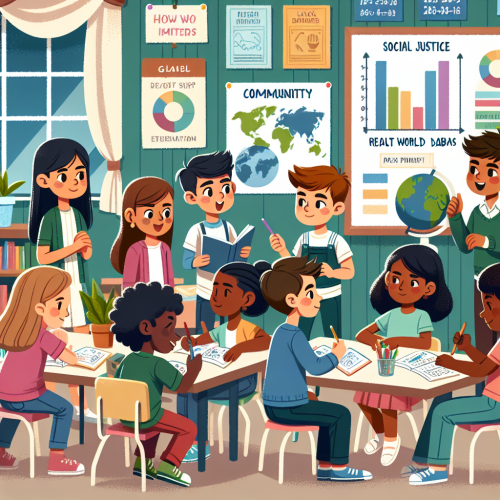
This project-based learning experience invites 5th-grade students to actively engage with social justice issues impacting their Santa Monica community. By integrating math, reading, and writing, students will research and develop actionable solutions to challenges such as ocean pollution, homelessness, climate change, and racial equality. The project emphasizes collaboration, reflection, and effective communication, allowing students to contribute meaningfully while reinforcing their sense of identity and community belonging.

Learning goals

Students will collaboratively investigate a local social justice issue, such as animal testing or mental health awareness, utilizing real-world data to explore its impact and devise actionable solutions. They will enhance their research skills by engaging with nonfiction texts and develop their writing proficiency through the creation of explanatory plans. Throughout the project, students will practice critical thinking and problem-solving by considering diverse strategies and predicting outcomes. They will also refine their communication skills by presenting their findings and solutions through various media, fostering a sense of community involvement and personal agency.
Standards
  • [National Council for the Social Studies] D4.7.3-5 - Explain different strategies and approaches students and others could take in working alone and together to address local, regional, and global problems, and predict possible results of their actions.
Competencies
  • Self Directed Learning - Students use teacher and peer feedback and self-reflection to monitor and direct their own learning while building self knowledge both in and out of the classroom.
  • Academic Mindset - Students establish a sense of place, identity, and belonging to increase self-efficacy while engaging in critical reflection and action.
  • Critical Thinking & Problem Solving - Students consider a variety of innovative approaches to address and understand complex questions that are authentic and important to their communities.
  • Content Expertise - Students develop key competencies, skills, and dispositions with ample opportunities to apply knowledge and engage in work that matters to them.
  • Effective Communication - Students practice listening to understand, communicating with empathy, and share their learning through exhibiting, presenting and reflecting on their work.

Products

Students will create a comprehensive project that includes a research-based plan addressing a local social justice issue in Santa Monica, such as clean water access, climate change, or mental health awareness. They will produce a nonfiction explanatory report detailing their research findings and proposed solutions. Additionally, students will choose to develop a digital product, such as a website, PSA video, or podcast, to communicate their ideas to the community. They may also engage in direct community action and present their experiences and outcomes at the 'Community Impact Fair.' Throughout the project, students will collaborate, reflect, and refine their work based on feedback.

Launch

Begin the project with an engaging 'Mission Possible Challenge,' where students receive a mystery envelope containing a specific community issue such as animal testing, climate change, or mental health awareness. Pair this with a beach cleanup activity in collaboration with Heal the Bay, allowing students to witness the impact of pollution firsthand. Back in the classroom, facilitate a brainstorming session where students exchange initial ideas and strategies for tackling their assigned problems, fostering excitement and a sense of purpose for their upcoming research and projects.

Exhibition

Host a 'Community Impact Fair' where students set up booths to present their projects, solutions, and reflections to parents, peers, and community members, creating an interactive and engaging learning environment. Students can choose to create informative displays, interactive booths, or digital presentations such as websites or PSA videos, focusing on topics like climate change, racial equality, or mental health awareness. This event will invite community members, local leaders, and family members to engage with the students' work, providing feedback and fostering dialogue. Students will also have the opportunity to reflect on their learning journey and the impact of their proposed solutions during a panel discussion.