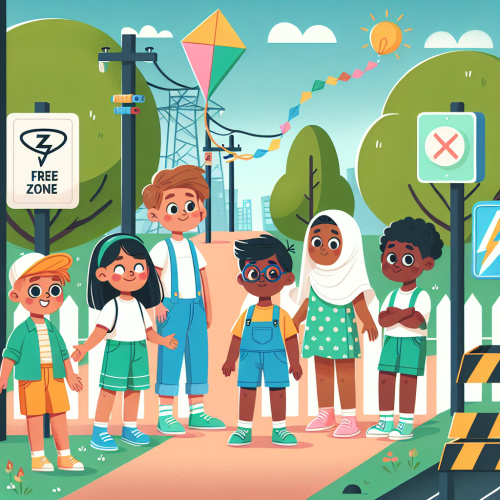
This project aims to equip high school students with a comprehensive understanding of electrical safety, integrating scientific principles and real-world applications. Through hands-on activities, collaboration with community partners, and critical reflection, students will develop the skills necessary to identify and mitigate electrical hazards in various environments. By engaging in authentic investigations and creating educational campaigns, students will enhance their problem-solving abilities and communication skills, ultimately fostering a deeper connection to their community and a commitment to safety.
Learning goals
Students will develop a comprehensive understanding of electrical safety by identifying and analyzing critical components of electrical systems in both residential and commercial settings. They will explore the impact of environmental factors on electrical safety and devise strategies to mitigate associated risks. Through hands-on activities, collaboration with community partners, and reflective practices, students will enhance their ability to communicate safety principles effectively to diverse audiences, ultimately creating educational campaigns and safety inspection checklists.
Standards
[Next Generation Science Standards] HS-PS2-5 - Plan and conduct an investigation to provide evidence that an electric current can produce a magnetic field and that a changing magnetic field can produce an electric current.
[Next Generation Science Standards] HS-PS2-5 - Plan and conduct an investigation to provide evidence that an electric current can produce a magnetic field and that a changing magnetic field can produce an electric current.
[Computer Science Teachers Association] 3A-NI-06 - Recommend security measures to address various scenarios based on factors such as efficiency, feasibility, and ethical impacts.
Competencies
Self Directed Learning - Students use teacher and peer feedback and self-reflection to monitor and direct their own learning while building self knowledge both in and out of the classroom.
Academic Mindset - Students establish a sense of place, identity, and belonging to increase self-efficacy while engaging in critical reflection and action.
Critical Thinking & Problem Solving - Students consider a variety of innovative approaches to address and understand complex questions that are authentic and important to their communities.
Products
Throughout the project, students will collaboratively develop an educational campaign on electrical safety, culminating in a community presentation. They will create a detailed safety inspection checklist for a mock property, incorporating insights from industry professionals. The final product will be a comprehensive portfolio that includes their inspection checklist, reflections, and feedback, showcasing their understanding and application of electrical safety principles.
Launch
Kick off the learning experience with a dynamic 'Power Up' field trip to a local power plant or electrical facility. Here, students will observe real-world electrical systems and safety protocols in action. This immersive experience will be followed by a Q&A session with engineers and safety officers, providing students with firsthand insights into electrical safety practices.
Exhibition
Students will organize a 'Safety in Action' showcase, where they will perform live demonstrations of electrical safety practices, including mock safety inspections and emergency response drills. Community partners, such as electricians and fire department representatives, will provide feedback and insights during the exhibition. This event will serve as an opportunity for students to display their understanding of electrical safety principles and engage with diverse audiences, promoting awareness and prevention strategies.