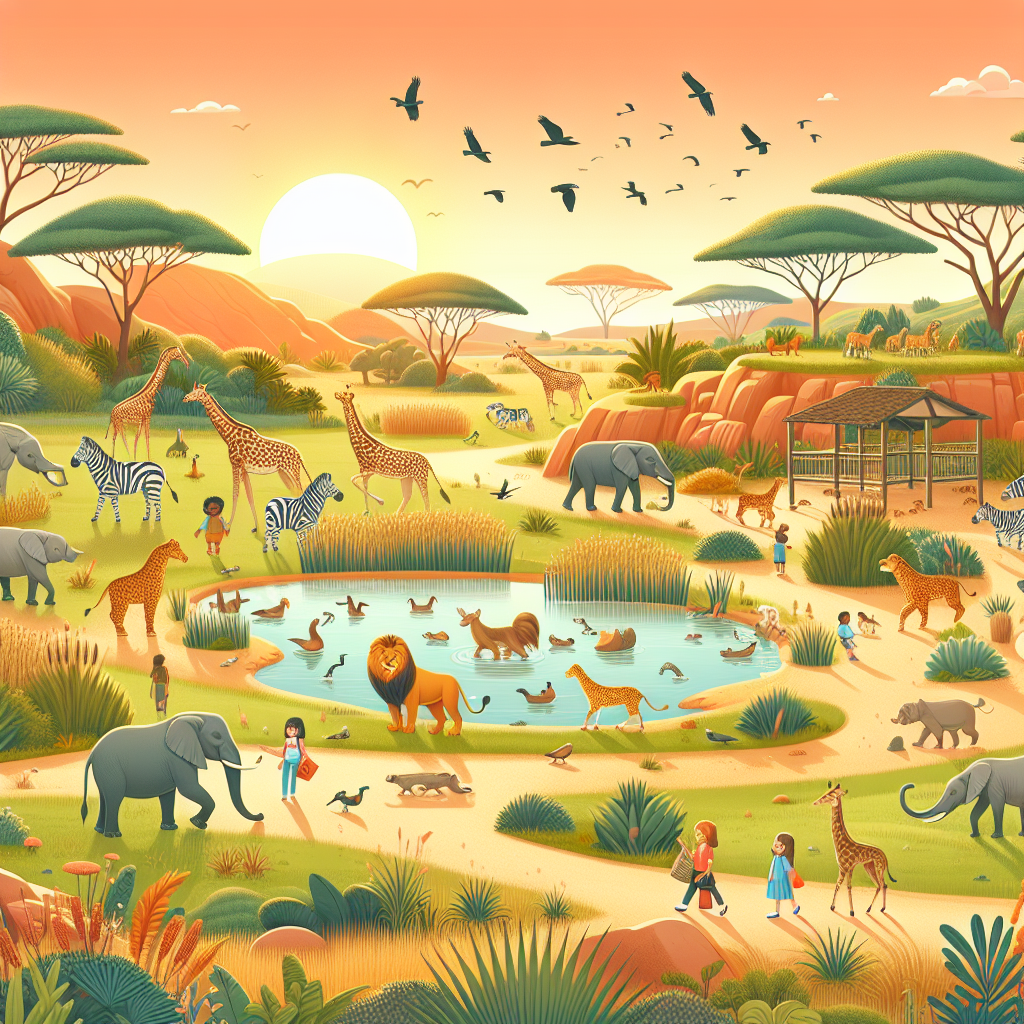
This project aims to engage students in designing a sustainable and innovative enclosure for African mammals at the San Diego Zoo, integrating real-world problem-solving with scientific principles. Students will explore the intersection of biology, environmental science, and design, addressing the impacts of human activity on biodiversity. Through hands-on activities, expert interactions, and iterative feedback, students will develop critical thinking and self-directed learning skills, fostering a deeper understanding of ecological and social responsibilities.
Learning goals
Students will develop the ability to design and evaluate solutions that address the impact of human activities on biodiversity, aligning with Next Generation Science Standards. They will enhance their self-directed learning skills by reflecting on feedback and revising their designs, fostering a deeper understanding of their learning processes. Additionally, students will cultivate an academic mindset by establishing a sense of place and identity within their project work, promoting self-efficacy. Critical thinking and problem-solving competencies will be strengthened as students explore innovative approaches to real-world challenges, ensuring their designs are both sustainable and feasible within the constraints of the San Diego Zoo.
Standards
[Next Generation Science Standards] HS-LS4-6 - Create or revise a simulation to test a solution to mitigate adverse impacts of human activity on biodiversity.
[Next Generation Science Standards] HS-LS2-7 - Design, evaluate, and refine a solution for reducing the impacts of human activities on the environment and biodiversity.
[Next Generation Science Standards] HS-LS4-6 - Create or revise a simulation to test a solution to mitigate adverse impacts of human activity on biodiversity.
Competencies
Self Directed Learning - Students use teacher and peer feedback and self-reflection to monitor and direct their own learning while building self knowledge both in and out of the classroom.
Academic Mindset - Students establish a sense of place, identity, and belonging to increase self-efficacy while engaging in critical reflection and action.
Critical Thinking & Problem Solving - Students consider a variety of innovative approaches to address and understand complex questions that are authentic and important to their communities.
Products
Students will create a detailed scale model of an African mammal enclosure using sustainable materials, incorporating innovative design features that address the animals' biological, environmental, and social needs. Throughout the project, students will maintain a design journal documenting their process, challenges, and revisions. This journal will serve as a reflective tool and a basis for peer feedback. The final product will be presented during a 'Design Pitch Day' to a panel of experts, simulating a real-world proposal process and showcasing students' critical thinking and problem-solving skills.
Launch
Kick off the project with a dynamic 'Meet the Experts' panel, where students engage directly with zoo architects and biologists who share their insights and experiences. Follow this with a hands-on 'Materials Exploration Lab' that allows students to experiment with various sustainable materials, understanding their properties and potential applications in their designs. These activities will spark curiosity and provide a solid foundation for the students' design process, setting the stage for an immersive and interactive learning journey.
Exhibition
Students will host a 'Design Pitch Day' where they present their enclosure models to a panel of judges, including zoo architects and biologists. This event will simulate a real-world proposal process, allowing students to articulate their design rationale and receive professional feedback. The exhibition will be open to the school community, encouraging students to engage with diverse audiences and reflect on their learning journey.