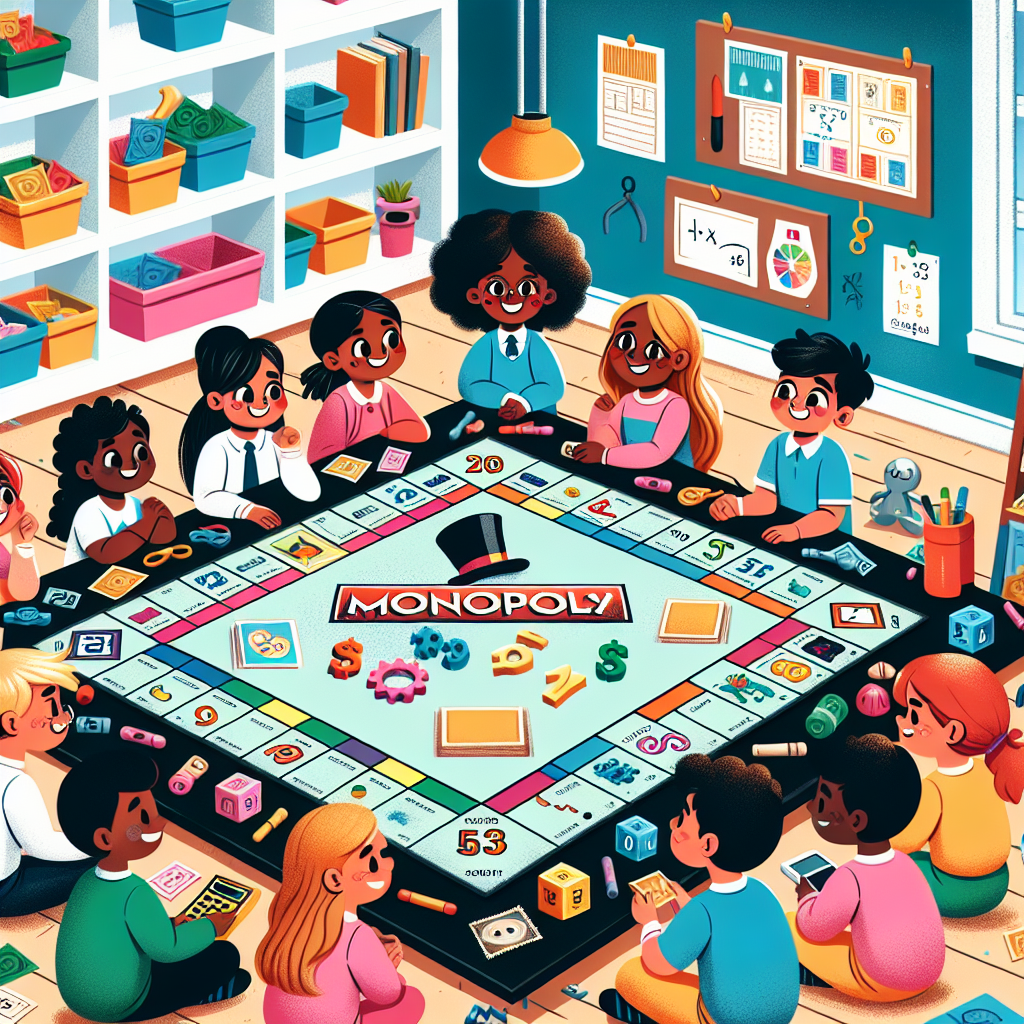
This project aims to strengthen students' addition and subtraction skills through engaging, hands-on gameplay using Monopoly. By focusing on real-world application, students collaboratively explore and refine their mathematical strategies, enhancing both their computational fluency and strategic thinking. The experience culminates in a reflective assessment, where students articulate their learning journey, demonstrating growth in both mental math and collaborative problem-solving.
Learning goals
Students will enhance their ability to perform addition and subtraction using mental math and paper-based strategies through engaging, real-world applications. They will develop collaborative problem-solving skills by discussing and refining strategies in small groups. Additionally, students will improve their ability to articulate mathematical reasoning by narrating their gameplay calculations and creating a visual representation of their strategic thinking.
Products
Students will collaboratively create a visual timeline or storyboard that captures the progression of their Monopoly game, emphasizing key moments where they employed specific addition and subtraction strategies. Each group will present their timeline to the class, explaining the strategies used and how these impacted their gameplay. This product will serve as both a reflection of their learning journey and a demonstration of their ability to apply mathematical concepts in a practical context.
Launch
Kick off the learning experience by organizing a Monopoly-themed scavenger hunt where students search for and solve hidden addition and subtraction problems around the classroom. Each problem they solve correctly unlocks a piece of the Monopoly board, which they will use in their upcoming gameplay sessions. This activity will spark excitement and curiosity, setting the stage for the project while allowing students to practice their math skills in a fun and engaging way.
Exhibition
At the end of the learning experience, organize a "Monopoly Strategy Showcase" where students present their visual timelines or storyboards to classmates, teachers, and family members. Each student or group will narrate their strategic decisions and calculations, emphasizing the addition and subtraction techniques used during key moments of the game. This exhibition will include interactive stations where attendees can engage with the students' work and ask questions about their problem-solving approaches.