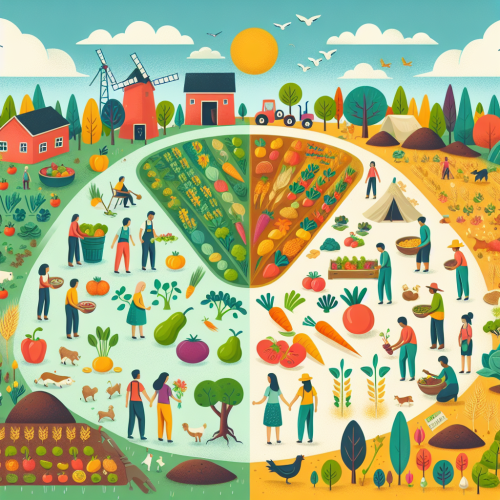
This project aims to deepen students' understanding of food sovereignty by exploring the interconnectedness of natural systems and their impact on food accessibility. Through hands-on activities, students will investigate soil health, water cycles, and biodiversity, while learning essential math skills to design sustainable food systems. By collaborating with community partners and engaging in real-world applications, students will develop solutions to overcome barriers to accessing fresh, local produce, fostering a sense of responsibility towards creating sustainable and equitable food systems.
Learning goals
Students will investigate the principles of food sovereignty by exploring the interconnectedness of soil, water, and plant life cycles, while applying mathematical concepts such as area, percentages, and fractions. They will engage in hands-on activities to understand soil health, biodiversity, and water conservation, and analyze the impact of climate change on food systems. Through collaboration with community partners and real-world applications, students will design sustainable agriculture solutions and reflect on the importance of local food access and cultural food traditions.
Products
Throughout this project, students will create a variety of products that demonstrate their learning and engagement. They will design and present informative posters on systems such as soil health, the water cycle, and food distribution. Students will also develop one-pagers comparing native and invasive plants and create food web charts. By the end of the project, they will collaboratively build models of diverse farms and prepare for an exhibition featuring a plant/seed swap and a community potluck with dishes made from fresh produce. These products will showcase students' understanding and creative solutions for making food systems more accessible and sustainable.
Launch
Begin with a nature walk to explore local ecosystems, focusing on observing the relationships between soil, plants, and insects. Follow this with a screening of the film "Gather" to introduce themes of food sovereignty and cultural connections to food. Plan visits to local sites like the SD Botanical Gardens or a community garden to deepen understanding of biodiversity and sustainable practices. These activities will ignite curiosity and provide a foundation for students to explore the interconnectedness of soil, water, and food systems.
Exhibition
Students will host a community garden walk, showcasing their understanding of soil health, plant life cycles, and sustainable agriculture through interactive displays and student-led tours. They will organize a plant and seed swap, encouraging community engagement and sharing of local biodiversity knowledge. The exhibition will culminate in a potluck featuring dishes made from fresh produce, highlighting students' exploration of food sovereignty and their ability to recreate favorite meals using locally sourced ingredients. Additionally, students will present terrarium-making demonstrations, emphasizing water conservation and small-scale ecological systems.