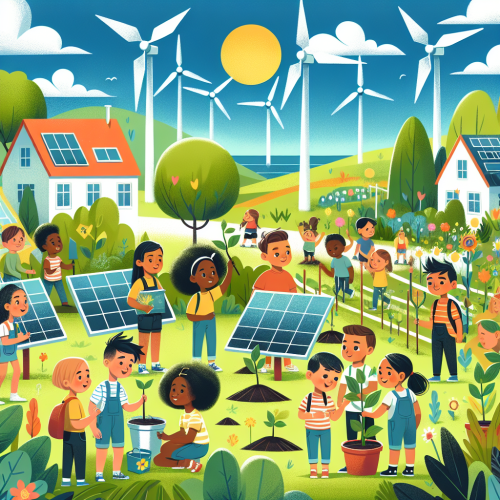
This project engages students in a dynamic exploration of renewable energy, fostering their ability to evaluate and innovate sustainable solutions. Through hands-on activities, students will investigate how energy and fuels from natural resources impact the environment, aligning with real-world challenges and opportunities in Nebraska. By designing and building energy conversion devices, students will develop critical thinking and problem-solving skills, while cultivating self-directed learning and a strong academic mindset. The project encourages students to connect with their community, identify their roles in environmental advocacy, and consider future STEM careers, all while meeting Nebraska educational standards.
Learning goals
Students will explore how renewable energy sources can be harnessed and utilized, understanding their impact on the environment and society. They will engage in designing and building a simple device that converts one form of energy into another, reflecting on the cost-benefit aspects of their solutions. Through this process, students will develop critical thinking and problem-solving skills, while fostering a sense of self-directed learning and academic identity. This project will connect to Nebraska's local resources and energy challenges, aligning with Nebraska state standards to encourage students to think about real-world applications in their community.
Standards
[Next Generation Science Standards] HS-ESS3-2 - Evaluate competing design solutions for developing, managing, and utilizing energy and mineral resources based on cost-benefit ratios.
[Next Generation Science Standards] 4-ESS3-1 - Obtain and combine information to describe that energy and fuels are derived from natural resources and their uses affect the environment.
[Next Generation Science Standards] HS-PS3-3 - Design, build, and refine a device that works within given constraints to convert one form of energy into another form of energy.
Competencies
Self Directed Learning - Students use teacher and peer feedback and self-reflection to monitor and direct their own learning while building self knowledge both in and out of the classroom.
Academic Mindset - Students establish a sense of place, identity, and belonging to increase self-efficacy while engaging in critical reflection and action.
Critical Thinking & Problem Solving - Students consider a variety of innovative approaches to address and understand complex questions that are authentic and important to their communities.
Products
Students will design and build a simple renewable energy device, such as a solar oven or wind turbine model, using everyday materials, aligning with Nebraska's standards on energy resources and environmental impact. They will document their process and findings in a digital portfolio, incorporating photos, videos, and reflective journal entries. The final product will be a presentation to peers and community members, showcasing their device, sharing insights on renewable energy's impact on agriculture, and proposing innovative solutions for local energy challenges.
Launch
Begin the project with an interactive field trip to a Nebraska-based renewable energy facility, or engage in a virtual tour if in-person visits are not feasible. Students will participate in hands-on activities, such as constructing simple wind turbines or solar ovens, to directly experience energy conversion. This immersive experience aligns with Nebraska's educational standards, sparking curiosity and providing a tangible connection to how renewable energy impacts their community and environment, setting the stage for deeper exploration and learning.
Exhibition
Students will host a Renewable Energy Fair, aligned with Nebraska standards, where they present their energy conversion devices and research findings to peers, teachers, and community members. Each group will create an interactive display that demonstrates their understanding of how renewable energy sources can be integrated into local agricultural practices. Attendees will have the opportunity to ask questions and provide feedback, fostering an environment of shared learning and community engagement. This exhibition will also include a panel discussion where students articulate the potential career paths in STEM fields related to clean energy and sustainability.