6th, 7th, 8th Grades  Project 12 weeks

Forkonomics

Amy T
1-pager

Purpose

This project immerses students in the multifaceted world of food sourcing, production, and its historical impact, offering a kaleidoscope of perspectives on cultural, economic, and environmental influences. Through experiential learning and community engagement, students will trace the journey of food from farm to table, honing critical thinking and narrative skills as they examine advertising strategies and advocate for sustainable practices. The project invites students to actively engage with real-world challenges, fostering collaboration, creativity, and the articulation of informed arguments for ethical food sourcing.

Learning goals

Students will delve into the historical, cultural, and economic roles of transformative foods, using primary and secondary sources to uncover their global impact. They will scrutinize food sourcing and production, assessing effects on people, animals, and the environment, and articulate their findings through narrative and argument writing. By crafting marketing campaigns for local products, students will explore the influence of advertising on consumer choices. Engaging with community partners, they will participate in hands-on activities to enhance their understanding of sustainable farming and food sourcing, fostering a practical connection to the content.
Standards
  • Common Core - CCSS.ELA-LITERACY.W.6.1: Write arguments to support claims with clear reasons and relevant evidence.
  • Common Core - CCSS.ELA-LITERACY.SL.7.4: Present claims and findings, emphasizing salient points in a focused, coherent manner with relevant descriptions, facts, details, and examples.
  • Common Core - CCSS.ELA-LITERACY.RI.8.3: Analyze how a text makes connections among and distinctions between individuals, ideas, or events.

Products

Throughout the project, students will create narrative essays and argument pieces exploring the historical significance and ethical considerations of food sourcing. By the end, they will develop multimedia documentaries and interactive digital maps tracing the journey of specific foods, culminating in a food festival showcasing dishes made from locally sourced ingredients. Additionally, students will design and execute a marketing campaign for a local food product, demonstrating their understanding of advertising strategies and consumer influence. Incorporating kaleidoscope elements, students will create visual representations that capture the diverse cultural impacts of food trade routes and exchanges.

Launch

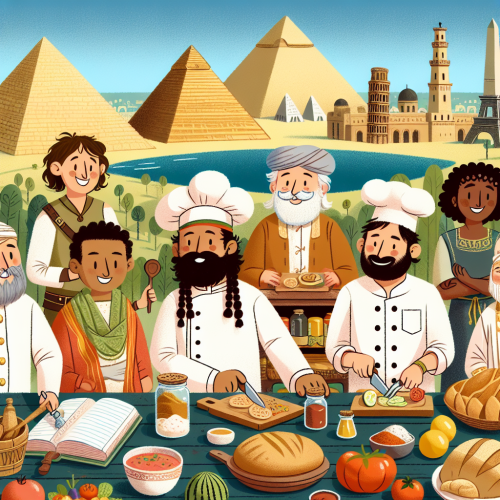
Begin the project with a 'Culinary Storytelling Circle' where students gather to share personal or cultural food stories, creating a sense of community and connection to the project's themes. Encourage students to bring a food item or recipe that holds significance to them, and discuss its origins, cultural importance, and any historical anecdotes tied to it. To add a visual element, have students create a 'food kaleidoscope' collage that represents the diversity of food stories shared, using images and words to illustrate the rich tapestry of cultural identities. This activity sets the stage for narrative writing and exploration of food's role in cultural identity, sparking curiosity and engagement for the upcoming project.

Exhibition

Students will host an interactive 'Global Food Journey Expo,' presenting multimedia projects that trace specific foods from origin to consumer. Each station will feature hands-on activities, tastings, and discussions with local farmers and experts to deepen understanding. Additionally, a 'Food Innovation Challenge' will allow students to showcase sustainable food sourcing solutions, presenting to a panel of judges and engaging the audience in feedback and participation. These events will celebrate students' learning and foster community connections, incorporating kaleidoscope elements to visually represent the diverse cultural impacts and historical significance of the foods studied.