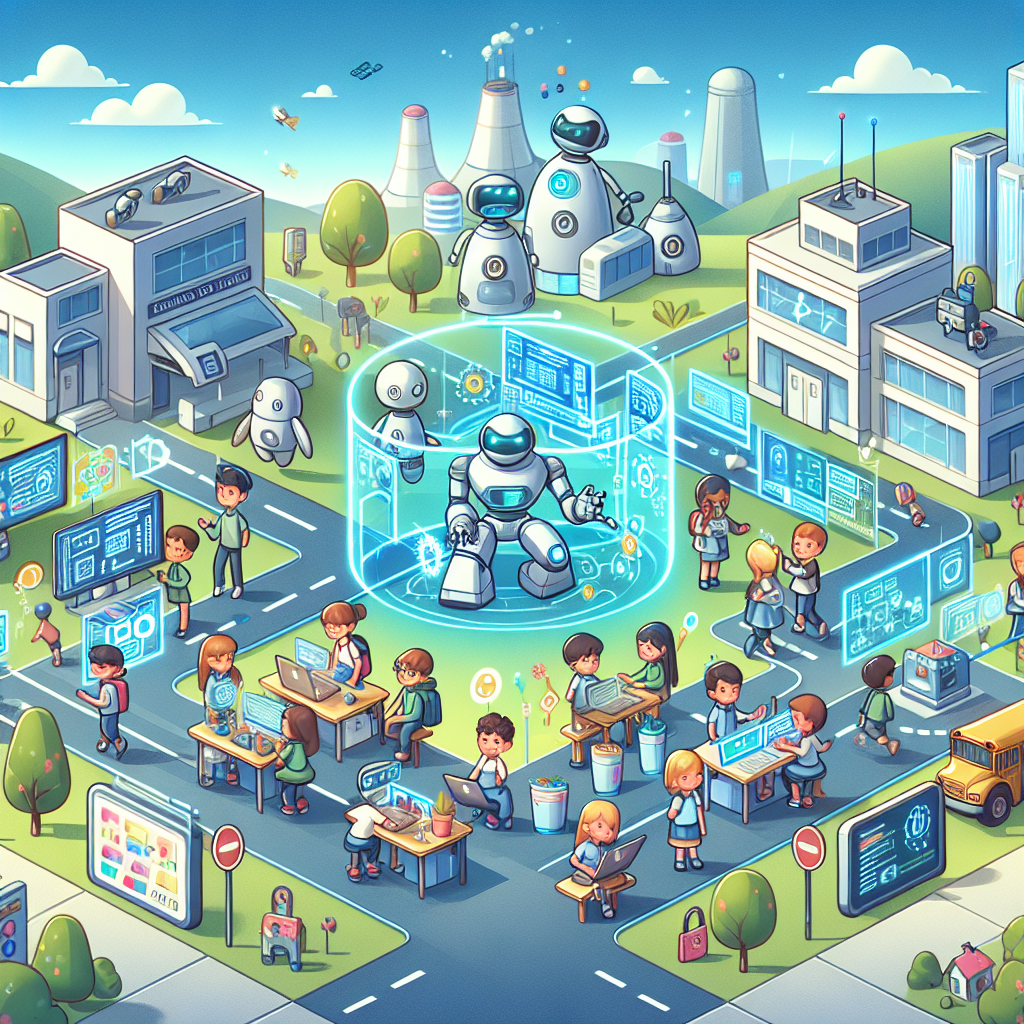
5th Grade  Project 4 weeks

AI Innovators: Designing Our Robotic Future

Jazmin O
Updated
1-pager

Purpose

This project aims to engage 5th-grade students in a multidisciplinary exploration of robotics and artificial intelligence, inspired by their recent reading of "The Wild Robot." By integrating English Language Arts (ELA) standards with Next Generation Science Standards (NGSS), students will investigate the essential question: "How would robots and artificial intelligence be beneficial to our society today?" The project encourages students to apply critical thinking, creativity, and collaboration as they design their own robots. Through a peer-review process, students will present their designs, provide and receive constructive feedback, and refine their ideas. Additionally, students will develop digital portfolios to document their reflections, project artifacts, and peer feedback, allowing them to track their learning journey and articulate their growth over the four-week period. By incorporating coding elements, students will gain a foundational understanding of programming, enhancing their problem-solving skills and preparing them for future technological challenges.

Learning goals

In this project, students will explore the intersection of literature, science, and technology by designing and coding their own robots, inspired by the themes and characters in "The Wild Robot." They will engage with English Language Arts (ELA) standards by analyzing the book's narrative and themes, and translating these into their robot designs. Through hands-on activities aligned with Next Generation Science Standards (NGSS), students will investigate the principles of robotics and artificial intelligence, understanding their potential impact on society. Coding will be introduced as a tool for bringing their robot designs to life, fostering computational thinking and problem-solving skills. By the end of the project, students will have developed critical thinking, collaboration, and communication skills, as they reflect on their learning journey and articulate their understanding through digital portfolios.

Standards
  • Common Core - CCSS.ELA-LITERACY.RL.5.1: Quote accurately from a text when explaining what the text says explicitly and when drawing inferences from the text.
  • Common Core - CCSS.ELA-LITERACY.W.5.7: Conduct short research projects that use several sources to build knowledge through investigation of different aspects of a topic.
  • NGSS - 3-5-ETS1-2: Generate and compare multiple possible solutions to a problem based on how well each is likely to meet the criteria and constraints of the problem.

Products

In this project, students will design and build a prototype of a robot that addresses a specific societal need, integrating their understanding of robotics and artificial intelligence. They will write a narrative or persuasive essay that explores the potential benefits and ethical considerations of their robot's role in society, aligning with ELA standards. Additionally, students will engage in basic coding exercises to program simple functions for their robot, introducing them to fundamental coding concepts. Throughout the project, students will compile their work into a digital portfolio, showcasing their robot design, coding scripts, written essays, and reflections on their learning journey. This portfolio will serve as a comprehensive artifact of their interdisciplinary exploration of robotics and society.

Launch

To kick off the project, organize an engaging launch activity by inviting a guest speaker who works in robotics or artificial intelligence. This expert can provide a real-world perspective on how robots and AI are currently benefiting society. Following the presentation, facilitate a Q&A session where students can ask questions and express their initial thoughts. This will not only spark curiosity but also provide a tangible connection to the essential question. To further engage students, you can introduce a hands-on mini-challenge where they work in small groups to brainstorm and sketch initial ideas for a robot that addresses a societal need. This activity will set the stage for the project by encouraging creativity and collaboration from the start.

Exhibition

To culminate the project, organize a "Robot Expo" where students can showcase their robot designs and coding projects to an audience of peers, teachers, and family members. Each student will have a booth to display their digital portfolio, including their reflections, project artifacts, and peer feedback. This event will allow students to articulate their learning journey, demonstrate their understanding of how robots and artificial intelligence can benefit society, and receive feedback from a broader audience. The expo can also include interactive demonstrations where students explain the coding aspects of their projects, further integrating ELA and NGSS standards by encouraging them to communicate their ideas effectively and understand the scientific principles behind their designs.