About Us Impact News Pricing Contact Us Explore
Make a copy
About Us Impact News Pricing Contact Us Explore
Tools
Project-Based Learning Performance Assessment Student-Led Conferences Digital Portfolios
Framework
Loading
Loading
    Products & Rubric
9th, 10th, 11th, 12th Grades  Project 6 weeks

Zen Greens: Growing Calm Together

Michael H
May 6, 2026
Updated May 7, 2026
CCSS.ELA-Literacy.SL.9-10.5
CCSS.ELA-Literacy.SL.9-10.1
CCSS.ELA-Literacy.SL.11-12.1
CCSS.ELA-Literacy.CCRA.SL.5
CCSS.ELA-Literacy.CCRA.W.10
+ 11 more
1-pager

Purpose

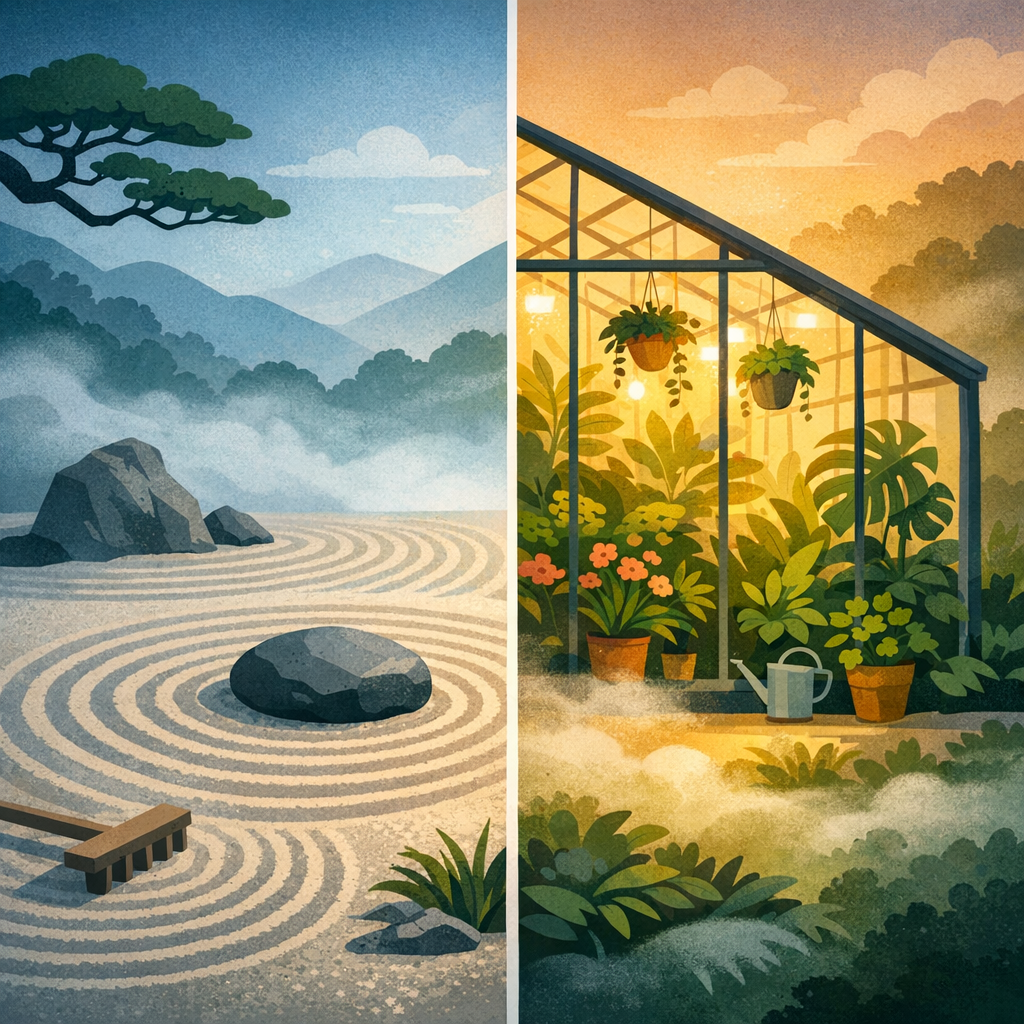
Students work together to transform a greenhouse into a zen garden that supports healthy plant growth and student well-being through design, building, and revision. They apply California-aligned science, environmental literacy, visual arts, and communication skills to solve a real campus design challenge while making decisions about sustainability, respectful design, and calming features. The work matters because students create a lasting school space that reduces stress, invites connection, and shows how thoughtful design can improve natural systems and daily life.

Learning goals

Students will design, test, and refine a greenhouse zen garden that supports plant health, biodiversity, and student well-being by applying California Environmental Principles and Concepts, California Career Technical Education Agriculture and Natural Resources pathways, and California Visual Arts standards related to environmental responsibility, design, and human-centered spaces. They will evaluate tradeoffs in cost, safety, aesthetics, cultural respect, maintenance, and environmental impact while revising their plans through peer critique, partner feedback walks, and observation of how the space functions over time. Students will communicate their thinking through sketches, mockups, a promotional piece, a PSA, video reflections, and public presentations that explain how their design choices create a calm, functional, and environmentally responsible space. They will strengthen collaboration, self-direction, and reflection by sharing roles, using weekly check-ins and end-of-session videos, and tracking how the space affects focus, stress, and belonging over time.

Standards
  • [Next Generation Science Standards] HS-LS2-7 - Design, evaluate, and refine a solution for reducing the impacts of human activities on the environment and biodiversity.
  • [Next Generation Science Standards] HS-LS2-7 - Design, evaluate, and refine a solution for reducing the impacts of human activities on the environment and biodiversity.
  • [Next Generation Science Standards] 9-12.AF.6.5 - Design, evaluate, and/or refine a solution to a complex real-world problem, based on scientific knowledge, student-generated sources of evidence, prioritized criteria, and tradeoff considerations.
  • [Next Generation Science Standards] HS-LS4-6 - Create or revise a simulation to test a solution to mitigate adverse impacts of human activity on biodiversity.
  • [Next Generation Science Standards] HS-ESS3-4 - Evaluate or refine a technological solution that reduces impacts of human activities on natural systems.
  • [Next Generation Science Standards] HS-LS2-5 - Develop a model to illustrate the role of photosynthesis and cellular respiration in the cycling of carbon among the biosphere, atmosphere, hydrosphere, and geosphere.
  • [Next Generation Science Standards] HS-ETS1-3 - Evaluate a solution to a complex real-world problem based on prioritized criteria and trade-offs that account for a range of constraints, including cost, safety, reliability, and aesthetics, as well as possible social, cultural, and environmental impacts.
  • [Next Generation Science Standards] HS-ESS3-2 - Evaluate competing design solutions for developing, managing, and utilizing energy and mineral resources based on cost-benefit ratios.
  • [National Core Arts Standards] VA:Cr2.3 - People create and interact with objects, places, and design that define, shape, enhance, and empower their lives.
  • [Next Generation Science Standards] HS-ESS3-4 - Evaluate or refine a technological solution that reduces impacts of human activities on natural systems.
Competencies
  • Collaboration - Students co-design projects with peers, exercise shared-decision making, strengthen relational agency, resolve conflict, and assume leadership roles.
  • Effective Communication - Students practice listening to understand, communicating with empathy, and share their learning through exhibiting, presenting and reflecting on their work.
  • Critical Thinking & Problem Solving - Students consider a variety of innovative approaches to address and understand complex questions that are authentic and important to their communities.
  • Content Expertise - Students develop key competencies, skills, and dispositions with ample opportunities to apply knowledge and engage in work that matters to them.
  • Academic Mindset - Students establish a sense of place, identity, and belonging to increase self-efficacy while engaging in critical reflection and action.
  • Self Directed Learning - Students use teacher and peer feedback and self-reflection to monitor and direct their own learning while building self knowledge both in and out of the classroom.

Products

Students create iterative products throughout the project, including mood boards, layout sketches, zen garden mockups, plant choice boards, calming feature prototypes, plant care charts, and revision notes from peer and partner feedback walks. Midway products include a gallery walk display of sketches, plant plans, reflective design ideas, and before-and-after revisions that show how students are balancing environmental impact, sustainability, cultural respect, aesthetics, and student well-being in ways that align with California science, arts, and communication expectations. Final products include a completed greenhouse zen garden with labeled plant zones, calming features, and student-built seating or reflection areas; a simple maintenance and care plan; and an interactive exhibit station with photos, design sketches, and QR-linked video reflections. Students also produce a public-facing promotional piece, a PSA, and a guided tour script for the community showcase.

Launch

Begin with a “Calm Corner Launch Lab” in the greenhouse where students rotate through quick stations to analyze restorative garden images, test calming features like sound, texture, seating, and pathway flow, and observe how plants and materials shape the mood of a space. Invite a master gardener, local nursery volunteer, and a representative from Mendocino Coast Botanical Gardens, Temple of Kwan Tai, or Kumeido.org to introduce the design challenge and model how environmental design, visual arts, and communication connect to creating a healthy, welcoming student space. Have teams create a rapid mood board and mini layout sketch that explains their plant choices, wellness features, and one design tradeoff, then share in a gallery walk for immediate peer and partner feedback. Close with a brief greenhouse circle where students respond to the driving question, name one hope for the space, and record a short video reflection about what would make the greenhouse a place where they would want to spend time.

Exhibition

Host a Zen Garden Launch Night in the greenhouse where students lead guided tours, present their promotional piece and PSA, and explain how their design choices, plant selections, and calming features support wellness, sustainability, and visual design. Set up exhibit stations with sketches, mockups, before-and-after photos, plant care routines, and QR codes to student video reflections so visitors can see evidence of revision, communication, and artistic decision-making. Invite the master gardener, Mendocino Coast Botanical Gardens, Temple of Kwan Tai, Kumeido.org, and local nursery volunteers to respond to student work and join a closing community circle about what makes the space peaceful, functional, and welcoming. Include a visitor feedback board or short reflection card so students collect public input to guide future maintenance and improvement of the greenhouse zen garden.

Plan
By Phase By Day Calendar
Empathize Define Ideate Draft Test Critique Notice & Reflect
Empathize
Students will launch the greenhouse zen garden challenge, investigate how the greenhouse currently functions for plants and people, and gather firsthand user evidence about wellness needs, calming preferences, and space-use habits to prepare for a strong problem statement in the next phase.
Days 1 - 2
🌿 Greenhouse Spark Walk
Launch 90m
🗂️ Wellness Interview Brief
Deliverable 90m
No activities have been added to this phase yet.

Edit Phase

Loading...
Define
Students will synthesize greenhouse data and stakeholder evidence into a focused problem statement that names the user, need, constraints, and design opportunity for a greenhouse zen garden that supports both plant health and student well-being.
Days 3 - 4
🧩 Evidence Clusters for Zen Needs
Knowledge/Skill Building 70m
📝 Greenhouse Problem Statement Draft
Deliverable 90m
No activities have been added to this phase yet.

Edit Phase

Loading...
Ideate
Students will generate multiple greenhouse zen garden concepts, compare them against plant-science evidence and user needs, and choose a promising direction to carry into prototyping.
Days 5 - 7
🎨 Calm Greenhouse Concept Sprint
Knowledge/Skill Building 80m
🌿 Plant Zones and Carbon Flow Check
Knowledge/Skill Building 70m
🗂️ Zen Garden Option Board
Deliverable 90m
No activities have been added to this phase yet.

Edit Phase

Loading...
Draft
Students will translate selected zen garden concepts into evidence-based greenhouse prototypes by applying plant science, calming-space design principles, and user-centered criteria. They will build and document early models, gather structured peer and expert feedback, and revise their draft concepts before moving into formal testing.
Days 8 - 11
🌿 Greenhouse Prototype Criteria Clinic
Knowledge/Skill Building 60m
🧪 Zen Garden Mockup Build
Deliverable 90m
🗣️ Mockup Feedback Walk
Community Experience 90m
✏️ Revised Prototype Evidence Check
Assessment 90m
No activities have been added to this phase yet.

Edit Phase

Loading...
Test
Students will run structured tests on their greenhouse zen garden drafts, gather evidence from peers and community partners, compare user feedback with plant-condition data, and document revisions that strengthen both plant health and student well-being.
Days 12 - 14
🧪 Greenhouse Test Protocols
Knowledge/Skill Building 50m
🌿 Peer Feedback Garden Walk
Deliverable 90m
🤝 Partner Critique Revision Log
Community Experience 90m
No activities have been added to this phase yet.

Edit Phase

Loading...
Critique
Students will use structured peer and partner critique to evaluate their greenhouse zen garden prototypes, document evidence-based revisions, and strengthen how well their designs support both plant health and student well-being.
Days 15 - 16
🧭 Zen Garden Feedback Walk
Deliverable 90m
🌿 Partner Revision Conference
Community Experience 90m
No activities have been added to this phase yet.

Edit Phase

Loading...
Notice & Reflect
Students will document how their greenhouse zen garden design changed through evidence, feedback, and testing, then present the finished space and communication pieces to an authentic audience while reflecting on scientific learning, wellness impact, and next steps for care and improvement.
Days 17 - 18
🎥 Greenhouse Growth Reflection Reel
Deliverable 75m
🌿 Zen Garden Launch Night
Assessment 90m
No activities have been added to this phase yet.

Edit Phase

Loading...
Empathize Days 1–2
Day 1
🌿 Greenhouse Spark Walk
Launch 90m
Day 2
🗂️ Wellness Interview Brief
Deliverable 90m
Define Days 3–4
Day 3
🧩 Evidence Clusters for Zen Needs
Knowledge/Skill Building 70m
Day 4
📝 Greenhouse Problem Statement Draft
Deliverable 90m
Ideate Days 5–7
Day 5
🎨 Calm Greenhouse Concept Sprint
Knowledge/Skill Building 80m
Day 6
🌿 Plant Zones and Carbon Flow Check
Knowledge/Skill Building 70m
Day 7
🗂️ Zen Garden Option Board
Deliverable 90m
Draft Days 8–11
Day 8
🌿 Greenhouse Prototype Criteria Clinic
Knowledge/Skill Building 60m
Day 9
🧪 Zen Garden Mockup Build
Deliverable 90m
Day 10
🗣️ Mockup Feedback Walk
Community Experience 90m
Day 11
✏️ Revised Prototype Evidence Check
Assessment 90m
Test Days 12–14
Day 12
🧪 Greenhouse Test Protocols
Knowledge/Skill Building 50m
Day 13
🌿 Peer Feedback Garden Walk
Deliverable 90m
Day 14
🤝 Partner Critique Revision Log
Community Experience 90m
Critique Days 15–16
Day 15
🧭 Zen Garden Feedback Walk
Deliverable 90m
Day 16
🌿 Partner Revision Conference
Community Experience 90m
Notice & Reflect Days 17–18
Day 17
🎥 Greenhouse Growth Reflection Reel
Deliverable 75m
Day 18
🌿 Zen Garden Launch Night
Assessment 90m

June 2026

Mon
Tue
Wed
Thu
Fri
1 Day 1
Empathize
🌿 Greenhouse Spark Walk
2 Day 2
🗂️ Wellness Interview Brief
3 Day 3
Define
🧩 Evidence Clusters for Zen Needs
8 Day 4
📝 Greenhouse Problem Statement Draft
9 Day 5
Ideate
🎨 Calm Greenhouse Concept Sprint
10 Day 6
🌿 Plant Zones and Carbon Flow Check
15 Day 7
🗂️ Zen Garden Option Board
16 Day 8
Draft
🌿 Greenhouse Prototype Criteria Clinic
17 Day 9
🧪 Zen Garden Mockup Build
22 Day 10
🗣️ Mockup Feedback Walk
23 Day 11
✏️ Revised Prototype Evidence Check
24 Day 12
Test
🧪 Greenhouse Test Protocols

July 2026

Mon
Tue
Wed
Thu
Fri
29 Day 13
🌿 Peer Feedback Garden Walk
30 Day 14
🤝 Partner Critique Revision Log
1 Day 15
Critique
🧭 Zen Garden Feedback Walk
6 Day 16
🌿 Partner Revision Conference
7 Day 17
Notice & Reflect
🎥 Greenhouse Growth Reflection Reel
8 Day 18
🌿 Zen Garden Launch Night
Share
Activities
Loading
Loading
Loading
Get it on Google Play
© 2026 Inkwire Inc
Contact Us Privacy Policy Terms of Service