10th, 11th Grades  Project 3 weeks

River Remix: LA’s Living Lifeline

KIMBERLY S
Updated
G8.2
Critical Thinking & Problem Solving
Effective Communication
Self Directed Learning
Collaboration
+ 1 more
1-pager

Purpose

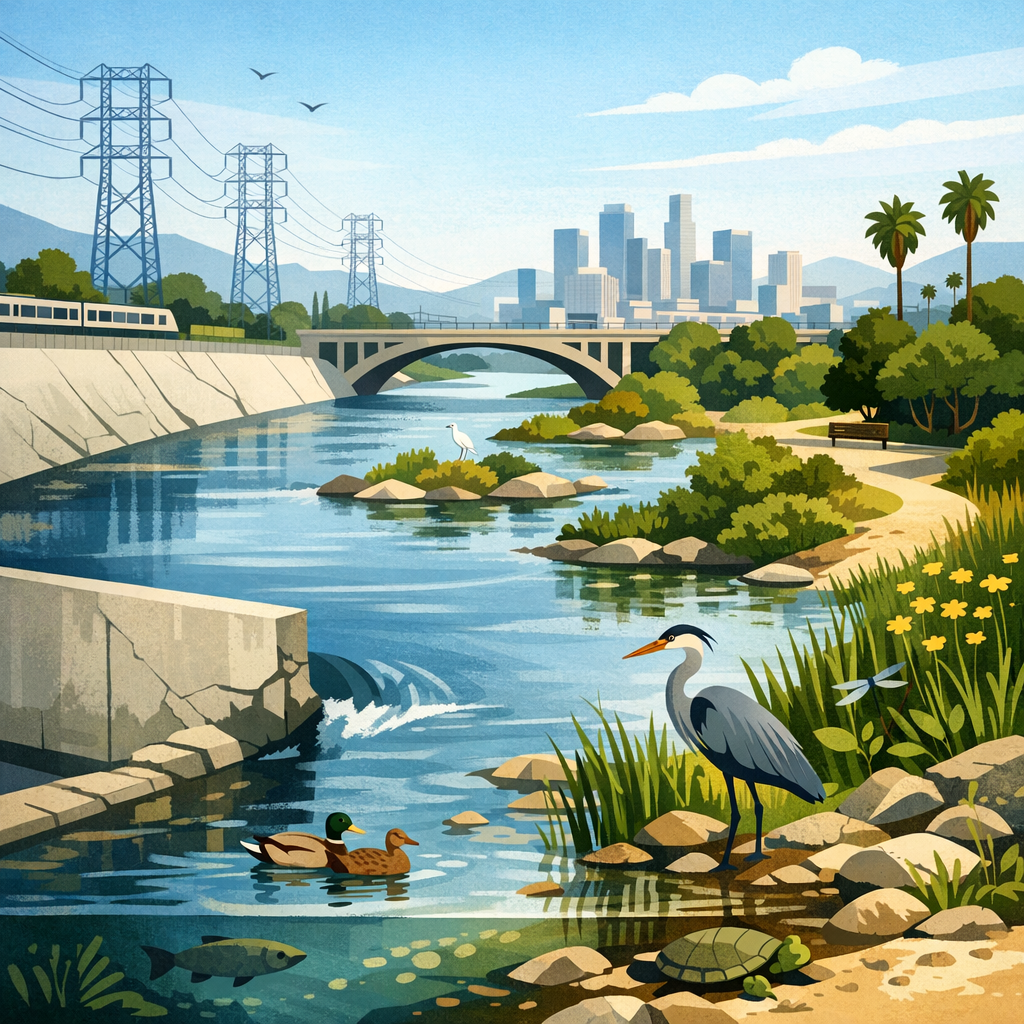
Students investigate how the Los Angeles River shapes the lives of people, animals, and neighborhoods by studying its history, ecology, and current community challenges. Working with River LA resources, field observations, and research on the agencies that regulate water quality and availability, they build evidence-based understanding of pollution, habitat loss, runoff, and access. The experience prepares students to create a multimedia presentation and slideshow that propose realistic community actions to support a healthier river. Through feedback from River LA staff, LA River board members, and local government representatives, students strengthen critical thinking, communication, collaboration, and self-direction in work connected to their city.

Learning goals

Students will explain the history and purpose of the Los Angeles River, analyze how it affects nearby communities, and describe how native and urban-adapted plants and animals depend on the river ecosystem. They will research water quality, availability, and the roles of local, state, and federal agencies using River LA resources and field observations to build evidence-based claims about pollution, habitat loss, stormwater runoff, access, and community impact. Working in teams, students will create and revise a multimedia presentation and slideshow that communicate realistic actions people can take to support a healthier river, using feedback from River LA staff, LA River board members, peers, and their own reflection. Through discussion, exhibition, and the before-and-after reflection wall, students will strengthen critical thinking, collaboration, self-direction, and clear public communication.

Standards
  • [California] G8.2 - Research and describe the local, state, and federal agencies that regulate water quality and availability in California.
Competencies
  • Critical Thinking & Problem Solving - Students consider a variety of innovative approaches to address and understand complex questions that are authentic and important to their communities.
  • Effective Communication - Students practice listening to understand, communicating with empathy, and share their learning through exhibiting, presenting and reflecting on their work.
  • Self Directed Learning - Students use teacher and peer feedback and self-reflection to monitor and direct their own learning while building self knowledge both in and out of the classroom.
  • Collaboration - Students co-design projects with peers, exercise shared-decision making, strengthen relational agency, resolve conflict, and assume leadership roles.
  • Content Expertise - Students develop key competencies, skills, and dispositions with ample opportunities to apply knowledge and engage in work that matters to them.

Products

Students will create a living question-and-observation wall at launch, field observation notes with ecosystem evidence, and a before-and-after reflection wall that tracks how their thinking shifts from initial questions to final evidence-based claims. In teams, they will develop draft slides, visuals, and short media pieces that explain the river’s history, key species, pollution, runoff, habitat loss, access issues, and the roles of local, state, and federal water agencies. After a mid-project critique with River LA staff and LA River board members, students will revise into a final multimedia presentation and slideshow that highlights current challenges and proposes realistic community actions to support healthier water, habitats, and neighborhoods. These products will be shared through interactive booth displays at the LA River Action Expo and presented to local government representatives, River LA staff, and board members.

Launch

Open with a River Stories Pop-Up in which a River LA guest speaker shares photos, maps, and short community stories about the Los Angeles River’s history, wildlife, pollution, runoff, and public access challenges. Students rotate through quick provocations, add observations and questions to a living wall, and respond to the essential questions about how the river affects people, animals, and neighborhoods today. To ground the inquiry in real evidence, students analyze a few local case examples that point to the roles of city, county, state, and federal water agencies, then identify what they want to investigate further. Close with a brief before-learning reflection wall so students capture initial claims they can revisit during the project.

Exhibition

Host an LA River Action Expo where student teams run interactive booths featuring their multimedia presentations and slideshows on river history, native and urban wildlife, pollution, runoff, habitat loss, and community impacts. Invite River LA staff, local government representatives, LA River board members, families, and community visitors to rotate through the exhibits, ask questions, and leave feedback cards on clarity, accuracy, and usefulness of the proposed actions. Include a before-and-after reflection wall that displays students’ launch questions alongside their final evidence-based claims about how the river affects people, animals, and neighborhoods. End with brief student speaking rounds in which teams share one key finding and one realistic action community members can take to support a healthier LA River.