About Us Impact News Pricing Contact Us Explore
Make a copy
About Us Impact News Pricing Contact Us Explore
Tools
Project-Based Learning Performance Assessment Student-Led Conferences Digital Portfolios
Framework
Loading
Loading
    Products & Rubric
    Design for Mastery Kit
    NEW
4th Grade  Project 2 weeks

Unit 7: Module 1 Cafeteria Fractions

Michele K
Apr 13, 2026
Updated Apr 15, 2026
CCSS.Math.Content.4.NF.B.4
CCSS.Math.Content.4.NF.C.5
CCSS.Math.Content.4.NBT.B.6
CCSS.Math.Content.4.NBT.B.5
CCSS.Math.Content.4.NBT.B.4
+ 5 more
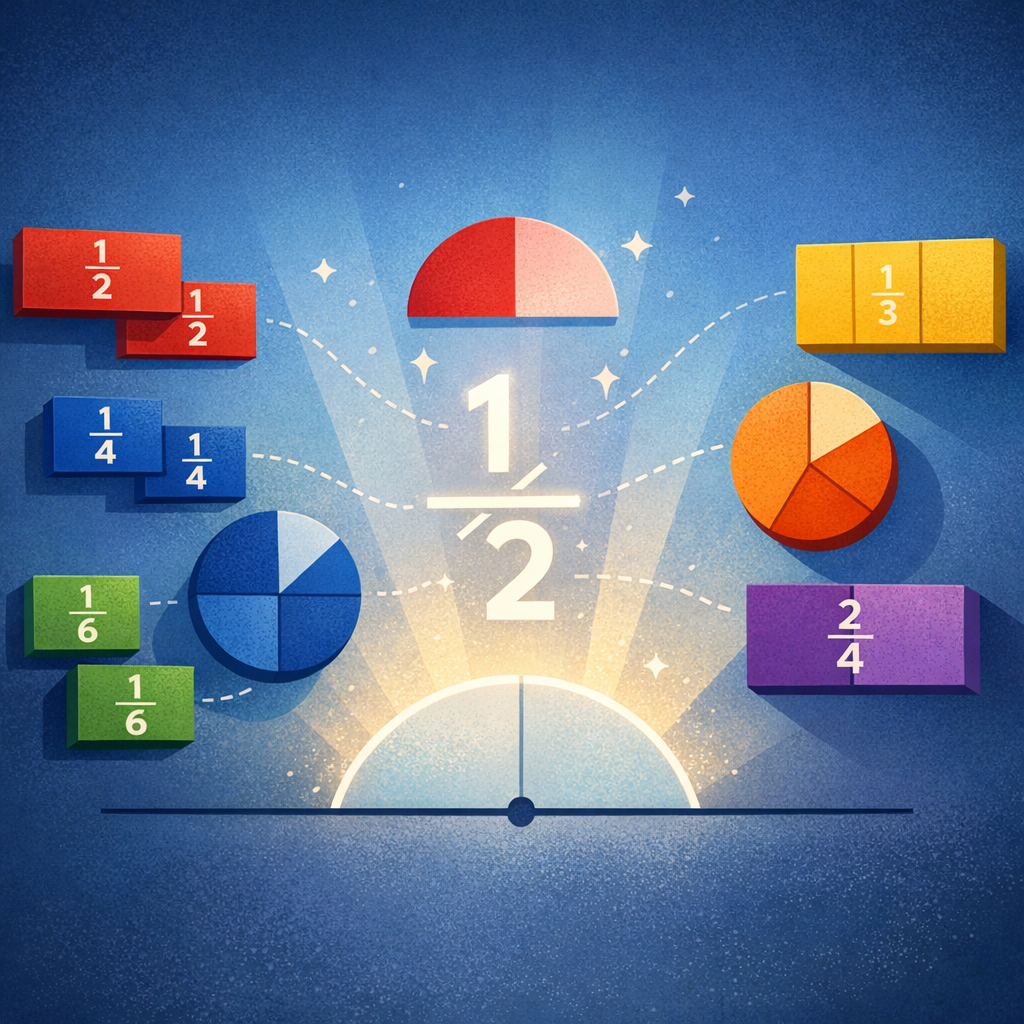
1-pager

Purpose

Students use fraction reasoning, multiplication, division, and multi-digit computation to solve a real cafeteria challenge: designing a balanced snack menu that others can understand and use. Across two weeks, they compare and rewrite fractions, including pairs with unlike denominators that are not factors or multiples of each other, use benchmark fractions and visual models, and explain total amounts with arrays, area models, equations, and the standard algorithm. The work matters because students create and revise menu plans for a cafeteria staff member, respond to feedback, and present their thinking in public through a menu showcase and interactive snack expo. Through this process, they build content expertise, collaboration, communication, problem solving, and confidence as mathematicians.

Learning goals

Students will compare, generate, and justify equivalent fractions, including tenths and hundredths, and compare fractions with unlike denominators that are not factors or multiples of each other, using fraction strips, number lines, benchmark fractions, visual models, and common denominators to make balanced serving decisions. They will solve snack-menu problems by multiplying whole numbers and fractions by whole numbers, and by adding, subtracting, and dividing multi-digit numbers with arrays, area models, equations, and the standard algorithm when appropriate. Students will communicate their reasoning clearly to classmates and the cafeteria staff member through posters, menu plans, and live explanations that use words, drawings, and mathematical proof. They will also collaborate to revise their menu designs based on peer and partner feedback, reflect daily on strategy and teamwork, and apply their math to create a useful product for a real audience.

Standards
  • [Common Core] CCSS.Math.Content.4.NF.B.4 - Apply and extend previous understandings of multiplication to multiply a fraction by a whole number.
  • [Common Core] CCSS.Math.Content.4.NF.C.5 - Express a fraction with denominator 10 as an equivalent fraction with denominator 100, and use this technique to add two fractions with respective denominators 10 and 100.
  • [Common Core] CCSS.Math.Content.4.NBT.B.6 - Find whole-number quotients and remainders with up to four-digit dividends and one-digit divisors, using strategies based on place value, the properties of operations, and/or the relationship between multiplication and division. Illustrate and explain the calculation by using equations, rectangular arrays, and/or area models.
  • [Common Core] CCSS.Math.Content.4.NBT.B.5 - Multiply a whole number of up to four digits by a one-digit whole number, and multiply two two-digit numbers, using strategies based on place value and the properties of operations. Illustrate and explain the calculation by using equations, rectangular arrays, and/or area models.
  • [Common Core] CCSS.Math.Content.4.NBT.B.4 - Fluently add and subtract multi-digit whole numbers using the standard algorithm.
Competencies
  • Critical Thinking & Problem Solving - Students consider a variety of innovative approaches to address and understand complex questions that are authentic and important to their communities.
  • Content Expertise - Students develop key competencies, skills, and dispositions with ample opportunities to apply knowledge and engage in work that matters to them.
  • Effective Communication - Students practice listening to understand, communicating with empathy, and share their learning through exhibiting, presenting and reflecting on their work.
  • Collaboration - Students co-design projects with peers, exercise shared-decision making, strengthen relational agency, resolve conflict, and assume leadership roles.
  • Academic Mindset - Students establish a sense of place, identity, and belonging to increase self-efficacy while engaging in critical reflection and action.

Products

Students will create draft menu sketches, fraction-strip and tile models, comparison cards for unlike fractions such as 4/5 and 5/6 or 3/8 and 4/12, array and area-model work samples, and short team pitches as they test ideas for balanced snack portions. Throughout the project, teams will revise their work after gallery-walk feedback from classmates and the cafeteria staff member, building a collection of labeled equations, visual proofs, fraction comparisons with common denominators and benchmarks, and written explanations. By the end, each team will produce a balanced snack menu poster and a revised cafeteria snack plan booklet that show serving sizes, equivalent fractions, comparisons of fractions with unlike denominators, total amounts, and multiplication justifications using words, drawings, and equations. Students will also prepare interactive portion challenges and display materials for a Menu Math Pop-Up or Snack Solve Expo, where guests can try problems and hear each team explain their strategy.

Launch

Kick off with a “Balanced Bite Lab” and “Menu Math Mystery Reveal” in which teams examine real snack items and clue cards from the cafeteria staff member to figure out which combinations make a balanced menu. Students use fraction strips, number lines, tiles, arrays, and quick multiplication sketches to compare fractions with unlike denominators, including pairs that are not related as factors or multiples such as 4/5 and 5/6 or 3/8 and 4/12, while also using benchmarks like 1/2 and estimating total servings. Each team creates a fast draft menu and gives a short pitch to the cafeteria staff member explaining one fraction comparison and one multiplication strategy with visuals. Close with the essential question and a class notice that their work will be revised through feedback before the final snack menu presentation and pop-up expo.

Exhibition

Host a Menu Math Pop-Up where teams present their balanced snack menu posters and revised snack plan booklets to classmates, families, and the cafeteria staff member, then invite guests to solve new portion challenges using arrays, area models, benchmark fractions, the standard algorithm, and comparisons of unlike fractions such as 4/5 and 5/6 or 3/8 and 4/12. Set up a Snack Solve Expo with interactive stations where visitors test serving-size problems, check solutions with fraction strips, number lines, and tile models, and listen to each team explain how they used equivalent fractions, common denominators, and multiplication to justify their menu choices. Include a short presentation at each station so students clearly communicate their reasoning, respond to questions, and show how peer and cafeteria feedback helped them revise their final products.

Plan
By Phase By Day Calendar
Launch Research & Empathize Prototype & Present Showcase
Launch
Students will launch the balanced snack menu project by solving a cafeteria math mystery, testing early ideas with fraction and multiplication models, and sharing a quick team pitch that introduces the challenge, audience, and expectations for later research and revision.
Day 1
🧩 Balanced Bite Mystery Lab
Launch 45m
No activities have been added to this phase yet.

Edit Phase

Loading...
Research & Empathize
Students will gather first-hand evidence from the cafeteria staff member, practice the fraction and computation tools needed to understand serving rules, map user needs and constraints, and turn their findings into a validated How Might We design brief for the balanced snack menu.
Days 2 - 5
🧠 Fraction Tools for Snack Portions
Knowledge/Skill Building 40m
🎤 Cafeteria Staff Interview Notes
Community Experience 45m
📊 Serving Rules Empathy Map
Research 45m
✅ How Might We Menu Brief
Deliverable 45m
No activities have been added to this phase yet.

Edit Phase

Loading...
Prototype & Present
Students will turn cafeteria research into tested snack menu prototypes, use fraction and multiplication reasoning to justify serving choices, gather feedback from classmates and the cafeteria staff member, and revise toward a stakeholder-ready menu plan with clear visual and written math explanations.
Days 6 - 9
🧠 Menu Proof Mini-Lesson
Knowledge/Skill Building 35m
✏️ Three Snack Menu Sketches
Project Work 45m
🗣️ Prototype Feedback Carousel
Community Experience 55m
📋 Refined Menu Pitch Checkpoint
Assessment 45m
No activities have been added to this phase yet.

Edit Phase

Loading...
Showcase
Students will present their revised balanced snack menu poster and snack plan booklet to the cafeteria staff member and guests, lead an interactive Menu Math Pop-Up with portion challenges, and complete a final performance assessment by explaining and defending their fraction and multiplication choices with visuals, equations, and clear speaking.
Day 10
🍎 Menu Math Pop-Up Expo
Assessment 45m
No activities have been added to this phase yet.

Edit Phase

Loading...
Launch Days 1–1
Day 1
🧩 Balanced Bite Mystery Lab
Launch 45m
Research & Empathize Days 2–5
Day 2
🧠 Fraction Tools for Snack Portions
Knowledge/Skill Building 40m
Day 3
🎤 Cafeteria Staff Interview Notes
Community Experience 45m
Day 4
📊 Serving Rules Empathy Map
Research 45m
Day 5
✅ How Might We Menu Brief
Deliverable 45m
Prototype & Present Days 6–9
Day 6
🧠 Menu Proof Mini-Lesson
Knowledge/Skill Building 35m
Day 7
✏️ Three Snack Menu Sketches
Project Work 45m
Day 8
🗣️ Prototype Feedback Carousel
Community Experience 55m
Day 9
📋 Refined Menu Pitch Checkpoint
Assessment 45m
Showcase Days 10–10
Day 10
🍎 Menu Math Pop-Up Expo
Assessment 45m

April 2026

Mon
Tue
Wed
Thu
Fri
20 Day 1
Launch
🧩 Balanced Bite Mystery Lab
21 Day 2
Research & Empathize
🧠 Fraction Tools for Snack Portions
22 Day 3
🎤 Cafeteria Staff Interview Notes
23 Day 4
📊 Serving Rules Empathy Map
24 Day 5
✅ How Might We Menu Brief
27 Day 6
Prototype & Present
🧠 Menu Proof Mini-Lesson
28 Day 7
✏️ Three Snack Menu Sketches
29 Day 8
🗣️ Prototype Feedback Carousel
30 Day 9
📋 Refined Menu Pitch Checkpoint
1 Day 10
Showcase
🍎 Menu Math Pop-Up Expo
Share
Activities
Loading
Loading
Loading
Get it on Google Play
© 2026 Inkwire Inc
Contact Us Privacy Policy Terms of Service