Middle School Grade
Project
1 week
Crop Talk: Growing Smarts with Local Experts
Updated
Critical Thinking & Problem Solving
Collaboration
Content Expertise
1-pager
Empathize
Empathize
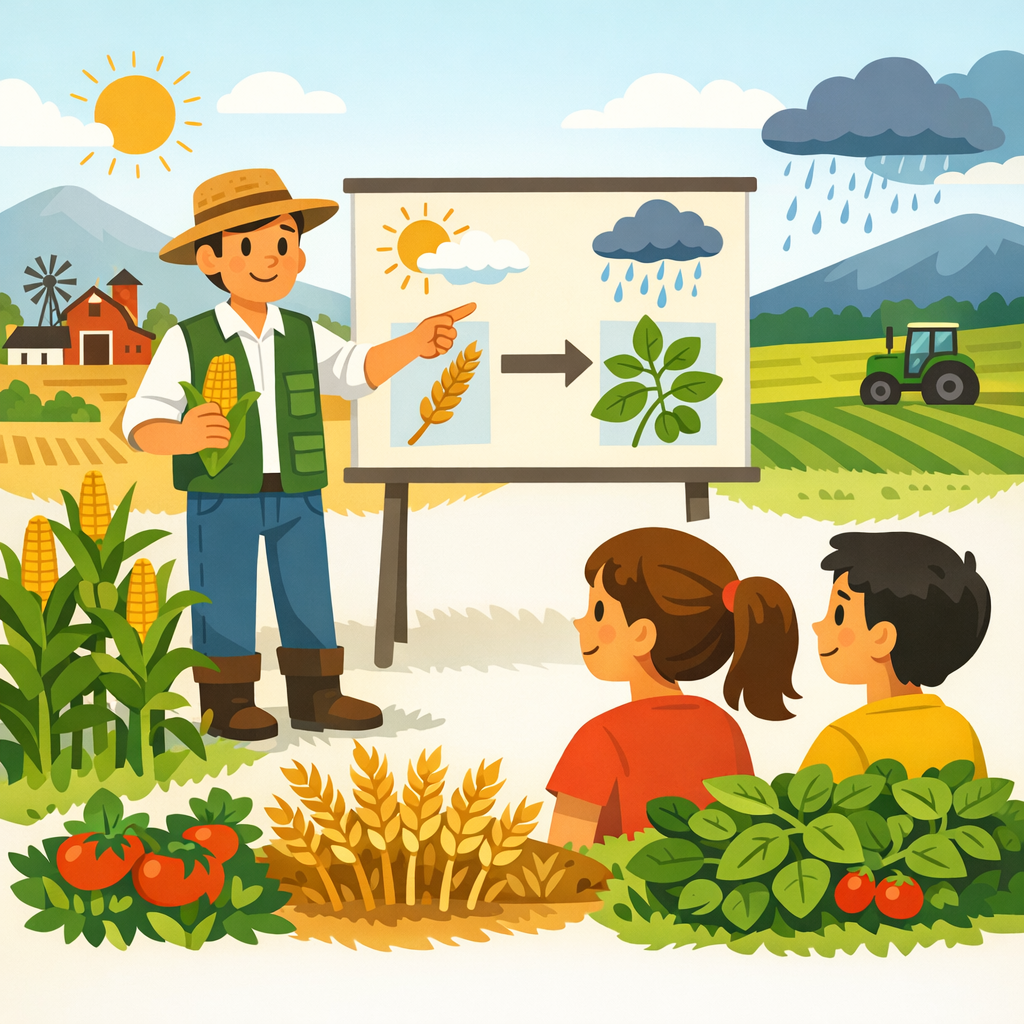
Students will launch the Climate & Crops project by engaging in a hands-on Local Agri Quest Adventure, interact directly with a visiting extension agent to understand how environmental conditions influence crop selection, and conduct structured interviews to create evidence-based empathy maps grounded in real user perspectives.
Day 1
45 min over capacity (45 min available across 1 day)
Define
Define
Students will synthesize their interview notes and empathy maps from farmers, extension agents, environmental scientists, and food bank partners to identify patterns, define a focused user-centered problem, and craft a clear How Might We statement grounded in evidence about local environmental conditions and crop selection.
Day 2
Prototype
Prototype
Students will build, test, and refine low- and medium-fidelity prototypes of their climate-responsive farm simulations, documenting how user feedback from peers and an environmental scientist shapes design improvements before the final presentation phase.
Day 4
No activities have been added to this phase yet.
Test/Present
Test/Present
Students will conduct a final validation round of their climate-responsive farm simulations with authentic users, analyze feedback to identify remaining gaps, and present their full design journey—from user research through iteration—to community stakeholders at a Climate & Crops Expo.
Day 5
Empathize
Days 1–1
Day 1
🌾 Local Agri Quest Adventure
Launch
20m
🎤 Interviewing Farmers & Extension Agents
Knowledge/Skill Building
10m
🧑🌾 Extension Agent Q&A Session
Community Experience
15m
🗺️ Empathy Map: Local Farmer Needs
Deliverable
45m
Define
Days 2–2
Day 2
🧠 Affinity Mapping Farmer Quotes
Knowledge/Skill Building
15m
🗺️ Point-of-View Draft Statements
Deliverable
10m
🌾 Climate Constraints Mini-Lesson
Knowledge/Skill Building
10m
🔍 HMW Peer Feedback Protocol
Deliverable
5m
✅ Climate-Responsive Design Brief
Assessment
5m
Ideate
Days 3–3
Day 3
🧠 20-Idea Climate Farm Sprint
Deliverable
15m
🔄 SCAMPER Crop Adaptation Lab
Knowledge/Skill Building
10m
🌾 Analogous Inspiration Gallery
Research
8m
📊 User-Weighted Decision Matrix
Knowledge/Skill Building
7m
✏️ Climate Farm Concept Storyboards
Deliverable
5m
Prototype
Days 4–4
Day 4
Test/Present
Days 5–5
Day 5
🎯 Final User Testing Protocol
Knowledge/Skill Building
15m
🌾 New User Simulation Test
Community Experience
15m
🔁 Iteration Log & Final Revisions
Deliverable
5m
🎤 Climate & Crops Expo Presentation
Assessment
10m
June 2026
Mon
Tue
Wed
Thu
Fri
8
Day 1
Empathize
🌾 Local Agri Quest Adventure
🎤 Interviewing Farmers & Extension Agents
🧑🌾 Extension Agent Q&A Session
🗺️ Empathy Map: Local Farmer Needs
9
Day 2
Define
🧠 Affinity Mapping Farmer Quotes
🗺️ Point-of-View Draft Statements
🌾 Climate Constraints Mini-Lesson
🔍 HMW Peer Feedback Protocol
✅ Climate-Responsive Design Brief
10
Day 3
Ideate
🧠 20-Idea Climate Farm Sprint
🔄 SCAMPER Crop Adaptation Lab
🌾 Analogous Inspiration Gallery
📊 User-Weighted Decision Matrix
✏️ Climate Farm Concept Storyboards
11
Day 4
Prototype
12
Day 5
Test/Present
🎯 Final User Testing Protocol
🌾 New User Simulation Test
🔁 Iteration Log & Final Revisions
🎤 Climate & Crops Expo Presentation