About Us Impact News Pricing Contact Us Explore
Make a copy
About Us Impact News Pricing Contact Us Explore
Tools
Project-Based Learning Performance Assessment Student-Led Conferences Digital Portfolios
HTH GSE Kaleidoscope
Personalize your design more by filling out the framework elements.
Designed by the Professional Learning team at the High Tech High Graduate School of Education.
Learn more
Essential Question
What question will guide the project and learning?
Community Partners
What organizations and individuals will collaborate and enhance the learning experience?
Reflection
What opportunities are there for us to reflect on our academic and socio-emotional development?
Assessment
In what ways can we demonstrate what we have learned and how we have grown?
Exhibition
How and who will we celebrate our learning with?
Project Launch
What shared experiences will engage us in the content, skills, and mindsets of the project?
Core Content
What will we need to learn and practice in order to engage in the project?
Critique and Revision
How will opportunities for feedback and refinement be embedded in the project?
Product
What will we make, build, or do that will have an impact on us or the world around us?
Next
What question will guide the project and learning?

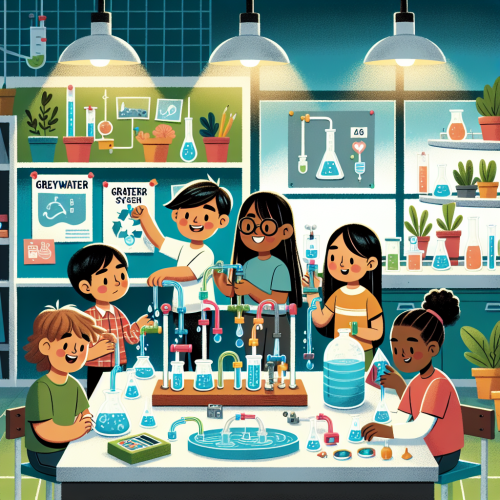
How can we design a functional and sustainable greywater recycling system that effectively reduces water usage in our school's bathrooms or labs?

    Design for Mastery Kit
    NEW
11th Grade  Project 4 weeks

Save Splash: School Water Warriors

Ari D
Critical Thinking & Problem Solving
Collaboration
Effective Communication
Content Expertise
Self Directed Learning
1-pager

Purpose

In this project, students actively engage with chemistry principles by designing innovative greywater recycling systems tailored to their school's unique needs. By tackling real-world environmental challenges, they develop critical thinking and problem-solving skills essential for their local community. Through collaboration and effective communication, students take initiative to create sustainable solutions, driving meaningful change and fostering a deeper connection to their learning and its impact beyond the classroom.

Learning goals

Throughout this project, students will achieve a comprehensive understanding of chemistry principles related to water purification and recycling. They will enhance their critical thinking and problem-solving skills by developing innovative greywater recycling systems tailored for their school environment. By co-designing and collaborating, students will build on their teamwork and leadership abilities, while effectively communicating their findings and solutions. Furthermore, students will hone their self-directed learning competencies, utilizing feedback to refine their prototypes and reflect on the broader, real-world applications of their work.
Competencies
  • Critical Thinking & Problem Solving - Students consider a variety of innovative approaches to address and understand complex questions that are authentic and important to their communities.
  • Collaboration - Students co-design projects with peers, exercise shared-decision making, strengthen relational agency, resolve conflict, and assume leadership roles.
  • Effective Communication - Students practice listening to understand, communicating with empathy, and share their learning through exhibiting, presenting and reflecting on their work.
  • Content Expertise - Students develop key competencies, skills, and dispositions with ample opportunities to apply knowledge and engage in work that matters to them.
  • Self Directed Learning - Students use teacher and peer feedback and self-reflection to monitor and direct their own learning while building self knowledge both in and out of the classroom.

Products

Students will collaboratively develop a functioning prototype of a greywater recycling system, complete with a detailed technical proposal illustrating their design concepts and expected impact on reducing water usage. Each team will create a comprehensive water audit report for their school, utilizing data visualization to convey findings and recommendations. Throughout the project, students will construct a digital portfolio documenting their process, including design iterations, expert feedback integration, and reflections on their learning journey. The final presentation will include a live demonstration of their system to showcase its efficacy and sustainability to an audience of peers, teachers, and local stakeholders.

Launch

Kick off the project with a dynamic 'Blueprint Blitz' event in which students are grouped into teams to brainstorm initial ideas for designing a sustainable greywater recycling system. Using large sheets of paper and markers, they will sketch rough system concepts, focusing on creativity and functionality. Teams will present their blueprints to the class and receive immediate feedback, promoting an atmosphere of collaboration and innovation. This hands-on, interactive session sets the stage for active participation and emphasizes the importance of collective brainstorming to solve real-world problems.

Exhibition

Host a 'Waterwise Expo' where students showcase their final greywater recycling systems through interactive demonstrations and engaging posters highlighting their design process, challenges, and solutions. Invite peers, faculty, and community members to the expo, fostering discussions and feedback sessions for students to share insights and reflect on the potential impact of their innovations. Encourage students to use multimedia presentations to elaborate on their work, enhancing the experience for attendees and providing a comprehensive view of their project journey.
Learning Journey
Empathize
Students will conduct interviews and surveys with fellow students, staff, and facility managers to gather insights on water use habits and needs, fostering a comprehensive understanding of user perspectives for informed design decisions.
Days 1 - 3
Milestone Activities
Meet Water Users
Launch 60m

Organize a launch session where student teams plan fieldwork and engage with real users impacted by the school's water use. Teams identify interview targets (students, staff, facility managers), draft interview prompts, and design a brief observation plan to gather firsthand insights about water habits, needs, and pain points. This kickoff builds empathy, frames the research scope, and assigns roles for collecting user-centered data.

Empathy Artifacts Pack
Deliverable

Students execute structured user research: conduct at least three user interviews (with peers, staff, or facility managers), complete observation notes, and synthesize findings into empathy maps and journey maps. Each group compiles interview notes, observation notes, and maps, then shares a concise user-understanding summary highlighting key needs and opportunities to inform greywater system design.

No activities have been added to this phase yet.

Edit Phase

Loading...
Define
Students will synthesize their audit findings to draft a concise, actionable problem statement, collaboratively identifying the core issues to address in their greywater recycling project.
Days 4 - 6
Milestone Activities
Define Core Water Problem
Deliverable

In small teams, students synthesize audit findings into a user-centered problem space. They will conduct brief interviews and field observations with campus users (students, custodial staff, teachers) to understand water use, pain points, and opportunities. They will produce a Point-of-View (POV) statement from the user perspective, develop 3–5 How Might We (HMW) questions, create 2–3 user personas, and build a systems map or problem tree linking root causes to symptoms affecting greywater use. The artifacts will be iteratively revised after a brief feedback session with campus users, and the final problem-definition packet will be ready for the next phase.

No activities have been added to this phase yet.

Edit Phase

Loading...
Ideate
Students will brainstorm and sketch a range of innovative greywater recycling system ideas, collaborating in teams to explore creative solutions and prepare for an expert critique session to refine their concepts.
Days 7 - 10
Milestone Activities
Concept Sketch Pack
Deliverable

Teams generate a rapid set of greywater recycling concepts and compile them into a Concept Sketch Pack. Each team documents brainstorming notes, creates two visual sketches or storyboards for each idea, and develops a Feasibility/Impact matrix. They select and annotate their Top 3 concepts with clear rationales. The pack includes one quick empathy artifact from a short user perspective (student or facilities staff) and records two rapid iterations of the top concepts with noted changes. This deliverable prepares teams for the expert critique session and guides subsequent refinement.

No activities have been added to this phase yet.

Edit Phase

Loading...
Prototype
Students will collaboratively construct and refine testable prototypes of their greywater recycling designs, actively integrating expert critiques to improve their solutions and prepare for functional testing.
Days 11 - 15
Milestone Activities
Prototype Iteration Sprint
Deliverable

Teams create rapid iterations of their greywater system prototype, starting with a low-fidelity paper or cardboard model and advancing to a functional medium-fidelity mockup. They integrate expert critiques and user feedback, updating an iteration log to capture changes and learning. Outputs include a low-fidelity prototype, a medium-fidelity functional mockup, and an iteration log that records what changed and why, focused on user needs and real-world constraints.

Document User Testing Findings
Deliverable

Students plan and conduct user testing sessions with real users (staff, students, or facilities personnel) to evaluate their prototypes. They write a testing protocol, collect feedback, synthesize findings, and list revision decisions with rationale tied to user input. This artifact builds toward future refinements by foregrounding user needs and documenting how feedback informed design choices.

No activities have been added to this phase yet.

Edit Phase

Loading...
Test/Present
Students will deliver a presentation of their greywater recycling prototypes to school administrators, local environmental experts, and community stakeholders, incorporate feedback to validate and refine their designs, and discuss their learning journey and the potential impact of their innovations on sustainable water usage reduction.
Days 16 - 20
Milestone Activities
Greywater System Showcase
Assessment 2m

Teams present their functioning greywater recycling prototypes to an authentic audience that includes school administrators, local environmental experts, and community stakeholders. Presenters demonstrate how the system works, share data from the school's water audit, and explain design decisions grounded in user research. The presentation highlights iterations made in response to user feedback, reflects on the learning journey, and discusses anticipated impact on water usage and sustainability.

No activities have been added to this phase yet.

Edit Phase

Loading...
Plan
Week 1
Day 1
Day 2
Day 3
Day 4
Day 5
Phase
Empathize
Define
Activities
Meet Water Users
Launch 60m
Empathy Artifacts Pack
Deliverable
No activities added
Define Core Water Problem
Deliverable
No activities added
Preparation
Week 2
Day 6
Day 7
Day 8
Day 9
Day 10
Phase
Define
Ideate
Activities
No activities added
No activities added
Concept Sketch Pack
Deliverable
No activities added
No activities added
Preparation
Week 3
Day 11
Day 12
Day 13
Day 14
Day 15
Phase
Prototype
Activities
Prototype Iteration Sprint
Deliverable
No activities added
Document User Testing Findings
Deliverable
No activities added
No activities added
Preparation
Week 4
Day 16
Day 17
Day 18
Day 19
Day 20
Phase
Test/Present
Activities
No activities added
No activities added
No activities added
No activities added
Greywater System Showcase
Assessment 2m
Preparation
Share
Loading
Loading
Get it on Google Play
© 2026 Inkwire Inc
Contact Us Privacy Policy Terms of Service