About Us Impact News Pricing Contact Us Explore
Make a copy
About Us Impact News Pricing Contact Us Explore
Tools
Project-Based Learning Performance Assessment Student-Led Conferences Digital Portfolios
HTH GSE Kaleidoscope
Personalize your design more by filling out the framework elements.
Designed by the Professional Learning team at the High Tech High Graduate School of Education.
Learn more
Essential Question
What question will guide the project and learning?
Community Partners
What organizations and individuals will collaborate and enhance the learning experience?
Reflection
What opportunities are there for us to reflect on our academic and socio-emotional development?
Assessment
In what ways can we demonstrate what we have learned and how we have grown?
Exhibition
How and who will we celebrate our learning with?
Project Launch
What shared experiences will engage us in the content, skills, and mindsets of the project?
Core Content
What will we need to learn and practice in order to engage in the project?
Critique and Revision
How will opportunities for feedback and refinement be embedded in the project?
Product
What will we make, build, or do that will have an impact on us or the world around us?
Next
What question will guide the project and learning?

How can design principles be innovatively applied to create inclusive spaces that cater to diverse sensory needs?

    Design for Mastery Kit
    NEW
11th Grade  Project 4 weeks

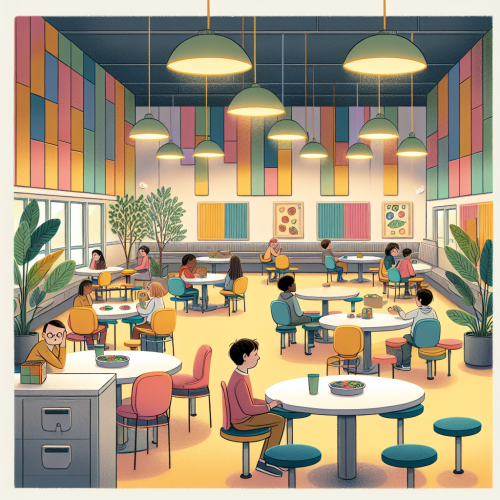
Light & Sound: Inclusive Cafeteria Makeover

Ari D
Collaboration
Effective Communication
Critical Thinking & Problem Solving
Academic Mindset
Content Expertise
1-pager

Purpose

The purpose of this project is to engage 11th-grade students in a hands-on exploration of inclusive design by redesigning the school cafeteria to accommodate neurodivergent sensory profiles. Through collaborative work, students will enhance their skills in communication, critical thinking, and problem-solving while fostering an academic mindset and sense of belonging. By applying acoustic engineering and lighting design techniques, students will produce creative solutions that address real-world sensory needs within their community. This experience aims to develop their content expertise and encourage reflection through peer feedback and iterative design critique sessions.

Learning goals

Students will develop collaborative skills by engaging in co-designing projects with peers and exercising shared decision-making to create inclusive environments. They will enhance their communication abilities through active listening, empathetic interactions, and presentations that reflect on their design iterations. The project encourages critical thinking and problem-solving as students explore innovative approaches to accommodate diverse sensory needs in their designs. Students will also foster an academic mindset by reflecting on their sense of belonging and efficacy as they work on meaningful, real-world problems. Throughout, students will deepen their content expertise through hands-on applications of acoustics, lighting design, and sensory-friendly environments.
Competencies
  • Collaboration - Students co-design projects with peers, exercise shared-decision making, strengthen relational agency, resolve conflict, and assume leadership roles.
  • Effective Communication - Students practice listening to understand, communicating with empathy, and share their learning through exhibiting, presenting and reflecting on their work.
  • Critical Thinking & Problem Solving - Students consider a variety of innovative approaches to address and understand complex questions that are authentic and important to their communities.
  • Academic Mindset - Students establish a sense of place, identity, and belonging to increase self-efficacy while engaging in critical reflection and action.
  • Content Expertise - Students develop key competencies, skills, and dispositions with ample opportunities to apply knowledge and engage in work that matters to them.

Products

Throughout this learning experience, students will create comprehensive design blueprints for a redesigned cafeteria environment, incorporating elements such as sound-proof panels and sensory-friendly lighting. By the project’s conclusion, each student team will present a detailed and professionally critiqued proposal to stakeholders, showcasing innovative solutions tailored to neurodivergent sensory needs. Additionally, students will produce reflective portfolios documenting their process, collaborative efforts, and personal growth, enriched by peer feedback and critiques.

Launch

Kick off the project with a dynamic 'Sensory Hackathon,' inviting students to collaborate in small groups to brainstorm inclusive design concepts that address neurodivergent sensory needs. Encourage the use of innovative materials such as sound-proof panels and adaptable lighting to prototype practical solutions. Conclude the session with group presentations, allowing students to share initial design ideas and receive feedback, setting a collaborative tone for the remainder of the project.

Exhibition

At the conclusion of the project, students will host an immersive exhibition that showcases their redesigned cafeteria blueprints. This event will invite participants to experience prototype models and sensory simulations, allowing students to demonstrate how their designs promote inclusivity for neurodivergent individuals. Stakeholder feedback, alongside student presentations, will enrich the exhibition by highlighting the importance of empathy and innovation—key components developed throughout the project.
Learning Journey
Empathize
Students will conduct interviews and observations with neurodivergent peers to gather insights into their sensory experiences, document findings to identify key needs, and reflect on the importance of inclusive design through a guided debrief session.
Days 1 - 3
Milestone Activities
Meet Neurodivergent Voices
Launch 60m

Students will collaborate in small groups to meet 2–3 neurodivergent peers or campus staff to conduct guided interviews and short observations in real spaces (e.g., cafeteria, hallways). They will capture initial empathy artifacts such as notes, quotes, and quick sketches, and identify 2–3 user needs to inform subsequent design work.

Capture Sensory Insights
Deliverable

In their small groups, students synthesize the gathered data into user research artifacts: at least three interview notes, observation field notes, and the creation of empathy maps and a journey map that highlight neurodivergent sensory needs and challenges. They will prepare a concise summary ready for feedback in the next phase.

No activities have been added to this phase yet.

Edit Phase

Loading...
Define
Students will consolidate their findings from research, evaluate their empathic understanding, and collaboratively formulate a clear, focused problem statement to guide their design process, ensuring it addresses the essential question of creating inclusive spaces for diverse sensory needs.
Days 4 - 6
Milestone Activities
POV & HMW Workshop
Deliverable

In small groups, students conduct rapid empathic interviews with classmates and staff who experience diverse sensory needs in the cafeteria. They synthesize findings into user-centered artifacts: a Point-of-View (POV) statement for a representative user, a set of How Might We (HMW) questions reframing the core challenge, 2–3 user persona profiles, and a problem tree or systems map that visualizes root causes and interdependencies. Groups will iterate their artifacts based on early user feedback, ensuring the problem statement aligns with authentic needs for inclusive spaces. The deliverables will be publicly shared with 1–2 invited users for feedback to inform next steps.

No activities have been added to this phase yet.

Edit Phase

Loading...
Ideate
Students will brainstorm and develop a wide range of innovative design solutions for the school cafeteria that prioritize inclusive sensory experiences, using collaborative workshops to ideate and refine concepts with input from diverse peers and stakeholders.
Days 7 - 10
Milestone Activities
Concept Brainstorm Pack
Deliverable

In small groups, students rapidly generate inclusive cafeteria design ideas that support neurodivergent sensory experiences. Groups produce a brainstorm document (quantity over quality), sketch quick concept visuals or storyboards, complete a feasibility/impact matrix, and select their top three concepts with concise rationales. Students will collect brief feedback from peers and stakeholders to ground their ideas in real user needs and prepare for upcoming critiques.

No activities have been added to this phase yet.

Edit Phase

Loading...
Prototype
Students will develop and construct prototype models of their inclusive cafeteria designs, using materials to simulate sensory-friendly environments, then present their prototypes to peers and stakeholders for iterative feedback and collaborative refinement.
Days 11 - 15
Milestone Activities
No activities have been added to this phase yet.

Edit Phase

Loading...
Test/Present
Students will engage in practical user testing of their cafeteria design solutions, collect real-time feedback from neurodivergent students during facilitated walk-throughs, and present their findings and final blueprints to an audience of stakeholders including educators and design experts for evaluation and insight exchange.
Days 16 - 20
Milestone Activities
Inclusive Cafeteria Pitch
Assessment

Teams present their final, evidence-based redesign blueprints for the school cafeteria, addressing neurodivergent sensory needs. The presentation includes user-centered research, real-time feedback from neurodivergent students gathered during facilitated walk-throughs, rationale for acoustics and lighting choices, prototyping concepts, and a reflective portfolio. Presentations are delivered to an authentic audience of educators, design professionals, and stakeholders for evaluation using a rubric aligned to User Understanding, Problem Definition, Creative Problem-Solving, Prototyping & Iteration, and Communication & Presentation. Students demonstrate how feedback informed iterations and how the solution benefits real users.

No activities have been added to this phase yet.

Edit Phase

Loading...
Plan
Week 1
Day 1
Day 2
Day 3
Day 4
Day 5
Phase
Empathize
Define
Activities
Meet Neurodivergent Voices
Launch 60m
Capture Sensory Insights
Deliverable
No activities added
POV & HMW Workshop
Deliverable
No activities added
Preparation
Week 2
Day 6
Day 7
Day 8
Day 9
Day 10
Phase
Define
Ideate
Activities
No activities added
No activities added
Concept Brainstorm Pack
Deliverable
No activities added
No activities added
Preparation
Week 3
Day 11
Day 12
Day 13
Day 14
Day 15
Phase
Prototype
Activities
No activities added
No activities added
No activities added
No activities added
No activities added
Preparation
Week 4
Day 16
Day 17
Day 18
Day 19
Day 20
Phase
Test/Present
Activities
No activities added
No activities added
No activities added
No activities added
Inclusive Cafeteria Pitch
Assessment
Preparation
Share
Loading
Loading
Get it on Google Play
© 2026 Inkwire Inc
Contact Us Privacy Policy Terms of Service