About Us Impact News Pricing Contact Us Explore
Make a copy
About Us Impact News Pricing Contact Us Explore
Tools
Project-Based Learning Performance Assessment Student-Led Conferences Digital Portfolios
Framework
Loading
Loading
    Products & Rubric
4th Grade  Project 4 weeks

Wild Tribes vs. Tech Bots: California Chronicles!

Riza E
Feb 5, 2026
Updated Feb 6, 2026
Critical Thinking & Problem Solving
Collaboration
Effective Communication
Self Directed Learning
Academic Mindset
1-pager

Purpose

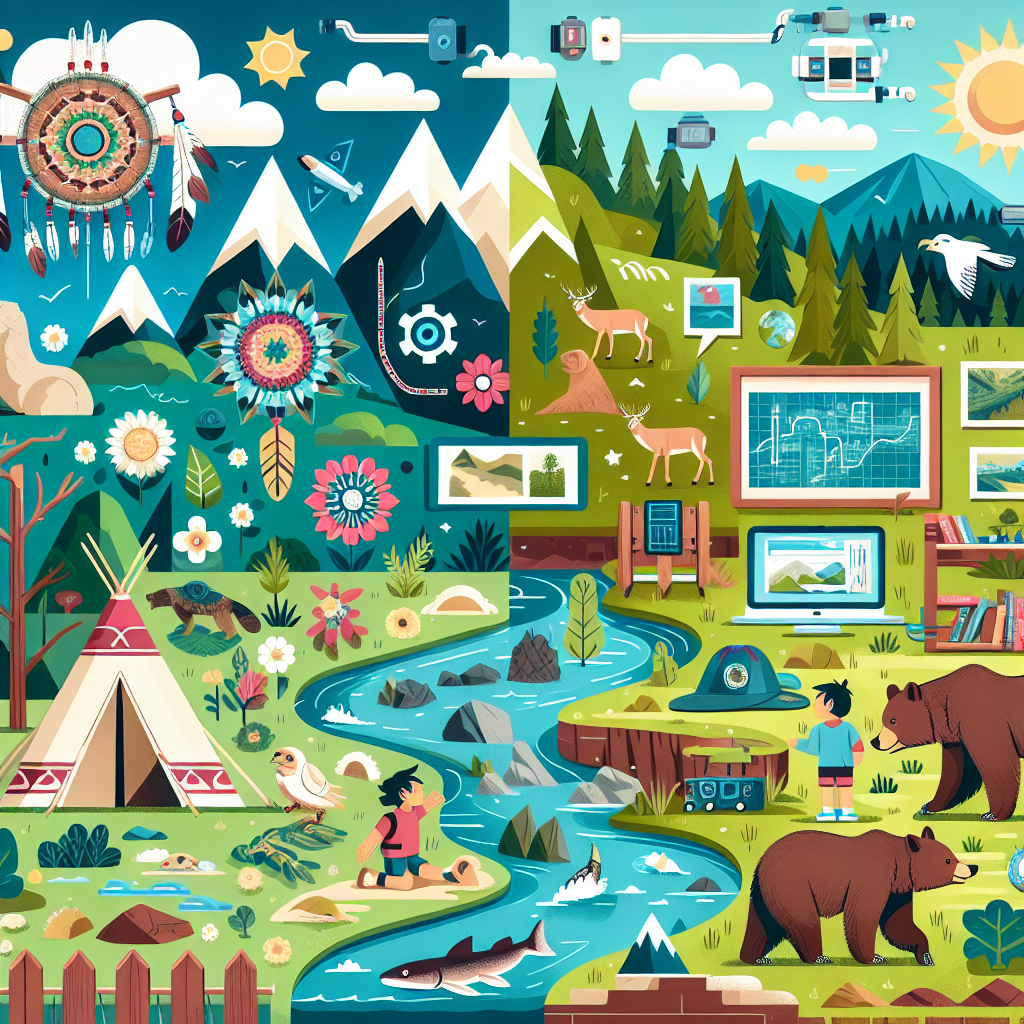
The purpose of this unit is to immerse fourth-grade students in a dynamic exploration of adaptation through both traditional methods and modern technology. By engaging with narratives of California Indigenous Peoples and the story of Roz in 'The Wild Robot,' students will understand the interplay of nature and technology. The learning experience encourages students to respectfully incorporate indigenous wisdom alongside robotic thinking, fostering critical perspectives on harmony and conflict. Through collaborative activities and exhibits, learners develop skills in creative problem-solving, effective communication, and self-directed exploration within a real-world context.

Learning goals

Students will develop an understanding of how California Indigenous Peoples and the character Roz from 'The Wild Robot' adapt to new environments, emphasizing the balance between nature and technology. They will deepen their critical thinking and problem-solving skills by analyzing real-world examples of adaptation and survival systems. By collaborating within diverse groups and taking on leadership roles, students will enhance their collaboration skills while creating and presenting interactive museum exhibits. Communication will be practiced through peer-led discussions and guided tours, fostering respectful listening, empathy, and sharing knowledge with peers and community members. Through self-directed learning and critical reflection, students will build a sense of identity and belonging, recognizing their place and efficacy in addressing complex questions.

Competencies
  • Critical Thinking & Problem Solving - Students consider a variety of innovative approaches to address and understand complex questions that are authentic and important to their communities.
  • Collaboration - Students co-design projects with peers, exercise shared-decision making, strengthen relational agency, resolve conflict, and assume leadership roles.
  • Effective Communication - Students practice listening to understand, communicating with empathy, and share their learning through exhibiting, presenting and reflecting on their work.
  • Self Directed Learning - Students use teacher and peer feedback and self-reflection to monitor and direct their own learning while building self knowledge both in and out of the classroom.
  • Academic Mindset - Students establish a sense of place, identity, and belonging to increase self-efficacy while engaging in critical reflection and action.

Products

Students will collaboratively design survival systems by integrating indigenous methods and robotic principles in physical models. As part of the Creative Imagination Lab, learners will craft dioramas and role-play scenes depicting environmental adaptation. For the exhibition, students will create multimedia presentations, art installations, and hands-on models for the Harmony and Conflict Gallery Walk. Throughout the unit, they will develop artifacts for a museum exhibit that demonstrate adaptation strategies of California Indigenous Peoples and Roz from 'The Wild Robot.' At the end of the unit, students will present guided tours, showcasing their creations to classmates and community members.

Launch

Initiate the project with an immersive 'Creative Imagination Lab' where students collaborate in small groups to create dioramas or perform role-play scenes. These scenes depict ways characters and communities adapt to their environments in 'The Wild Robot' and among California Indigenous Peoples. Engage students in peer-led discussions to share insights and foster deeper understanding of the harmony and conflict between nature and technology, setting a strong foundation for the explorative unit ahead.

Exhibition

Students will host an interactive "Harmony and Conflict Gallery Walk," transforming the classroom into a multimedia exhibition space that showcases their creative interpretations of how California Indigenous Peoples and Roz balance nature and technology. Art installations, digital presentations, and hands-on models crafted by learners will provide a rich narrative of adaptation and survival. Throughout the event, students will act as docents, guiding visitors through the exhibits while effectively communicating their insights and responding to questions and feedback from guests, including classmates and community members.

Plan
By Phase By Day Calendar

No activities yet

Your plan has phases but no activities yet. Open By Phase to add activities to your phases.

Empathize Define Ideate Prototype Test/Present
Empathize
Students will conduct interviews and research to explore and understand the lifestyles and environment adaptations of both California Indigenous Peoples and Roz from 'The Wild Robot,' focusing on how each navigates the balance and conflict between nature and technology.
Days 1 - 3
No activities have been added to this phase yet.

Edit Phase

Loading...
Define
Students will synthesize their research findings into a collaborative problem statement by working in teams to identify the key challenges and opportunities faced by the California Indigenous Peoples and Roz, integrating both empathy maps and brainstorming activities to focus on the harmony and conflict between nature and technology.
Days 4 - 6
No activities have been added to this phase yet.

Edit Phase

Loading...
Ideate
Students will brainstorm innovative ideas through sketching, discussing, and mind-mapping in groups to explore diverse ways California Indigenous Peoples and Roz creatively navigate environmental adaptation and the intersection of nature and technology.
Days 7 - 10
No activities have been added to this phase yet.

Edit Phase

Loading...
Prototype
Students will develop prototypes of survival systems using a blend of indigenous techniques and robotic elements, rigorously testing their functionality and receiving peer feedback to refine their designs before the upcoming exhibition.
Days 11 - 15
No activities have been added to this phase yet.

Edit Phase

Loading...
Test/Present
Students will conduct a 'Harmony and Conflict Gallery Walk,' presenting their multimedia displays to classmates and community members, engaging in dialogues to validate their insights and gathering feedback to refine their understanding of how indigenous adaptation and technological progression coexist and conflict.
Days 16 - 20
No activities have been added to this phase yet.

Edit Phase

Loading...
Empathize Days 1–3
Day 1
Day 2
Day 3
Define Days 4–6
Day 4
Day 5
Day 6
Ideate Days 7–10
Day 7
Day 8
Day 9
Day 10
Prototype Days 11–15
Day 11
Day 12
Day 13
Day 14
Day 15
Test/Present Days 16–20
Day 16
Day 17
Day 18
Day 19
Day 20

June 2026

Mon
Tue
Wed
Thu
Fri
8 Day 1
Empathize
9 Day 2
10 Day 3
11 Day 4
Define
12 Day 5
15 Day 6
16 Day 7
Ideate
17 Day 8
18 Day 9
19 Day 10
22 Day 11
Prototype
23 Day 12
24 Day 13
25 Day 14
26 Day 15

July 2026

Mon
Tue
Wed
Thu
Fri
29 Day 16
Test/Present
30 Day 17
1 Day 18
2 Day 19
3 Day 20
Share
Loading
Loading
Get it on Google Play
© 2026 Inkwire Inc
Contact Us Privacy Policy Terms of Service