All grades
Project
4 weeks
Wild Survival: Adapt and Thrive!
Updated
4-LS1-2
4-LS1-1
Critical Thinking & Problem Solving
1-pager
Empathize
Empathize
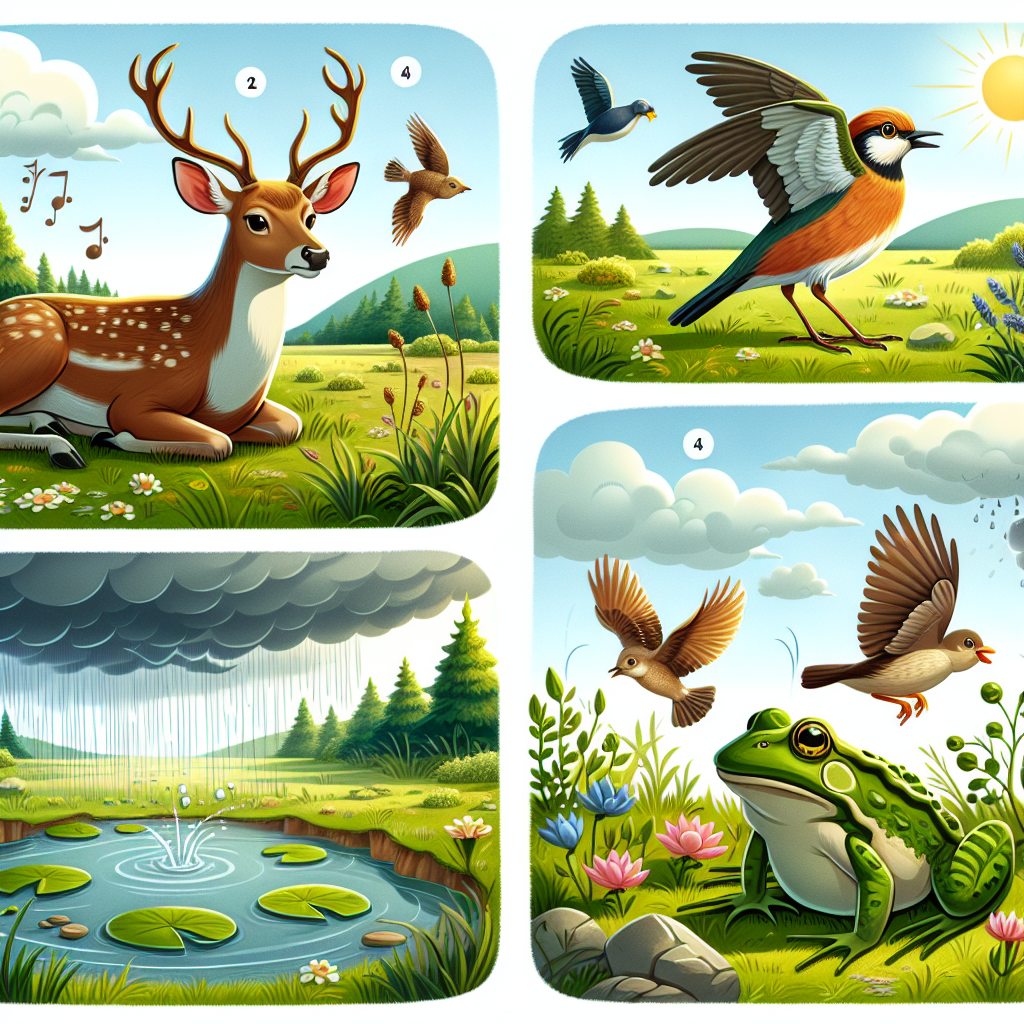
Students will explore diverse animal habitats virtually through images and videos, observe how various species use their body parts and senses to react to environmental stimuli, and compile their observations in a class discussion to better understand animal survival mechanisms.
Day 1
Define
Define
Students will synthesize their research findings to form a clear and actionable problem statement that highlights how animals use their body structures and sensory organs to process information and survive in changing environments.
Day 2
No activities have been added to this phase yet.
Prototype
Prototype
Students will build and refine physical or digital models to demonstrate how animals use their sensory organs to receive and process environmental information, testing and iterating their designs to reflect accurate survival mechanisms.
Days 5 - 6
No activities have been added to this phase yet.
Test/Present
Test/Present
Students will test their animal models by presenting them to peers and teachers, demonstrating how the models represent the sensory and response mechanisms essential for survival, adaptation, and environmental interaction.
Days 7 - 8
No activities have been added to this phase yet.
Empathize
Days 1–1
Day 1
Animal Senses Immersion
Launch
40m
Define
Days 2–2
Day 2
Ideate
Days 3–4
Day 3
Day 4
Prototype
Days 5–6
Day 5
Day 6
Test/Present
Days 7–8
Day 7
Day 8
June 2026
Mon
Tue
Wed
Thu
Fri
8
Day 1
Empathize
Animal Senses Immersion
9
Day 2
Define
15
Day 3
Ideate
16
Day 4
22
Day 5
Prototype
23
Day 6
July 2026
Mon
Tue
Wed
Thu
Fri
29
Day 7
Test/Present
30
Day 8