2nd Grade  Project 8 weeks

NatureQuest: Classroom Without Walls

Christine H
HS-LS2-7
MS-LS2-5
HS-LS4-6
SL1
ELA.2.SL.3
+ 14 more
1-pager

Purpose

Second graders will design and develop a vibrant school garden that attracts and supports local wildlife while observing and documenting weather patterns and their effects on the ecosystem. Students will engage in hands-on exploration, critical thinking, and collaborative discussions, fostering a sense of identity and belonging within their community. The project will culminate in an open exhibition where students present their findings and innovations, connecting with urban planning partners to explore real-world solutions for environmental challenges.

Learning goals

Students will develop skills in designing and evaluating a schoolyard garden to support and attract local wildlife, integrating science and engineering practices to understand ecosystems and biodiversity. They will actively participate in collaborative discussions, using peer feedback to refine their ideas while considering diverse perspectives and interactions between organisms. Through data collection and analysis, they will observe weather patterns and environmental changes, employing critical thinking to propose solutions that mitigate human impact on biodiversity. Students will engage with urban planning experts, fostering self-efficacy and a sense of belonging within their community, by creating tangible real-world solutions.
Standards
  • [Next Generation Science Standards] HS-LS2-7 - Design, evaluate, and refine a solution for reducing the impacts of human activities on the environment and biodiversity.
  • [Next Generation Science Standards] MS-LS2-5 - Evaluate competing design solutions for maintaining biodiversity and ecosystem services.
  • [Next Generation Science Standards] HS-LS4-6 - Create or revise a simulation to test a solution to mitigate adverse impacts of human activity on biodiversity.
  • [Wisconsin] SL1 - Prepare for and participate effectively in a range of conversations and collaborations with diverse partners, building on others' ideas and expressing their own clearly and persuasively.
  • [Wisconsin] ELA.2.SL.3 - Ask and answer questions about what a speaker says in order to gather additional information, or clarify something that is not understood, or expand on the topic.
  • [Wisconsin] ELA.2.SL.1.d - Consider individual differences when communicating with others.
  • [Wisconsin] ELA.2.SL.1.b - Build on others' talk in conversations by linking their comments to the remarks of others.
  • [Wisconsin] ELA.2.SL.1.a - Follow agreed-upon norms for discussions and participate by actively listening, taking turns, gaining the floor in respectful ways and staying on topic.
  • [Wisconsin] ELA.2.SL.1.c - Ask for clarification and further explanation as needed about the topics and texts under discussion.
  • [Wisconsin] ELA.2.W.7 - Participate in shared and independent inquiry and writing projects (e.g., read a number of books on a single topic to produce a report; record science observations).
  • [Wisconsin] SCI.2.CC.1 - Students use science and engineering practices, disciplinary core ideas, and patterns to make sense of phenomena and solve problems.
  • [Wisconsin] SCI.2.CC.2 - Students use science and engineering practices, disciplinary core ideas, and cause and effect relationships to make sense of phenomena and solve problems.
  • [Wisconsin] SCI.2.CC.4 - Students use science and engineering practices, disciplinary core ideas, and an understanding of systems and models to make sense of phenomena and solve problems.
  • [Wisconsin] SCI.2.LS.1 - Students use science and engineering practices, crosscutting concepts, and an understanding of structures and processes (on a scale from molecules to organisms) to make sense of phenomena and solve problems.
  • [Wisconsin] SCI.2.LS.2 - Students use science and engineering practices, crosscutting concepts, and an understanding of the interactions, energy, and dynamics within ecosystems to make sense of phenomena and solve problems.
  • [Wisconsin] SCI.2.LS.4 - Students use science and engineering practices, crosscutting concepts, and an understanding of biological evolution to make sense of phenomena and solve problems.
Competencies
  • Self Directed Learning - Students use teacher and peer feedback and self-reflection to monitor and direct their own learning while building self knowledge both in and out of the classroom.
  • Academic Mindset - Students establish a sense of place, identity, and belonging to increase self-efficacy while engaging in critical reflection and action.
  • Critical Thinking & Problem Solving - Students consider a variety of innovative approaches to address and understand complex questions that are authentic and important to their communities.

Products

Students will design and cultivate a schoolyard garden that attracts and supports local wildlife, showcasing plant choices and habitats that bolster biodiversity. Throughout the eight weeks, teams will compile a nature-inspired journal capturing daily observations of weather impacts and ecosystem changes, integrating visual diagrams and reflective narratives. The project culminates in an open exhibition, where students present their garden and findings to peers, teachers, and community partners, offering data-driven ideas for sustainable urban planning and ecosystem support solutions.

Launch

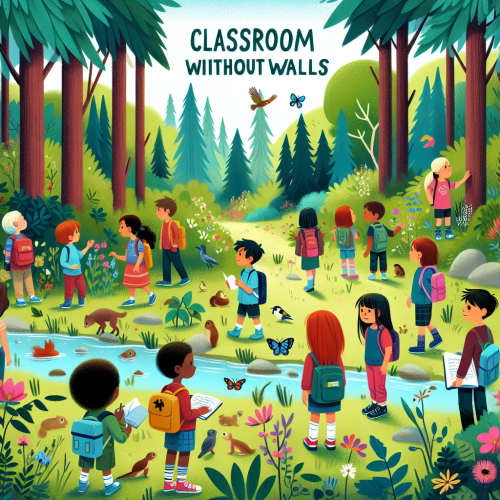
To launch the project, students will embark on a guided nature walk through the schoolyard to observe existing biodiversity and weather patterns. Equipped with journals and field guides, students will document the local flora and fauna, noting the interactions and ecosystem dynamics they observe. The walk will include collaborative discussions to help students brainstorm ideas for creating a wildlife-friendly garden. This introductory experience will foster curiosity and set the stage for the project by connecting them to the school's natural environment.

Exhibition

At the end of the project, students will host an open learning exhibition, inviting community partners, family members, and peers to explore the wildlife garden they have created. Each student will present observations on how weather patterns affected the plants and animals in the garden, demonstrating their learning through drawings and written reflections. Interactive stations will allow guests to engage with the scientific concepts explored, encouraging dialogue and deeper understanding of the local ecosystem.
Copied from NatureQuest: Classroom Without Walls