About Us Impact News Pricing Contact Us Explore
Make a copy
About Us Impact News Pricing Contact Us Explore
Tools
Project-Based Learning Performance Assessment Student-Led Conferences Digital Portfolios
HTH GSE Kaleidoscope
Personalize your design more by filling out the framework elements.
Designed by the Professional Learning team at the High Tech High Graduate School of Education.
Learn more
Essential Question
What question will guide the project and learning?
Community Partners
What organizations and individuals will collaborate and enhance the learning experience?
Reflection
What opportunities are there for us to reflect on our academic and socio-emotional development?
Assessment
In what ways can we demonstrate what we have learned and how we have grown?
Exhibition
How and who will we celebrate our learning with?
Project Launch
What shared experiences will engage us in the content, skills, and mindsets of the project?
Core Content
What will we need to learn and practice in order to engage in the project?
Critique and Revision
How will opportunities for feedback and refinement be embedded in the project?
Product
What will we make, build, or do that will have an impact on us or the world around us?
Next
What question will guide the project and learning?

(1) How do animals and humans adapt their behaviors and use their environments to meet their basic needs for survival?
(2) What strategies do humans and animals use to conserve resources while surviving in their habitats, and how can we model these strategies in our communities?
(3) How do the environmental challenges faced by humans and animals shape their respective survival strategies and what similarities can we identify?
(4) What role do ecosystems play in the survival of both humans and animals, and how do our actions impact these systems?

    Design for Mastery Kit
    NEW
6th Grade  Project 12 weeks

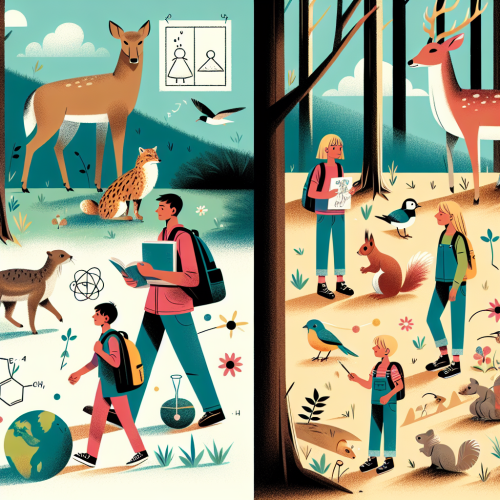
Survival Showdown: Humans vs. Animals

Gemma R
MS-LS1-4
MS-LS1-4
LS.4.D
LS.4.C
MS-LS4-2
+ 10 more
1-pager

Purpose

The purpose of this learning experience is to engage sixth-grade students in exploring the intricacies of survival strategies utilized by humans and animals within the context of local ecosystems. By integrating mathematical, scientific, and cultural knowledge through hands-on, project-based activities, students will develop critical thinking, communication, and collaboration skills while gaining deeper insights into the role of adaptation and resource conservation. Through partnerships with local community members and experts, students will connect school learning to real-world challenges, fostering a sense of responsibility and empowerment in their communities.

Learning goals

Students will investigate and compare human and animal survival mechanisms, focusing on adaptations within local ecosystems. They will collect, analyze, and interpret data on resource conservation strategies, biodiversity impacts, and anatomical structures, constructing 3D models to demonstrate their understanding. Learners will practice effective communication, collaboration, and problem-solving through project co-design with peers and local community partners. They will gain content expertise in math, science, and traditional ecological knowledge while enhancing their self-directed learning through iterative revisions and reflection on their work.
Standards
  • [Next Generation Science Standards] MS-LS1-4 - Use argument based on empirical evidence and scientific reasoning to support an explanation for how characteristic animal behaviors and specialized plant structures affect the probability of successful reproduction of animals and plants respectively.
  • [Next Generation Science Standards] MS-LS1-4 - Use argument based on empirical evidence and scientific reasoning to support an explanation for how characteristic animal behaviors and specialized plant structures affect the probability of successful reproduction of animals and plants respectively.
  • [Next Generation Science Standards] LS.4.D - Biodiversity and Humans
  • [Next Generation Science Standards] LS.4.C - Adaptation
  • [Next Generation Science Standards] MS-LS4-2 - Apply scientific ideas to construct an explanation for the anatomical similarities and differences among modern organisms and between modern and fossil organisms to infer evolutionary relationships.
  • [Next Generation Science Standards] LS.4.B - Natural Selection
  • [Next Generation Science Standards] 6-8.AF.5.4 - Apply mathematical concepts and/or processes (e.g., ratio, rate, percent, basic operations, simple algebra) to scientific and engineering questions and problems.
  • [Next Generation Science Standards] MS-LS4-2 - Apply scientific ideas to construct an explanation for the anatomical similarities and differences among modern organisms and between modern and fossil organisms to infer evolutionary relationships.
  • [Next Generation Science Standards] 6-8.AF.5.2 - Use mathematical representations to describe and/or support scientific conclusions and design solutions.
  • [Next Generation Science Standards] 6-8.AF.4.7 - Analyze and interpret data to determine similarities and differences in findings.
Competencies
  • Critical Thinking & Problem Solving - Students consider a variety of innovative approaches to address and understand complex questions that are authentic and important to their communities.
  • Effective Communication - Students practice listening to understand, communicating with empathy, and share their learning through exhibiting, presenting and reflecting on their work.
  • Collaboration - Students co-design projects with peers, exercise shared-decision making, strengthen relational agency, resolve conflict, and assume leadership roles.
  • Content Expertise - Students develop key competencies, skills, and dispositions with ample opportunities to apply knowledge and engage in work that matters to them.
  • Self Directed Learning - Students use teacher and peer feedback and self-reflection to monitor and direct their own learning while building self knowledge both in and out of the classroom.

Products

Students will create 3D printed animal models that reflect anatomical features and survival strategies. They will capture a daguerreotype-style photograph of a selected animal within a San Diego ecosystem. Additionally, students will produce a multimedia presentation comparing survival strategies of humans and animals, and work on a collaborative photo essay with wildlife imagery. Each student's work will be showcased in the "Wild Survival Wonders" exhibition, transforming the classroom into an interactive museum.

Launch

To kick off this project, initiate a dynamic 'Ecosystem Exploration Tour' where students dive into local habitats guided by environmental educators. This hands-on exploration will ignite curiosity as students observe survival strategies firsthand, engaging in discussions about the organisms they encounter. Complement the tour with a 'Survival Skills Workshop' led by Native American tribe members and wildlife experts, which will enrich students' understanding by teaching practical skills and traditional ecological knowledge essential for survival and resource conservation. This launch will set a meaningful context for the project, emphasizing experiential learning from the start.

Exhibition

In the 'Wild Survival Wonders' exhibition, students will proudly display their multimedia presentations, showcasing comparisons of human and animal survival strategies. The classroom will transform into a museum-style experience, featuring student-created daguerreotype-style photographs and 3D printed animal models. Community partners, parents, and peers are invited to explore and interact with the displays, which will include student-led tours and explanations on the exhibited content, fostering a community-wide celebration of learning and engagement with survival strategy insights.
Learning Journey
No learning journey yet!
Plan

No plan yet

Create a Learning Journey first to generate your activity plan. The plan view will show your activities organized by day and week.

Share
Loading
Loading
Get it on Google Play
© 2026 Inkwire Inc
Contact Us Privacy Policy Terms of Service