7th Grade
Project
4 weeks
Body Breakdowns: A Systems Survival Guide
Updated
LS.7.1.3
Self Directed Learning
Academic Mindset
Critical Thinking & Problem Solving
Content Expertise
+ 1 more
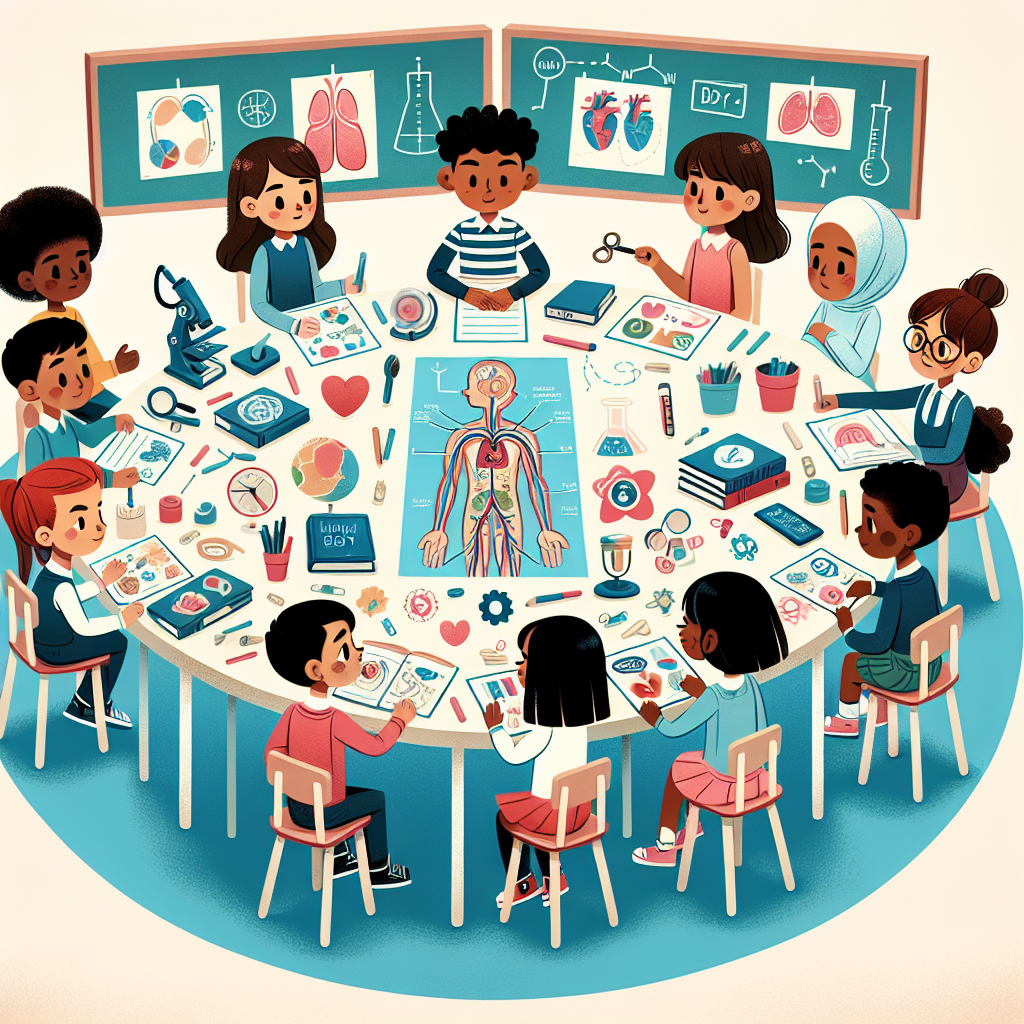
1-pager
Project Activities
Days 1–20
Day 1
Project Introduction and Essential Question Exploration
Activity
15m
Body Systems Escape Room Challenge
Activity
30m
Day 2
Health Heroes Symposium
Activity
45m
Day 3
Introduction to Cellular Structures
Activity
25m
Interactive Cell Model Creation
Activity
20m
Day 4
Hierarchical Organization Exploration
Activity
25m
Group Activity: Building a Human Body System Model
Activity
20m
Day 5
Research Session: Historical vs. Modern Medical Treatments
Activity
25m
Reflection and Peer Sharing
Activity
20m
Day 6
Body Systems Research and Analysis
Activity
25m
Interactive Timeline Creation
Activity
20m
Day 7
Cellular Structure Deep Dive
Activity
20m
Hands-on Cellular Model Refinement
Activity
25m
Day 8
Hierarchical Organization Workshop
Activity
25m
Group Collaboration: Body System Integration
Activity
20m
Day 9
Peer Review Session
Activity
30m
Reflection and Improvement
Activity
15m
Day 10
Community Partner Interaction Preparation
Activity
20m
Role-Playing Educators
Activity
25m
Day 11
Interactive Timeline Development
Activity
25m
Peer Review Session
Activity
20m
Day 12
Body Systems Museum Exhibit Planning
Activity
30m
Group Collaboration
Activity
15m
Day 13
Model Construction Workshop
Activity
25m
Feedback Loop
Activity
20m
Day 14
Digital Presentation Development
Activity
25m
Exhibit Mock-Up
Activity
20m
Day 15
Reflective Practice
Activity
20m
Final Exhibit Prep
Activity
25m
Day 16
Final Exhibit Assembly
Activity
25m
Feedback and Refinement
Activity
20m
Day 17
Rehearsal for Presentation
Activity
25m
Role-Playing with Peers
Activity
20m
Day 18
Community Partner Interaction
Activity
25m
Exhibit Enhancement
Activity
20m
Day 19
Final Presentation Practice
Activity
25m
Student Reflection and Self-Assessment
Activity
20m
Day 20
Body Systems Museum Exhibition
Activity
45m
April 2026
Mon
Tue
Wed
Thu
Fri
20
Day 1
Project Activities
Project Introduction and Essential Question Exploration
Body Systems Escape Room Challenge
21
Day 2
Health Heroes Symposium
22
Day 3
Introduction to Cellular Structures
Interactive Cell Model Creation
23
Day 4
Hierarchical Organization Exploration
Group Activity: Building a Human Body System Model
24
Day 5
Research Session: Historical vs. Modern Medical Treatments
Reflection and Peer Sharing
27
Day 6
Body Systems Research and Analysis
Interactive Timeline Creation
28
Day 7
Cellular Structure Deep Dive
Hands-on Cellular Model Refinement
29
Day 8
Hierarchical Organization Workshop
Group Collaboration: Body System Integration
30
Day 9
Peer Review Session
Reflection and Improvement
1
Day 10
Community Partner Interaction Preparation
Role-Playing Educators
May 2026
Mon
Tue
Wed
Thu
Fri
4
Day 11
Interactive Timeline Development
Peer Review Session
5
Day 12
Body Systems Museum Exhibit Planning
Group Collaboration
6
Day 13
Model Construction Workshop
Feedback Loop
7
Day 14
Digital Presentation Development
Exhibit Mock-Up
8
Day 15
Reflective Practice
Final Exhibit Prep
11
Day 16
Final Exhibit Assembly
Feedback and Refinement
12
Day 17
Rehearsal for Presentation
Role-Playing with Peers
13
Day 18
Community Partner Interaction
Exhibit Enhancement
14
Day 19
Final Presentation Practice
Student Reflection and Self-Assessment
15
Day 20
Body Systems Museum Exhibition