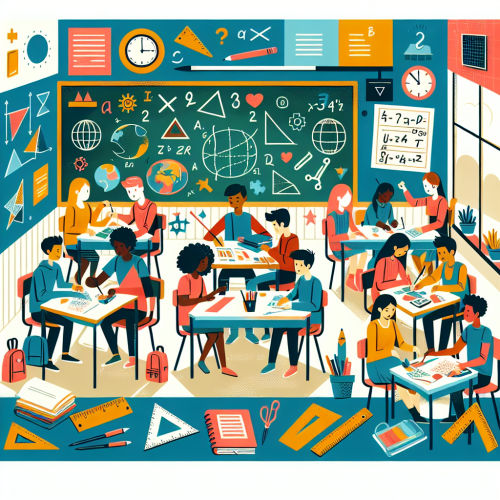
10th Grade  Project 4 weeks

Math Adventures: Unit 5 Quest!

Kendra S
CCSS.ELA-Literacy.W.9-10.7
Self Directed Learning
1-pager

Purpose

Students will engage in a hands-on project to design a sustainable community park, applying geometric principles to create solutions that address the needs of diverse groups. This project encourages students to conduct research, synthesize information, and develop self-directed learning skills through peer and teacher feedback. Over the course of four weeks, students will collaborate, reflect, and iterate on their designs, demonstrating their understanding of geometry in real-world contexts.

Learning goals

Students will design a sustainable community park by applying geometric principles, focusing on diverse needs and environmental impact. They will conduct research to explore various design elements and synthesize information from multiple sources. Throughout the project, students will engage in self-directed learning, using feedback and reflection to refine their designs and deepen their understanding of geometry in real-world contexts.
Standards
  • [Common Core] CCSS.ELA-Literacy.W.9-10.7 - Conduct short as well as more sustained research projects to answer a question (including a self-generated question) or solve a problem; narrow or broaden the inquiry when appropriate; synthesize multiple sources on the subject, demonstrating understanding of the subject under investigation.
Competencies
  • Self Directed Learning - Students use teacher and peer feedback and self-reflection to monitor and direct their own learning while building self knowledge both in and out of the classroom.

Products

Students will collaboratively design a blueprint for a sustainable community park, incorporating geometric principles learned throughout the unit. Each group will present their design, supported by research on environmental impact and community needs, demonstrating synthesis of multiple sources. The project will culminate in a digital presentation where students reflect on their learning process and the feedback received, showcasing their self-directed learning competencies.

Launch

Students will begin the project by visiting a local park to observe its design and usage. They will take notes on the geometric elements present and interview park users to understand their needs and preferences. Back in the classroom, students will collaboratively brainstorm ideas for a sustainable community park design, using their observations and interviews to inform their approach.

Exhibition

Students will collaboratively design and present a model of a sustainable community park using geometric principles. They will create visual displays, including diagrams and 3D models, to showcase their park designs and explain how they meet the needs of diverse groups. The exhibition will be open to peers, teachers, and community members, allowing students to engage in discussions and receive feedback on their projects.