Kindergarten Grade
Project
4 weeks
Kiddie Karts: Push & Pull Playground
 Anthony M
K-PS2-2
Self Directed Learning
1-pager
Purpose
The purpose of this project is to engage kindergarten students in a hands-on exploration of the concepts of force, specifically pushing and pulling, through the design and creation of a simple toy. By experimenting with various materials and designs, students will develop an understanding of how different forces affect the movement of objects. This project fosters self-directed learning by encouraging students to reflect on their designs, seek feedback, and make improvements, thereby building their confidence and problem-solving skills in a collaborative and playful environment.
Learning goals
Students will explore the concepts of force, motion, and design by creating a toy that moves with a push or pull. They will engage in hands-on experimentation with various materials to determine which combinations best facilitate movement. Through collaborative discussions and iterative design processes, students will analyze and refine their creations, using feedback to enhance their understanding of how different forces affect speed and direction. This project will also nurture self-directed learning as students reflect on their progress and adapt their strategies to achieve desired outcomes.
Standards
- [Next Generation Science Standards] K-PS2-2 - Analyze data to determine if a design solution works as intended to change the speed or direction of an object with a push or a pull.
Competencies
- Self Directed Learning - Students use teacher and peer feedback and self-reflection to monitor and direct their own learning while building self knowledge both in and out of the classroom.
Products
Throughout the project, children will create a variety of toy prototypes using different materials, such as cardboard, plastic wheels, and dowels. By the end, each student will have designed and constructed a personalized cart or small toy that demonstrates their understanding of how pushing and pulling can change speed or direction. These creations will be tested and refined through peer feedback sessions, allowing students to analyze and improve their designs collaboratively.
Launch
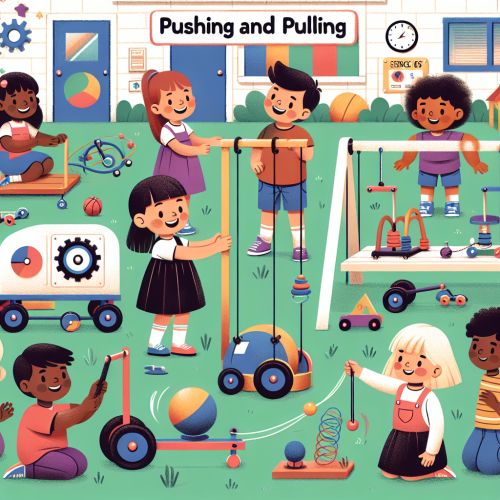
Begin the project with a hands-on exploration session where students interact with various toy cars, blocks, and ramps. Encourage them to experiment with pushing and pulling these objects to observe how they move differently on various surfaces. Facilitate a group discussion where students share their observations and brainstorm ideas about what makes a toy easy or difficult to push or pull. This activity sets the stage for their design challenge by sparking curiosity and laying the groundwork for understanding the principles of motion.
Exhibition
At the end of the project, students will host a "Push and Pull Toy Fair" where they showcase their designed toys to classmates, teachers, and family members. Each student will demonstrate how their toy moves, explaining the materials used and the design choices made to optimize pushing and pulling. Attendees will have the opportunity to interact with the toys and provide feedback, allowing students to reflect on their design process and the effectiveness of their solutions. This exhibition will celebrate students' creativity and understanding of the science concepts while fostering a sense of accomplishment and community.
Plan
| Week 1 |
Day 1
|
Day 2
|
Day 3
|
Day 4
|
Day 5
|
|---|---|---|---|---|---|
| Activities |
Push and Pull Playground Exploration - Organize a visit to the playground where students explore equipment like swings and slides to observe and discuss real-life examples of pushing and pulling forces. (45 min)
|
Introduction to Push and Pull - Conduct a hands-on session where students interact with toy cars, blocks, and ramps. Encourage experimentation with pushing and pulling to observe movement on different surfaces. (25 min)
Group Discussion and Brainstorming - Facilitate a group discussion for students to share their observations and brainstorm ideas about what makes a toy easy or difficult to push or pull. (20 min)
|
Design Inspiration - Show students various images and videos of simple carts and toys that can be pushed or pulled. Discuss the materials and shapes used in these designs. (20 min)
Reflection Journal Introduction - Introduce the Reflection Journal activity where students draw or write about their observations and feelings regarding pushing and pulling. (25 min)
|
Design Sketching - Encourage students to sketch their initial ideas for a toy that can be pushed or pulled, using the materials explored. (15 min)
|
Peer Feedback Session - Organize a session where students share their design sketches with peers and receive feedback on their ideas. (20 min)
Reflection Journal Update - Have students update their Reflection Journals with new ideas and feedback received from peers. (25 min)
|
| Deliverables |
1. Students will complete initial sketches of their toy design ideas.
2. Create simple prototypes of their toys using the materials provided. 3. Complete entries in their 'Reflection Journal' detailing their learning experiences and observations. |
||||
| Preparation |
1. Gather materials for 'Push and Pull Playground' day, such as markers for stations and any necessary safety equipment.
2. Collect toy cars, blocks, ramps, and various surfaces for classroom exploration. 3. Prepare drawing materials for brainstorming and sketching sessions. 4. Assemble materials for prototype building, including cardboard, straws, plastic wheels, tape, and scissors. 5. Create a reflection journal template for students to draw or write about their learning experiences. |
||||
| Week 2 |
Day 6
|
Day 7
|
Day 8
|
Day 9
|
Day 10
|
|---|---|---|---|---|---|
| Activities |
Material Exploration - Provide various materials such as cardboard, plastic wheels, and dowels for students to explore. Encourage them to test how these materials move when pushed or pulled. (25 min)
Reflection Journal Update - Have students draw or write about their material exploration experiences in their Reflection Journals, noting which materials worked best for pushing and pulling. (20 min)
|
Prototype Building: Part 1 - Guide students in beginning to construct a basic prototype of their toy using selected materials. Focus on building the base structure that will be pushed or pulled. (30 min)
Peer Discussion - Allow students to share their prototype progress with a partner, discussing challenges and strategies. (15 min)
|
Prototype Building: Part 2 - Continue constructing prototypes, focusing on adding wheels or other moving parts to enhance the toy's movement. (30 min)
Reflection Journal Update - Encourage students to reflect on the building process and any modifications they have made to improve movement. (15 min)
|
Testing and Data Collection - Facilitate a session where students test their prototypes, observing and recording how well they move with a push or pull. (25 min)
Group Analysis - Lead a discussion for students to share their test results and analyze which design elements worked well or need improvement. (20 min)
|
Design Improvement - Provide time for students to make adjustments and improvements to their prototypes based on test results and peer feedback. (30 min)
Reflection Journal Reflection - Have students summarize their week’s progress and identify what they plan to focus on next week in their Reflection Journals. (15 min)
|
| Deliverables |
1. Completed material experimentation worksheet documenting observations of material effectiveness.
2. Initial design sketches for each student's toy, incorporating feedback from peers. 3. A reflection entry in each student's journal detailing their learning progress and design changes. |
||||
| Preparation |
1. Gather a variety of materials for experimentation such as cardboard, plastic wheels, dowels, tape, and glue.
2. Select and prepare a storybook that highlights pushing and pulling concepts. 3. Prepare large sheets of paper and crayons/markers for design sketching. 4. Organize the classroom into small group stations for the peer feedback session. 5. Ensure Reflection Journals are available for each student. |
||||
| Week 3 |
Day 11
|
Day 12
|
Day 13
|
Day 14
|
Day 15
|
|---|---|---|---|---|---|
| Activities |
Prototype Refinement - Students use observations from testing to refine and improve their toy designs, focusing on enhancing the push and pull mechanism. (30 min)
Reflection Journal Update - Encourage students to document the changes made to their prototypes and the reasons behind these modifications in their Reflection Journals. (15 min)
|
Final Construction - Guide students in finalizing the construction of their toy, ensuring all parts are securely attached and the toy functions as intended. (35 min)
Peer Review - Pair students to share the final version of their toys and discuss what they like about each other's designs. Encourage positive feedback and suggestions for minor improvements. (10 min)
|
Design Presentation Preparation - Assist students in preparing to present their toy designs, including practicing explaining their design choices and how their toy can be pushed or pulled. (25 min)
Reflection Journal Update - Allow time for students to reflect on their preparation for the presentation and note any aspects they are proud of or areas they wish to improve. (20 min)
|
Dress Rehearsal - Conduct a mock presentation where students showcase their toys to a small group, practicing their presentation skills and receiving feedback from peers and teachers. (30 min)
Final Touches - Provide time for students to make any last adjustments to their toys based on feedback they received during the rehearsal. (15 min)
|
Parade and Presentation - Organize a school-wide kindergarten parade where students proudly present their toys, explaining the design process and demonstrating how their toy moves with a push or pull. (45 min)
|
| Deliverables |
1. Updated toy design with refinements based on testing and feedback.
2. A short presentation on the design process, challenges faced, and solutions implemented. 3. Reflection Journal entries documenting observations, design changes, and new insights. 4. Peer feedback sheets completed during the mini showcase. |
||||
| Preparation |
1. Gather various surface materials (e.g., carpet squares, tiles, grass patches) for testing.
2. Prepare feedback sheets for peer review and reflection activities. 3. Collect additional materials like tape, glue, wheels, axles for design modifications. 4. Create a simple rubric or checklist for students to use when refining their designs. 5. Set up a comfortable space for reflective circle discussions and presentations. |
||||
| Week 4 |
Day 16
|
Day 17
|
Day 18
|
Day 19
|
Day 20
|
|---|---|---|---|---|---|
| Activities |
Final Reflection Journal Entry - Encourage students to draw or write about their entire design journey, including what they learned about pushing and pulling forces, and any memorable moments. (20 min)
Exhibition Preparation - Guide students in setting up their toys and preparing their presentation space for the Push and Pull Toy Fair, ensuring everything is ready for display. (25 min)
|
Community Partner Engagement - Invite parents to visit the classroom to see the toys and provide feedback. Facilitate interactions where students explain their design process to parents. (30 min)
Feedback Reflection - Allow students to discuss the feedback received from parents and consider any minor improvements they might want to make before the final exhibition. (15 min)
|
Exhibition Setup - Assist students in arranging their toys for the upcoming Toy Fair, ensuring each display is organized and accessible for visitors. (15 min)
Presentation Rehearsal - Conduct a final practice session where students rehearse their presentations in front of peers, focusing on clear communication and engagement. (30 min)
|
Final Adjustments - Provide time for students to make any last-minute changes or enhancements to their toys based on rehearsal feedback. (15 min)
Exhibition Orientation - Explain the logistics of the Toy Fair, including how students will interact with visitors and manage their exhibition space. (30 min)
|
Push and Pull Toy Fair - Host the Toy Fair where students showcase their toys to classmates, teachers, and family members, demonstrating how their toy moves and discussing their design choices. (45 min)
|
| Deliverables |
1. Each student should have a completed toy that demonstrates the principles of pushing and pulling.
2. A brief presentation by each student explaining their design process and showcasing their toy. 3. Completed Reflection Journals from each student, highlighting their learning journey and self-reflection. |
||||
| Preparation |
1. Gather materials for any last-minute toy adjustments (e.g., glue, tape, extra wheels and axles).
2. Prepare a schedule for the practice presentations, ensuring each student has time to rehearse. 3. Coordinate with parent volunteers for the community partner feedback session. 4. Set up the exhibition space for the 'Push and Pull Toy Fair' with tables for displaying toys, and ensure enough space for demonstrations. 5. Prepare certificates or simple awards for students to celebrate their completion and participation in the project. |
||||