10th Grade  Project 3 weeks

Fair Game of Probability Fun!

Desirae B
CCSS.Math.Content.HSS-MD.B.6
Self Directed Learning
Academic Mindset
Critical Thinking & Problem Solving
Content Expertise
+ 1 more
1-pager

Purpose

Students will design and create their own carnival games incorporating conditional probability, enhancing their understanding of mathematical concepts through real-world application. This project encourages them to explore the balance between challenge and reward, fostering critical thinking and problem-solving skills. By engaging in self-directed learning, students will refine their games based on peer and teacher feedback, culminating in a 'Carnival Game Expo' where they present and explain their creations. This hands-on experience not only deepens content expertise but also strengthens effective communication and academic mindset as students reflect on their learning journey.

Learning goals

Students will design and develop unique carnival games that incorporate conditional probability, enhancing their understanding of how probabilities can influence game outcomes. They will engage in self-directed learning by using feedback to refine their games, fostering a deeper comprehension of fair decision-making processes. Through critical thinking and problem-solving, students will explore innovative strategies to calculate and adjust winning odds, ensuring a balance between challenge and reward. They will develop content expertise by applying mathematical concepts in a real-world context, while effective communication skills will be honed through presentations and exhibitions of their work.
Standards
  • [Common Core] CCSS.Math.Content.HSS-MD.B.6 - (+) Use probabilities to make fair decisions (e.g., drawing by lots, using a random number generator).
Competencies
  • Self Directed Learning - Students use teacher and peer feedback and self-reflection to monitor and direct their own learning while building self knowledge both in and out of the classroom.
  • Academic Mindset - Students establish a sense of place, identity, and belonging to increase self-efficacy while engaging in critical reflection and action.
  • Critical Thinking & Problem Solving - Students consider a variety of innovative approaches to address and understand complex questions that are authentic and important to their communities.
  • Content Expertise - Students develop key competencies, skills, and dispositions with ample opportunities to apply knowledge and engage in work that matters to them.
  • Effective Communication - Students practice listening to understand, communicating with empathy, and share their learning through exhibiting, presenting and reflecting on their work.

Products

Students will design and construct their own carnival-style games that incorporate conditional probability, ensuring the games are both engaging and mathematically sound. They will also develop a comprehensive rulebook and probability analysis for their game, detailing how conditional probability influences outcomes and ensures fairness. Each student will produce a video presentation to explain their game's mechanics, probability calculations, and adjustments made to balance challenge and reward. Additionally, students will prepare a reflection journal documenting their design process, peer feedback, and personal insights gained throughout the project.

Launch

Kick off the project with a visit to a local fair or carnival, either in person or virtually, where students observe and play various games of chance. Encourage them to take notes on the mechanics and probability elements they notice. Follow this with a class discussion to share observations and brainstorm initial ideas for their own game designs. This immersive experience will spark curiosity and provide real-world context for their project.

Exhibition

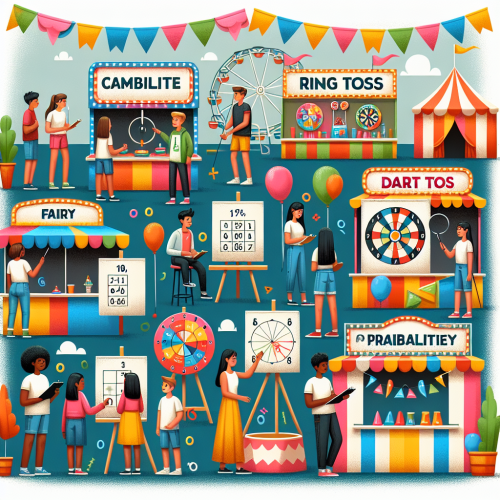
Students will host a 'Carnival Game Expo' where they design and set up interactive booths to showcase their unique games. They will invite peers, teachers, and family members to participate, providing an engaging opportunity for visitors to play and understand the conditional probability principles behind each game. This public exhibition not only highlights students' creativity and understanding but also encourages them to communicate their learning effectively and receive real-time feedback from a diverse audience.