About Us Impact News Pricing Contact Us Explore
Make a copy
About Us Impact News Pricing Contact Us Explore
Tools
Project-Based Learning Performance Assessment Student-Led Conferences Digital Portfolios
HTH GSE Kaleidoscope
Personalize your design more by filling out the framework elements.
Designed by the Professional Learning team at the High Tech High Graduate School of Education.
Learn more
Essential Question
What question will guide the project and learning?
Community Partners
What organizations and individuals will collaborate and enhance the learning experience?
Reflection
What opportunities are there for us to reflect on our academic and socio-emotional development?
Assessment
In what ways can we demonstrate what we have learned and how we have grown?
Exhibition
How and who will we celebrate our learning with?
Project Launch
What shared experiences will engage us in the content, skills, and mindsets of the project?
Core Content
What will we need to learn and practice in order to engage in the project?
Critique and Revision
How will opportunities for feedback and refinement be embedded in the project?
Product
What will we make, build, or do that will have an impact on us or the world around us?
Next
What question will guide the project and learning?

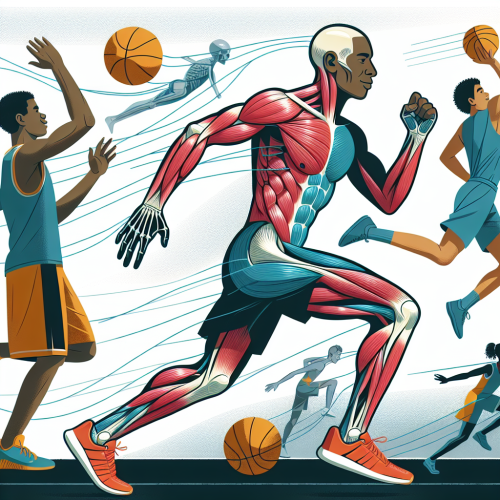
How can understanding the physics of forces and kinematics enhance our athletic performance and prevent injuries in our sports?

10th Grade  Project 6 weeks

Sports Science: Physics in Motion!

Santiago A
HS-PS2-3
Resource management
Strategic planning
Modeling systems
Understanding causality
+ 8 more
1-pager

Purpose

This project aims to deepen students' understanding of physics concepts by exploring forces and kinematics within sports, enhancing their athletic performance and injury prevention strategies. Through collaboration with sports clubs and mentors, students will apply scientific principles to analyze and optimize sports techniques, integrating anatomy, physiology, and biomechanics. The project fosters critical thinking, problem-solving, and community engagement, culminating in a showcase where students demonstrate their improved techniques and share insights with peers and local sports figures.

Learning goals

Students will apply scientific principles to analyze and optimize sports techniques, focusing on forces and kinematics to enhance performance and reduce injury risk. They will engage in hands-on experiments and utilize video analysis to understand the anatomy and physiology involved in movement, sketch force vectors, and explore Newton's Laws and kinematics. Through collaboration with sports mentors and peers, students will develop strategic planning and problem-solving skills, while collecting and interpreting data to refine their techniques. The project will foster critical thinking, reflection, and community engagement, culminating in a showcase where students demonstrate their improved techniques and understanding of physics concepts.
Standards
  • [Next Generation Science Standards] HS-PS2-3 - Apply scientific and engineering ideas to design, evaluate, and refine a device that minimizes the force on a macroscopic object during a collision.
Competencies
  • Pursuing Goals - Resource management (LL.SM.2.a)
  • Problem Solving - Strategic planning (OT.PS.2.d)
  • Scientific Investigation - Modeling systems (FL.MST.4.c)
  • Scientific Investigation - Understanding causality (FL.MST.4.d)
  • Scientific Investigation - Collecting data (FL.MST.4.b)
  • Logical Thinking - Recognizing patterns (OT.Crit.2.e)
  • Logical Thinking - Contextualizing my perspective (OT.Crit.2.c)
  • Diverse Perspectives - Situating my perspective (GC.SA.1.b)
  • Community Mobilization - Building relationships (GC.SAg.2.c)
  • Receiving Feedback - Absorbing feedback (LL.SM.1.a)
  • Receiving Feedback - Evaluating feedback (LL.SM.1.b)
  • Wayfinding - Iterative thinking (LL.SD.2.b)

Products

Students will create educational videos that dissect sports techniques into their fundamental physics components, using slow-motion footage and expert commentary. These videos will highlight improvements in technique and explain the physics concepts applied, serving as a resource for peers and community sports partners. Additionally, students will produce visual displays and models for the 'Kinematics and Forces Expo,' showcasing their understanding of forces and motion in sports. Each student will also compile a personal reflection document detailing their learning journey, insights gained, and future goals for athletic performance enhancement.

Launch

Begin with an engaging 'Sports Technique Challenge' where students film themselves performing a chosen sports technique. Use video analysis software to capture initial data on their movement and forces involved. Collaborate with peers and mentors to identify areas for improvement, setting the foundation for their project work. This activity will spark curiosity and provide a practical context for exploring physics concepts in sports.

Exhibition

Students will showcase their learning through a dynamic 'Kinematics and Forces Expo,' where they present their projects in a gallery format, featuring visual displays, models, and interactive elements. Community sports partners will be invited to offer commentary and awards for innovative approaches. Additionally, a 'Performance Showcase' will allow students to perform live demonstrations of their sports techniques, highlighting improvements and explaining the physics concepts applied. Invited community sports figures will provide feedback during this event, enhancing the learning experience and fostering community engagement.
Rubric
Competency Progression Rubric Competency-first rubric
Category
Learning Goal
Emerging
Developing
Proficient
Applying
Pursuing Goals
Resource management
  • I am aware when I do not have the resources I need to complete a goal, task, or project.


Project-specific:
  • I can identify when I need additional resources or support to analyze my sports technique footage using physics concepts
  • I recognize when my understanding or tools are insufficient for optimizing performance and minimizing collision forces, and I actively seek out guidance from peers, mentors, or community partners to achieve my goals
  • I can identify the resources that are needed to complete a goal, task, or project.


Project-specific:
  • I can identify the tools and support I need to improve my sports technique by observing my initial video and planning how to use physics concepts to minimize impact during collisions, ensuring my project goals are met effectively
  • I identify gaps in my available resources compared to the resources I will need for a goal, task, or project, and develop strategies to fill those gaps.


Project-specific:
  • I can identify what resources I have and what resources I need to improve my sports technique, then come up with a plan using scientific ideas to fill those gaps, such as collaborating with sports coaches to refine my technique and minimize impact during collisions based on physics principles
  • I identify gaps in my available resources compared to the resources I will need for a goal, task or project, and develop strategies and self-advocate to fill those gaps.


Project-specific:
  • I can effectively identify any gaps in the resources I have compared to what I need to successfully analyze and optimize sports techniques using physics principles
  • I develop creative strategies and advocate for myself to secure the necessary tools, information, and support, ensuring I can design, evaluate, and refine solutions that minimize forces during collisions, while enhancing athletic performance and safety
Problem Solving
Strategic planning
  • I can recognize when a strategy I’m considering didn’t work in a similar situation in the past.


Project-specific:
  • I can identify and reflect on past sports strategies that did not lead to desired outcomes, using this understanding to develop new plans that apply scientific principles to minimize forces during collisions in my sports technique
  • I can identify and describe the connections and similarities between past and current events to find trends and cycles.


Project-specific:
  • I can recognize patterns in sports techniques by comparing my initial video footage with past performances, identifying trends in motion and forces, and using this analysis to strategically plan improvements that will minimize forces during collisions
  • I analyze and describe how past trends and cycles are or are not related to my strategies and thinking.


Project-specific:
  • I can analyze my sports technique footage and describe how previous trends in my performance relate to the strategies I develop to enhance my skills
  • By applying scientific principles, I design and refine my methods to minimize forces during collisions, showcasing my understanding through educational videos and models
  • I produce a proactive strategic plan for future success by adjusting my strategies and thinking to account for past trends and cycles.


Project-specific:
  • I can proactively develop and refine a strategic plan that enhances sports techniques by applying physics principles, including minimizing force during collisions
  • I analyze past trends in my performance and adjust my approach to achieve success, demonstrating my understanding through engaging video content and interactive models at the Kinematics and Forces Expo
Scientific Investigation
Modeling systems
  • I can explain a system as composed of smaller parts and can identify some of those smaller parts (e.g., an object colliding with another object, an ecological environment, or a respiratory system).


Project-specific:
  • I can identify the key parts of a sports technique by observing how different movements affect the overall performance and explain how these parts contribute to minimizing force during collisions
  • I can investigate or analyze a system by defining its boundaries and initial conditions, as well as its inputs and outputs.


Project-specific:
  • I can define the boundaries and initial conditions of a sports technique by identifying key movements and forces involved, and analyze its inputs and outputs to understand how they affect performance and potential injury risk
  • I use models (e.g., physical, mathematical, computer models) to simulate the flow of energy, changes in matter, and other interactions within and between systems at different scales.


Project-specific:
  • I can use models to simulate how energy flows and matter changes when analyzing sports techniques, demonstrating my understanding by designing a device that reduces force during collisions
  • I can explain how my models show the interactions between systems at different scales, using data and feedback from my experiments to refine my designs and improve athletic performance
  • I use models and simulations to predict the behavior of a system, and describe how these predictions have limited precision and reliability due to the assumptions and approximations inherent in the models.


Project-specific:
  • I can create detailed models and simulations of sports techniques to predict how different forces impact performance and safety
  • By analyzing these predictions, I explain the assumptions and limitations within my models and use this understanding to refine techniques that minimize collision forces effectively, showcasing my ability to integrate scientific principles for practical improvements in sports
Scientific Investigation
Understanding causality
  • I can describe the difference between causal and correlational relationships, and recognize when a claim implies correlation or causation.


Project-specific:
  • I can explain how specific sports techniques lead to changes in motion and forces, and identify whether these changes are due to causal or correlational relationships
  • I can use slow-motion video analysis to demonstrate how adjustments in technique can minimize force during collisions, applying scientific and engineering ideas effectively
  • I can analyze how different causal and correlational relationships could or could not be used to predict phenomena in systems.


Project-specific:
  • I can identify and explain how different forces impact the movement and technique in sports, using video analysis to predict possible outcomes and suggest improvements
  • I set up experiments and investigations to gather empirical evidence to differentiate between cause and correlation and support claims and predictions about specific causes and effects in systems.


Project-specific:
  • I can design and conduct experiments to analyze sports techniques, using slow-motion video to identify how different forces affect movement and performance
  • I apply physics principles to distinguish the cause of specific movements and refine techniques to minimize impact during collisions, supporting my claims with evidence from my investigations
  • I improve the design of experiments and investigations to gather empirical evidence of causality in a system, by making a change to a single component of a system and examining the result.


Project-specific:
  • I can design and conduct experiments that improve sports techniques by changing one component of the technique, such as body position or limb movement, and analyze the resulting effects using video footage and data collection to understand how these changes impact force and motion during collisions
Scientific Investigation
Collecting data
  • I can identify tools for collecting data, and can identify how observations and measurements will be recorded.


Project-specific:
  • I can choose the right tools to film and collect data on sports techniques, clearly explaining how I will record my observations and measurements to analyze forces and movements
  • I can explain how a given experiment, observation, and/or test would produce relevant data to serve as evidence for explaining phenomena or testing solutions.


Project-specific:
  • I can describe how filming my sports technique helps me gather important data about movement and forces, which I use to identify areas for improvement and make my performance safer and more effective
  • I apply scientific reasoning to evaluate the accuracy of various methods of collecting data (including experiments, observations, and/or prototype testing) and describe why specific evidence is adequate for explanations or conclusions.


Project-specific:
  • I can effectively evaluate different methods of collecting data, such as experiments, video observations, and prototype testing, to ensure the accuracy and reliability of my findings
  • I can explain why the evidence I gather is suitable for making conclusions about how to optimize sports techniques using physics principles
  • I consider different approaches for collecting reliable experimental or observational data, and decide on how best to gather data and produce reliable measurements, taking into account limitations on the precision and relevance of the resulting data (e.g., number of trials, cost, risk, time, confounding variables, etc.).


Project-specific:
  • I can design and conduct experiments to gather reliable data on sports techniques, considering different approaches and deciding on the best methods to collect precise measurements
  • I evaluate the limitations of my data collection, such as time and cost, and refine my techniques to ensure accuracy and relevance, applying scientific principles to minimize forces during collisions
Logical Thinking
Recognizing patterns
  • I can describe a given pattern in qualitative and quantitative information.


Project-specific:
  • I can identify recurring patterns in sports techniques by observing and analyzing slow-motion footage, describing how these patterns relate to the principles of forces and motion to enhance performance and safety
  • I can recognize and describe patterns in sets of qualitative and quantitative information.


Project-specific:
  • I can identify and explain patterns in the movements and forces captured in my sports technique videos, using these observations to suggest improvements
  • I can recognize how changes in technique may reduce the impact during collisions, and I share these insights with my peers while collaboratively refining our approaches
  • I look for and identify patterns in information to identify key components of the possible reasoning(s) behind an idea.


Project-specific:
  • I can identify and analyze patterns in sports techniques by examining slow-motion footage and collaborating with peers to recognize key components of motion and force
  • I apply scientific principles to propose ideas for minimizing impact during collisions, demonstrating an understanding of biomechanics and physics
  • I evaluate patterns in information to describe their connections to and impacts on an idea.


Project-specific:
  • I can analyze sports techniques and identify patterns in the motion and forces involved, using scientific and engineering principles to design improvements that minimize collision forces
  • I evaluate how these patterns connect to the physics concepts we've learned and explain their impact on performance and injury prevention
Logical Thinking
Contextualizing my perspective
  • I can tell a story of my lived experiences that is connected to an idea, challenge, or question about which I am thinking.


Project-specific:
  • I can share my personal experiences with sports techniques and connect them to the physics concepts we are exploring, demonstrating how I use scientific principles to optimize performance and minimize injury
  • I can describe how my lived experiences are impacting my thinking about an idea, challenge, or question.


Project-specific:
  • I can describe how my experiences in sports are shaping my understanding of physics concepts, like forces and motion, as I work to improve my techniques and design solutions that minimize collision impacts
  • I identify and analyze how my lived experiences impact my thinking about an idea, challenge, or question.


Project-specific:
  • I can analyze how my personal experiences in sports shape my understanding of physics principles by applying scientific and engineering ideas to design and refine techniques that reduce impact forces during collisions, and I share these insights through educational videos and displays at the Kinematics and Forces Expo
  • I evaluate how my lived experiences impact my thinking about an idea, challenge, or question in order to interrogate my own biases.


Project-specific:
  • I can reflect on how my personal experiences in sports shape my understanding of physics concepts and challenge my assumptions about athletic performance
  • By integrating these insights, I design and refine a device to minimize force during collisions, ensuring it aligns with scientific and engineering principles
Diverse Perspectives
Situating my perspective
  • I can identify the facts that I may hold about a given circumstance.


Project-specific:
  • I can identify and explain the facts I understand about how forces affect sports techniques, using video evidence to support my observations and ideas
  • I can identify the facts, assumptions, and biases that I may hold about a given circumstance.


Project-specific:
  • I can identify and explain the facts and assumptions I have about how forces impact sports techniques, and I can recognize any biases that might affect my analysis
  • I use video footage and peer feedback to refine my understanding and improve my approach to minimizing collision forces in sports
  • I identify the facts, assumptions, and biases that form my perspective on a given issue/circumstance and analyze relationships among them.


Project-specific:
  • I can identify the facts, assumptions, and biases that shape my understanding of sports techniques and analyze how these elements influence my perspective
  • By applying physics principles, I evaluate and refine strategies to minimize force during collisions, using scientific and engineering ideas to improve athletic performance while considering feedback from mentors and peers
  • I identify the facts, assumptions, and biases that form my perspective on a given issue/circumstance and analyze them for oppressive or exclusionary elements (e.g., racism, homophobia, etc.).


Project-specific:
  • I can critically examine the biases and assumptions influencing my perspective on sports techniques and apply scientific principles to design solutions that minimize collision forces, ensuring inclusive and equitable approaches
Community Mobilization
Building relationships
  • I can describe ways in which community members help improve their communities.


Project-specific:
  • I can identify and describe how community sports partners contribute to improving athletic performance and reducing injury risks by applying scientific and engineering concepts to sports techniques
  • I can engage with others to help improve our communities.


Project-specific:
  • I can collaborate effectively with community sports partners to gather insights and feedback, using their expertise to improve our sports technique videos and models, ensuring they accurately reflect physics principles and effectively minimize collision forces
  • I contribute to building trusting relationships and group structures to create momentum and action toward goals that benefit my communities.


Project-specific:
  • I can effectively collaborate with community sports partners and peers to build trusting relationships, using scientific principles to design and refine techniques that minimize force during sports collisions, while sharing these improvements through engaging presentations and videos at the 'Kinematics and Forces Expo'
  • I build trusting relationships and group structures to create momentum and action toward goals that benefit my communities and build toward a future that is sustainable, equitable, and just.


Project-specific:
  • I can build trusting relationships with community sports partners and peers to collaboratively analyze and optimize sports techniques, applying physics principles to design solutions that reduce collision forces and enhance performance, while fostering a sustainable and equitable community environment
Receiving Feedback
Absorbing feedback
  • I can listen to feedback related to my performance.


Project-specific:
  • I can actively listen to feedback from peers and mentors about my sports technique videos and use their insights to identify specific areas for improvement, applying scientific ideas to refine my approach and better understand how forces impact performance
  • I can listen to, consider, and act on feedback related to my performance.


Project-specific:
  • I can listen to feedback from my peers and mentors about the analysis of my sports technique video and use it to refine my understanding of how to minimize forces during collisions
  • I can identify specific areas for improvement and make adjustments to my technique based on the scientific principles we've discussed, showing my ability to apply and act on feedback to enhance my performance
  • I ask for feedback in order to improve my performance.


Project-specific:
  • I actively seek feedback from my peers and mentors to enhance my sports technique videos, using their insights to refine my understanding of physics principles and improve my demonstration of minimizing forces during collisions
  • I ask for feedback from people outside of my normal circle in order to improve my performance.


Project-specific:
  • I actively seek feedback from sports coaches and community partners to refine my sports techniques and learn how to minimize forces during collisions
  • I use this feedback to make targeted improvements and demonstrate a clear understanding of the physics principles involved, showcasing my ability to apply scientific and engineering ideas effectively
Receiving Feedback
Evaluating feedback
  • I can identify specific points of feedback I choose to accept and not to accept.


Project-specific:
  • I can review feedback from peers and mentors on my sports technique video and explain which suggestions I will use to improve my analysis of forces during collisions, supporting my choices with scientific reasoning
  • I can explain why I chose to accept or not accept specific points of feedback.


Project-specific:
  • I can thoughtfully consider the feedback I receive from my peers and mentors during my sports technique analysis
  • By reflecting on the feedback, I can explain my reasons for accepting or rejecting specific suggestions and apply scientific principles to refine my approach, aiming to minimize force impact during sports movements
  • I analyze why people give me the specific points of feedback they do, and incorporate that into my decision of whether or not to choose to accept those points.


Project-specific:
  • I can thoughtfully analyze feedback from peers and mentors about my sports technique videos, considering the reasons behind their specific suggestions
  • By understanding the physics principles of forces and collisions, I integrate relevant feedback to refine my techniques and improve my video presentation, ensuring it effectively communicates scientific ideas and enhances athletic performance
  • I explain and defend why I chose to accept or not accept specific points of feedback, and analyze feedback for any larger patterns that I might apply in the future.


Project-specific:
  • I can thoughtfully explain why I accepted or chose not to accept specific feedback from peers and mentors, using scientific principles to refine my sports technique and minimize collision forces
  • I analyze feedback for patterns that can help me improve future projects, demonstrating my understanding by successfully applying these insights to optimize my athletic performance and enhance my educational video presentation
Wayfinding
Iterative thinking
  • I can recognize when new information might impact my original thinking and/or learning plans.


Project-specific:
  • I can recognize when new information about sports techniques and physics principles might impact my original thinking or learning plans
  • I actively adjust my approach by incorporating this information into my project, ensuring my designs effectively minimize forces during collisions in sports
  • When faced with new information, I can modify my original thinking to incorporate the new information that I have learned.


Project-specific:
  • I can adjust my initial ideas about sports techniques to include new insights from video analysis and feedback, using physics principles like force and kinematics to improve my performance and make it safer
  • I modify my thinking and plans to incorporate new information that I learn.


Project-specific:
  • I can analyze my sports technique videos and use feedback from peers and mentors to refine my approach, demonstrating how I apply scientific ideas to reduce forces during collisions and improve performance
  • I modify my original thinking and plans to incorporate new information that I learn, and I articulate how that modification impacts my thinking/plans.


Project-specific:
  • I can effectively analyze my sports technique footage to identify areas for improvement, and apply scientific and engineering principles to design solutions that reduce force during collisions
  • I modify my strategies based on feedback and new insights from mentors and peers, clearly explaining how these changes enhance my understanding and performance
Learning Journey
Empathize
Students will engage with their sports club coaches to film and analyze their initial sports techniques, identifying challenges and opportunities for improvement by applying principles of physics, anatomy, and biomechanics to understand how forces and kinematics impact performance and safety.
Days 1 - 3
Milestone Activities
No activities have been added to this phase yet.

Edit Phase

Loading...
Define
Students will define specific areas for sports technique improvement by analyzing initial video footage, identifying key biomechanical and physics challenges, and articulating these problems to set a focused direction for their project work.
Days 4 - 7
Milestone Activities
No activities have been added to this phase yet.

Edit Phase

Loading...
Ideate
Students will brainstorm a diverse array of ideas for optimizing sports techniques by analyzing forces and kinematics, sketching vector diagrams, and gathering feedback from peers and sports club coaches to refine solutions, setting the foundation for prototype development.
Days 8 - 12
Milestone Activities
No activities have been added to this phase yet.

Edit Phase

Loading...
Prototype
Students will create low-fidelity prototypes of their optimized sports techniques using sketches and models to visualize force vectors, analyze motion, and incorporate anatomical insights, preparing for peer review and community feedback.
Days 13 - 15
Milestone Activities
No activities have been added to this phase yet.

Edit Phase

Loading...
Test
Students will present their refined sports technique videos to peers and community partners, gather feedback through interactive discussions, and iterate on their techniques using insights from physics principles, anatomical understanding, and biomechanical analysis.
Days 16 - 18
Milestone Activities
No activities have been added to this phase yet.

Edit Phase

Loading...
Plan
Week 1
Day 1
Day 2
Day 3
Phase
Empathize
Activities
Introduction to Project and Essential Question
Activity 15m
Sports Technique Challenge
Activity 25m
Physics of Movement Presentation Preparation
Activity 25m
Introduction to Forces in Sports
Activity 15m
Sports Technique Challenge Launch
Activity 30m
Force Vector Sketching
Activity 10m
Sports Technique Analysis Report
Activity 20m
Physics in Motion Video Commentary
Activity
Sports Technique Analysis Report
Activity
Imagine Phase Introduction
Activity 20m
Biomechanical Diagram Creation
Activity 15m
Peer Collaboration
Activity 25m
Physics in Motion Video Commentary
Activity 10m
Preparation
Week 2
Day 4
Day 5
Day 6
Phase
Define
Activities
Innovative Technique Sketch Review
Activity 20m
Refining Force Vector Sketches
Activity 15m
Biomechanical Diagram Presentation
Activity
Introduction to Strategic Improvement Plan
Activity 10m
Physics-Driven Technique Proposal Finalization
Activity 25m
Strategic Improvement Plan
Activity
Strategic Improvement Plan Development
Activity 15m
Force Reduction Model Exploration
Activity 25m
Plan Phase Introduction
Activity 20m
Peer Review of Improvement Plans
Activity 10m
Force Reduction Model Completion
Activity 25m
Biomechanics Analysis Workshop
Activity 15m
Force Minimization Device Brainstorm
Activity 10m
Peer Review and Reflection
Activity 20m
Preparation
Week 3
Day 7
Day 8
Day 9
Phase
Define
Ideate
Activities
Sports Technique Optimization Proposal Completion
Activity 30m
Force Analysis Deep Dive
Activity 15m
Refinement of Biomechanical Diagrams
Activity 10m
Peer Review Session
Activity 15m
Create Phase Introduction
Activity 10m
Ideation Session: Device Design
Activity 15m
Peer Feedback Exchange
Activity 10m
Hands-on Experimentation
Activity 35m
Understanding Causality in Sports Techniques
Activity 15m
Biomechanics and Anatomy Integration
Activity 20m
Technique Refinement Workshop
Activity 25m
Video Analysis Revisions
Activity 10m
Preparation
Week 4
Day 10
Day 11
Day 12
Phase
Ideate
Activities
Vector Diagram Sketches
Activity
Technique Optimization Proposal
Activity
Collaborative Feedback Session
Activity 20m
Vector Diagram Completion
Activity 15m
Technique Optimization Proposal Review
Activity 10m
Improvement Analysis Finalization
Activity 25m
Biomechanics and Anatomy Deep Dive
Activity 15m
Force and Motion Experimentation
Activity 25m
Force Minimization Device Design
Activity 10m
Data Synthesis and Technique Optimization
Activity 20m
Peer Feedback on Device Designs
Activity 15m
Biomechanical Feedback Session
Activity 20m
Iterative Design Refinement
Activity 10m
Test Phase Introduction
Activity 25m
Preparation
Week 5
Day 13
Day 14
Day 15
Phase
Prototype
Activities
Force and Motion Feedback Session
Activity 20m
Prototype Testing and Data Collection
Activity 15m
Iteration and Feedback Session
Activity 10m
Test Phase Experimentation
Activity 25m
Motion Analysis Video Log
Activity
Motion Analysis Video Enhancement
Activity 15m
Sports Technique Improvement Analysis Report Preparation
Activity 25m
Peer Feedback Roundtable
Activity 10m
Peer Collaboration and Review
Activity 20m
Biomechanics and Physiology Review
Activity 15m
Biomechanical and Physics Integration Workshop
Activity 20m
Expo Preparation and Presentation Practice
Activity 10m
Improve Phase Refinement Session
Activity 25m
Preparation
Week 6
Day 16
Day 17
Day 18
Phase
Test
Activities
Physics in Motion Presentation Preparation
Activity 25m
Interactive Technique Workshop
Activity 20m
Final Technique Refinement
Activity 25m
Physics in Motion Presentation
Activity
Exhibition Preparation
Activity 25m
Exhibition Setup and Final Checks
Activity 15m
Physics in Motion Presentation
Activity 10m
Video Presentation Finalization
Activity 20m
Iterative Improvement Journal
Activity
Iterative Improvement Journal Completion
Activity 15m
Physics in Sports Performance Infographic Completion
Activity 15m
Project Reflection and Peer Review
Activity 10m
Live Physical Demonstration Rehearsal
Activity 15m
Exhibition and Performance Showcase
Activity 15m
Preparation
Share
Activities
Loading
Loading
Loading
Get it on Google Play
© 2026 Inkwire Inc
Contact Us Privacy Policy Terms of Service