About Us Impact News Pricing Contact Us Explore
Make a copy
About Us Impact News Pricing Contact Us Explore
Tools
Project-Based Learning Performance Assessment Student-Led Conferences Digital Portfolios
HTH GSE Kaleidoscope
Personalize your design more by filling out the framework elements.
Designed by the Professional Learning team at the High Tech High Graduate School of Education.
Learn more
Essential Question
What question will guide the project and learning?
Community Partners
What organizations and individuals will collaborate and enhance the learning experience?
Reflection
What opportunities are there for us to reflect on our academic and socio-emotional development?
Assessment
In what ways can we demonstrate what we have learned and how we have grown?
Exhibition
How and who will we celebrate our learning with?
Project Launch
What shared experiences will engage us in the content, skills, and mindsets of the project?
Core Content
What will we need to learn and practice in order to engage in the project?
Critique and Revision
How will opportunities for feedback and refinement be embedded in the project?
Product
What will we make, build, or do that will have an impact on us or the world around us?
Next
What question will guide the project and learning?

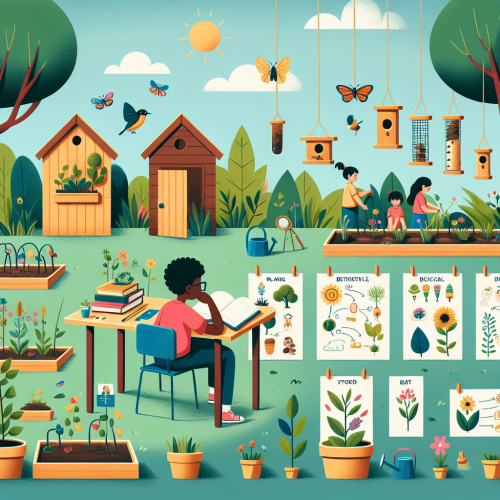
How can we transform our outdoor space to support local wildlife and enhance our learning experience?

3rd, 4th, 5th Grades  Project 4 weeks

Sprout Scouts: Outdoor Oasis Makeover!

Erin S
3-5-ETS1-1
3-5.AF.1.5
3-LS4-4
Self Directed Learning
Academic Mindset
+ 1 more
1-pager

Purpose

The purpose of this project is to transform our outdoor space into a dynamic learning environment that supports local wildlife and enhances educational experiences. By engaging in hands-on activities, students will deepen their understanding of plant biology, ecosystem dynamics, and sustainable practices, while developing essential skills in problem-solving, collaboration, and communication. This project fosters a sense of community and environmental stewardship as students work together to create a lasting, positive impact on their school and local ecosystem.

Learning goals

Students will explore plant anatomy and photosynthesis, understanding the role of native plants in local ecosystems. They will apply math skills to design and map an outdoor learning space, integrating sustainable gardening practices. Through research and collaboration, students will identify beneficial insects and creatures, creating informational materials to share with the community. They will develop communication skills by writing proposals and delivering speeches to potential sponsors, emphasizing the project's impact. Throughout the project, students will engage in critical reflection, peer feedback, and community interaction to refine their designs and deepen their understanding of ecosystem support.
Standards
  • [Next Generation Science Standards] 3-5-ETS1-1 - Define a simple design problem reflecting a need or a want that includes specified criteria for success and constraints on materials, time, or cost.
  • [Next Generation Science Standards] 3-5.AF.1.5 - Define a simple design problem that can be solved through the development of an object, tool, process, or system and includes several criteria for success and constraints on materials, time, or cost.
  • [Next Generation Science Standards] 3-LS4-4 - Make a claim about the merit of a solution to a problem caused when the environment changes and the types of plants and animals that live there may change.
Competencies
  • Self Directed Learning - Students use teacher and peer feedback and self-reflection to monitor and direct their own learning while building self knowledge both in and out of the classroom.
  • Academic Mindset - Students establish a sense of place, identity, and belonging to increase self-efficacy while engaging in critical reflection and action.
  • Critical Thinking & Problem Solving - Students consider a variety of innovative approaches to address and understand complex questions that are authentic and important to their communities.

Products

Students will design and construct interactive stations within the outdoor classroom, featuring educational signage and art installations created in collaboration with local artists. They will create a digital portfolio documenting the transformation process, including time-lapse videos and interviews. Educational posters and brochures about native plants and sustainable practices will be developed and distributed during the grand opening. Students will also organize a 'Wildlife Welcome Tour' and a 'Budget Masters Showcase' to present their contributions and problem-solving strategies.

Launch

Kick off the project with an 'Ecosystem Exploration Expedition,' where students embark on a guided nature walk led by a local environmental scientist. During the walk, students will observe and discuss various components of the local ecosystem, including native plants, wildlife, and environmental conditions. This immersive experience will spark curiosity and inspire students to generate design ideas for transforming their outdoor learning space.

Exhibition

Host a 'Wildlife Welcome Tour' where students lead community members through the newly transformed outdoor classroom, explaining the significance of each feature, such as birdhouses, bug hotels, and native plant selections. Students will showcase their understanding of ecosystems and plant structures by presenting educational stations and art installations created in collaboration with local artists. The event will also include a 'Budget Masters Showcase,' where students creatively display their budgeting strategies and problem-solving skills, highlighting the challenges they addressed in the project.
Rubric
Competency Progression Rubric Competency-first rubric
Category
Learning Goal
Stage 1
Stage 2
Stage 3
Stage 4
Deeper Learning Competencies
Self Directed Learning
  • I can identify and describe a simple design problem related to transforming our outdoor learning space, using feedback from my teacher and classmates to understand the criteria for success and the materials, time, or cost constraints
  • Through my observations during the nature walk, I can express thoughtful ideas about how changes in the environment might affect the plants and animals living there, and how our project can support local wildlife
  • I can use feedback from my teacher and classmates to improve my outdoor classroom design and make sure it meets the needs we discussed, like fitting our space and using the materials we have
  • I can explain why my design is a good solution when things in the environment change, like different plants or animals living there
  • I can use feedback from my teacher and classmates to improve my design for the outdoor classroom, making sure it meets the needs of the local ecosystem and fits within the materials and time we have
  • I can reflect on my learning journey, track my progress, and make adjustments to my plans, demonstrating my understanding of how changes in the environment affect plants and animals
  • I can independently set goals for my outdoor classroom project, use feedback from my teacher and classmates to improve my design, and adapt my plans when faced with challenges like limited materials or unexpected weather changes
  • I can clearly explain how my design helps local wildlife and plants thrive, and I can share my learning process and decisions through my digital portfolio and presentations
Deeper Learning Competencies
Academic Mindset
  • I can describe why transforming our outdoor learning space is important for our community and identify one way it will help local wildlife
  • I use what I learn from the nature walk to think about what our outdoor classroom needs and talk about one idea to make it better
  • I ask questions to understand more about ecosystems and share my thoughts with classmates
  • I can describe how my outdoor classroom design helps local wildlife and supports learning by using feedback from my teacher and friends
  • I can also explain the importance of one native plant or animal and how it fits into our ecosystem design
  • I can use my understanding of ecosystems and plant biology to suggest creative solutions for our outdoor classroom that meet the project goals and work within the given materials and time constraints
  • I can confidently share my ideas and designs for our outdoor classroom with others, using facts and examples to explain why my solutions are important for our community and the environment
  • I can describe how I considered different needs and limits, like time and materials, while creating a space that helps plants and animals thrive
Deeper Learning Competencies
Critical Thinking & Problem Solving
  • I can identify a simple design problem related to transforming our outdoor space and explain why it is important for local wildlife and our learning
  • I can list criteria for success and recognize the materials, time, or cost constraints involved in solving the problem
  • I can discuss how changes in the environment affect the types of plants and animals that live there, and suggest solutions that will help the ecosystem
  • I can identify a simple design problem for our outdoor classroom project and list some criteria for success, like using native plants and creating a space that supports local wildlife
  • I can also consider basic constraints, such as the materials we have and the time we need to complete the project
  • I can explain why my chosen solution, like planting specific native plants, is helpful for the environment and how it supports different animals that might live there
  • I can identify a design problem in my outdoor classroom project and suggest creative solutions that consider the needs of my community and the environment
  • I use evidence from my research to explain why my ideas will help plants and animals adapt to changes
  • I make sure my solutions fit the resources we have and the time we need to complete them
  • I can creatively solve design challenges by considering different ways to make our outdoor classroom better for learning and for local plants and animals
  • I can explain why my ideas will work and how they help solve problems caused by changes in the environment
  • I use what I learn from feedback and research to make sure my designs meet all the important goals and limits we have
Learning Journey
Ask
Students will collaborate to explore the current outdoor learning space, identify its challenges, and define the main problem to solve, while gathering initial insights from community partners and setting criteria for a successful transformation.
Days 1 - 2
Milestone Activities
No activities have been added to this phase yet.

Edit Phase

Loading...
Imagine
Students will brainstorm creative design solutions for transforming the outdoor space by collaborating in groups to sketch ideas, discuss potential plant selections, and propose innovative ways to incorporate structures like birdhouses and bug hotels, setting the stage for their design plans in the next phase.
Days 3 - 4
Milestone Activities
No activities have been added to this phase yet.

Edit Phase

Loading...
Plan
Students will collaborate to select the optimal design solution for the outdoor classroom, creating detailed plans with measurements, plant selections, and habitat features, ensuring alignment with budgetary and ecological criteria.
Days 5 - 7
Milestone Activities
No activities have been added to this phase yet.

Edit Phase

Loading...
Create
Students will collaborate to construct and test small-scale prototypes of their outdoor classroom designs, including birdhouses and plant layouts, integrating feedback from peers and community partners to refine and enhance their plans.
Days 8 - 10
Milestone Activities
No activities have been added to this phase yet.

Edit Phase

Loading...
Test
Students will conduct hands-on testing of their outdoor classroom designs by assessing the functionality and effectiveness of installed elements such as birdhouses, bug hotels, and plant layouts, gathering data and feedback to evaluate their impact on the local ecosystem and ensure the solutions meet project goals.
Days 11 - 12
Milestone Activities
No activities have been added to this phase yet.

Edit Phase

Loading...
Improve
Students will refine their outdoor classroom designs by implementing feedback from peers and community partners, testing and adjusting plant layouts and structures to better support local wildlife and enhance the space's educational value.
Days 13 - 14
Milestone Activities
No activities have been added to this phase yet.

Edit Phase

Loading...
Share
Students will host a grand opening event where they present their digital portfolios, guide community members through the transformed outdoor classroom, and deliver speeches reflecting on their learning journey and the impact of their contributions to the project.
Days 15 - 16
Milestone Activities
No activities have been added to this phase yet.

Edit Phase

Loading...
Plan
Week 1
Day 1
Day 2
Day 3
Day 4
Phase
Ask
Imagine
Activities
Project Launch: Ecosystem Exploration Expedition
Activity 45m
Essential Question Discussion
Activity 30m
Reflection Circle
Activity 15m
Defining the Design Problem
Activity 30m
Research Workshop: Native Plants
Activity 45m
Reflection and Feedback
Activity 15m
Imagining the Outdoor Space
Activity 45m
Collaborative Mapping
Activity 30m
Peer Review and Feedback Wall
Activity 15m
Design Proposal Sketching
Activity 45m
Feedback Session with Community Partners
Activity 30m
Reflection and Planning
Activity 15m
Preparation
Week 2
Day 5
Day 6
Day 7
Day 8
Phase
Plan
Create
Activities
Native Plant Research and Selection
Activity 45m
Design Sketch Workshop
Activity 45m
Budget and Material Planning
Activity 45m
Community Partner Feedback Session
Activity 45m
Design Plan Presentation
Activity 45m
Reflection Circle
Activity 45m
Construction Kick-off
Activity 45m
Permaculture Principles Workshop
Activity 45m
Preparation
Week 3
Day 9
Day 10
Day 11
Day 12
Phase
Create
Test
Activities
Construction Phase Initiation
Activity 45m
Collaborative Plant Layout Design
Activity 45m
Educational Signage Creation
Activity 45m
Art Installation Planning
Activity 45m
Prototype Testing
Activity 45m
Community Partner Feedback Session
Activity 45m
Final Design Adjustments
Activity 45m
Reflection and Planning for Next Steps
Activity 45m
Preparation
Week 4
Day 13
Day 14
Day 15
Day 16
Phase
Improve
Share
Activities
Final Construction and Planting
Activity 45m
Collaborative Ecosystem Support
Activity 45m
Digital Portfolio Compilation
Activity 45m
Preparation for Presentations
Activity 45m
Interactive Tour Rehearsal
Activity 45m
Community Engagement Strategy
Activity 45m
Grand Opening Event Setup
Activity 45m
Reflection and Celebration
Activity 45m
Preparation
Share
Activities
Loading
Loading
Loading
Get it on Google Play
© 2026 Inkwire Inc
Contact Us Privacy Policy Terms of Service